dailynewsnblog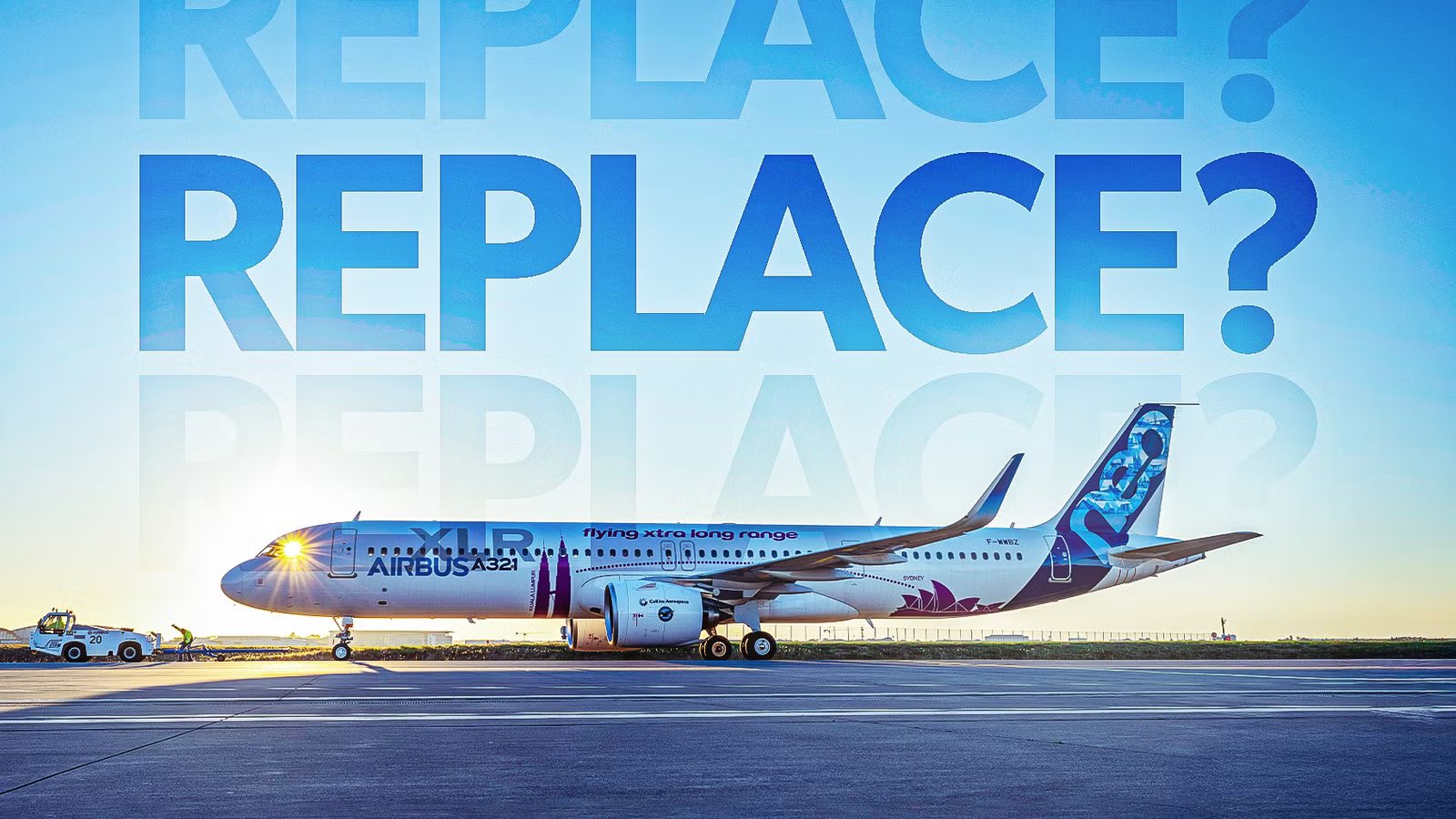
The Airbus A321XLR generated a lot of discussion even before entering widespread service for various reasons. Since Airbus formally launched the program, the aircraft has been framed in two very different ways. To some observers, it is simply the next logical step in the steady evolution of narrowbody aircraft. To others, it represents something far more disruptive: a genuine challenge to the long-standing dominance of widebody jets on international routes.
That tension has increasingly been distilled into a single and short question: Can the A321XLR replace widebodies? It’s an understandable way to frame the conversation, especially as airlines place large orders and begin reshaping their future route maps around the aircraft. But it is also a question that risks oversimplifying what is, in fact, a much more nuanced shift in how long-haul flying is planned and operated.
Can The Airbus A321XLR Really Replace Widebody Aircraft?

The short answer is no: the AirbusA321XLR does not and will not replace widebody aircraft across the board. What it does instead is remove the requirement to use widebodies on a growing number of routes where they were never the most efficient tool for the job. That distinction helps explain both the enthusiasm surrounding the aircraft and the persistent confusion about what it actually changes.
In practical terms, the A321XLR gives airlines a way to operate long-haul routes profitably with far fewer passengers. Where a widebody might require 250 or even 300 daily travelers to make the numbers work, the A321XLR can sustain nonstop service with closer to 180–220 seats, depending on cabin configuration. On paper, that difference may not appear dramatic. Across an airline’s network, however, it can be the deciding factor between a viable route and one that never gets launched.
For much of the past several decades, airlines routinely flew widebodies on routes that struggled to fill them simply to preserve nonstop connectivity or support hub-and-spoke networks. In those cases, the aircraft choice was driven more by range limitations than by demand. The A321XLR removes that constraint. It does not render widebodies unnecessary, but it does highlight how many widebody operations existed, primarily because no narrowbody could fly far enough to serve the market efficiently.
Why The A321XLR Changes The Economics Of Long-Haul Flying

Whether an A321XLR can realistically take over a route previously flown by a widebody depends on several interconnected factors. Passenger demand is the most visible, but cargo revenue, seasonality, operating costs, and network strategy all play equally important roles.
Passenger volume remains the starting point. In long-haul configuration, most A321XLRs will seat between 180 and 220 passengers depending on cabin layout. Routes that consistently exceed that demand, particularly year-round, still favor widebodies, which benefit from lower per-seat costs when filled. However, many international routes do not enjoy such steady demand, especially outside peak travel seasons.
Cargo often becomes the decisive factor that keeps widebodies in place. Aircraft like the Airbus A330, Boeing 787 or Boeing 777 can generate substantial belly cargo revenue, particularly on transatlantic and transpacific routes. For some airlines, freight can represent the difference between profit and loss. The A321XLR’s limited cargo capacity means it is far less attractive on routes where cargo demand is strong and predictable.
|
Aircraft Type |
Typical Long-Haul Seats |
Max Range, Nautical Miles (Kilometers) |
Belly Cargo Potential |
Relative Trip Cost |
|
Airbus A321XLR |
180–220 |
~4,700 (8,700) |
Limited |
Very Low |
|
Airbus A330-900neo |
250–300 |
~6,500 (12,038) |
High |
Medium |
|
Boeing 787-9 |
260–290 |
~7,600 (14,075) |
High |
Medium–High |
Seasonality further complicates the picture. Routes that are profitable in summer but marginal in winter are often poor fits for widebodies. Airlines like Icelandair have cited this exact issue in explaining why the A321XLR is central to their future fleet plans. A smaller, long-range aircraft allows capacity to better track demand without abandoning nonstop service during weaker periods.

How Airbus Has Revolutionized Long-Haul Travel
Airbus’s A321LR and A321XLR reshaped long-haul travel, opened new routes, cut costs, and enabled narrowbodies to fly where twin-aisles once ruled.
What Airlines And Industry Experts Say About The A321XLR’s Role

Airlines have been careful in how they describe the A321XLR’s role, and that caution is telling. Rather than framing it as a widebody replacement, most executives describe it as a precision tool for network development. At  American Airlines, leadership has repeatedly highlighted the aircraft’s ability to open new nonstop routes that would have been financially risky with a widebody. The emphasis is not on shrinking capacity, but on matching aircraft size more closely to real-world demand, particularly on business-oriented routes where frequency and nonstop convenience matter more than total seat count.
Industry analysts have echoed this framing. Aviation Week reporting has emphasized that airlines expect the A321XLR to lower the risk associated with launching new long-haul routes. Instead of committing to a widebody and hoping demand materializes, carriers can deploy an XLR, evaluate performance, and scale up later if conditions warrant. This shift in mindset may ultimately be the A321XLR’s most lasting impact. It changes long-haul growth from a high-stakes gamble into a more incremental, data-driven process.
How The A321XLR Compares To The A321LR And Modern Widebodies

To understand if the A321XLR can truly replace widebodies, it helps to compare how airlines actually deploy different aircraft types rather than focusing only on headline performance figures. In that context, the A321XLR’s role becomes clearer: it does not outperform widebodies at its core missions, but it can easily replace them in cases in which they are inefficient.
The most direct internal comparison is with its sibling, the Airbus A321LR. That aircraft proved the viability of long-haul narrowbody flying, particularly across the North Atlantic. However, it also highlighted the limits of that concept. On longer sectors or during periods of strong headwinds, airlines sometimes faced payload restrictions or had to accept less operational margin. The aircraft could serve the route, but not always with the consistency network planners prefer.
The A321XLR is designed to address those shortcomings. Its permanent rear center fuel tank and airframe modifications allow airlines to plan routes closer to the aircraft’s maximum range without routine compromises. For airlines, that difference translates into year-round reliability and profit rather than seasonal viability, a subtle but critical improvement.
|
Factor |
Airbus A321LR |
Airbus A321XLR |
Airbus A330-900 |
Boeing 787-9 |
|
Typical route strategy |
Proven but range-limited |
Purpose-built for long routes |
Dense leisure & mixed-demand long haul |
Long-range, premium and cargo-heavy routes |
|
Risk when launching new routes |
Moderate |
Low |
High |
High |
|
Flexibility to adjust frequency |
High |
Very high |
Low |
Low |
|
Sensitivity to seasonal demand |
Medium |
Low |
High |
Medium–High |
|
Reliance on cargo revenue |
Minimal |
Minimal |
Often significant |
Often significant |
|
Network role |
Niche enabler |
Network unlocker |
Capacity backbone |
Flagship long-haul aircraft |
This does not diminish the role of widebodies where they are truly needed. Aircraft such as the Airbus A330-900 and the Boeing 787-9 Dreamliner remain indispensable on high-density leisure routes, cargo-heavy corridors, and premium-focused services where their larger cabins and belly-hold capacity generate revenue the A321XLR simply cannot.
Where the A321XLR excels is in the space between those extremes. It allows airlines to rethink how often widebodies are genuinely required, and where smaller, more flexible aircraft can deliver better results. In that sense, it does not replace widebodies so much as redefine their role within modern airline networks.

Is The Airbus A321XLR The Future Of Transatlantic Flights?
Airbus’ A321XLR is redefining long-haul travel, linking secondary cities across the Atlantic with efficiency, comfort, and game-changing range.
Operational Risks Of Long-Haul Narrowbody Flights

Despite its impressive capabilities, the A321XLR is not without legitimate concerns, both from a passenger and an operational perspective. Long-haul flights on single-aisle aircraft are fundamentally different from widebody flights, and passengers are likely to notice.
The cabin layout is the most obvious factor. Fewer aisles, smaller galleys, and limited space to move around can make long journeys feel more confined, particularly in economy class. Airlines are mitigating this with upgraded interiors, larger overhead bins, and lie-flat business class seats, but the physical constraints of a narrowbody remain. For some travelers, especially those accustomed to widebody long-haul comfort, these differences may be noticeable on flights approaching five or six hours.
Operationally, flying near the edge of a narrowbody’s maximum range introduces additional risks. Strong headwinds, severe weather, or technical issues can have a greater impact on scheduling, payload restrictions, or the need to divert. Engine reliability is a particular consideration. The A321XLR uses the latest-generation CFM LEAP-1A or Pratt & Whitney PW1100G geared turbofan engines, which are generally very reliable, but like any new high-thrust engine operating near maximum range, they require meticulous monitoring and maintenance. Any unplanned engine issue on a long route can have outsized operational consequences compared with a widebody that carries more fuel and reserves.
Airlines adopting the A321XLR must carefully plan for these factors, including fuel contingencies, alternate airports, and payload management strategies. Crew training and operational procedures are also adjusted to reflect the tighter margins involved in long-route operations. For passengers, the upside is clear: more nonstop routes, fewer connections, and better access to secondary cities. The trade-off is understanding that not every long-haul flight will be on a widebody, and that some comfort and space compromises may exist. For many travelers, the convenience of a nonstop flight on a smaller aircraft outweighs the difference in cabin experience, but it is a factor worth considering when choosing a flight.
What The Airbus A321XLR Ultimately Means For The Future Of Long-Haul Travel

The Airbus A321XLR does not signal the end of the widebody era; rather, it signals the end of widebodies being the default answer for every long-haul route.
By making long, thin routes economically viable, the A321XLR allows airlines to deploy the right aircraft rather than the biggest one available. That shift leads to more nonstop flights, more experimentation, and networks that are better matched to real-world demand.
Looking ahead, the aircraft’s success may reshape how the industry thinks about fleet categories altogether. Instead of narrowbody versus widebody, the future of long-haul flying may be defined by mission fit, and in that future, the A321XLR occupies a uniquely powerful position.