dailynewsnblog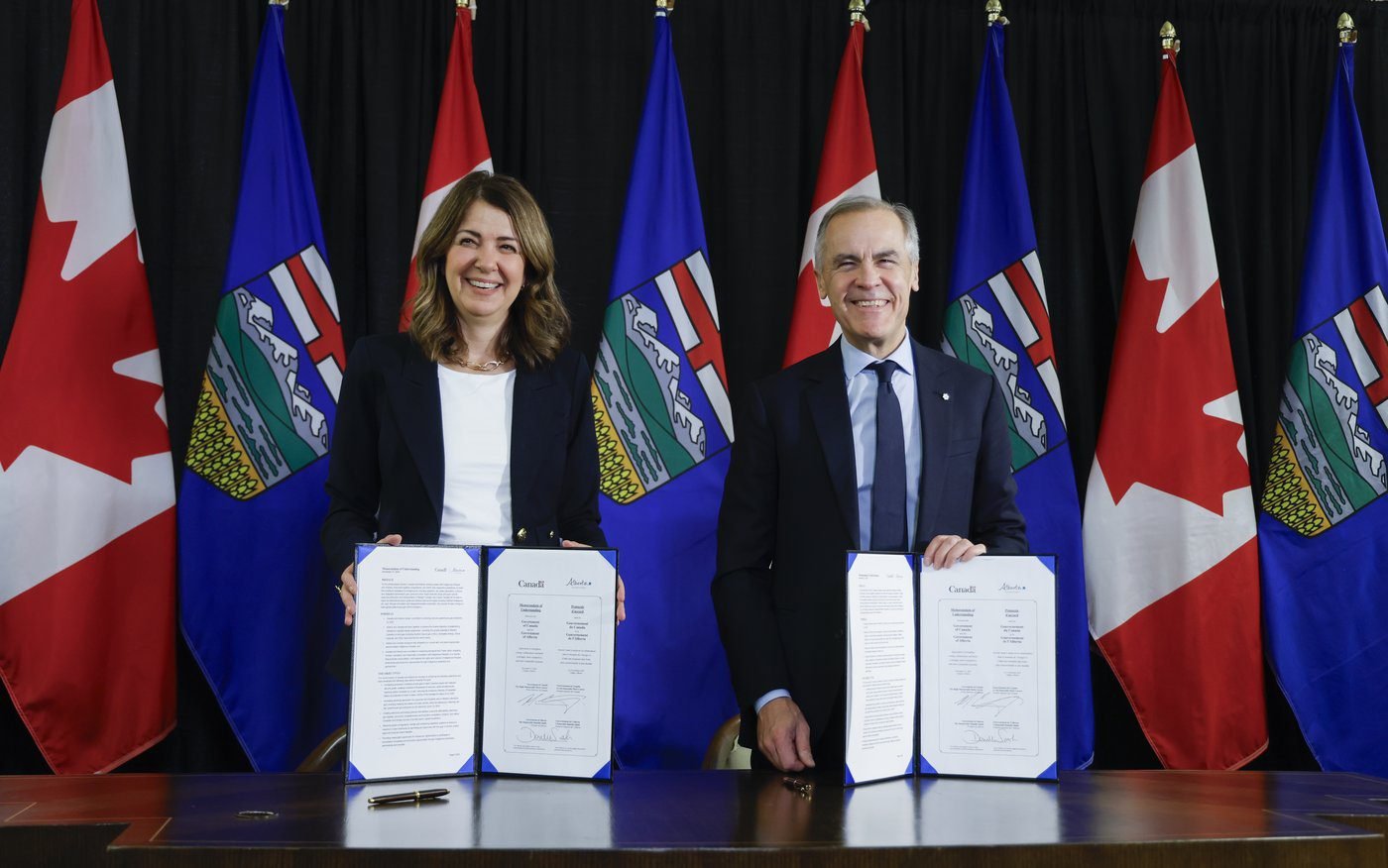
Prime Minister Mark Carney made significant sacrifices to secure a new memorandum of understanding (MOU) on energy and the environment with Alberta Premier Danielle Smith. He surrendered key pillars of Canada’s climate plan, his reputation as an eco-warrior — albeit a corporate one — a cabinet minister, and the trust of countless progressive voters. Today, those concessions may seem necessary for the political rewards they earned him. But with time, he may come to view them for what they truly are: costly mistakes for the climate, the country’s unity, and his own political future.
Carney and his cabinet vehemently deny that their agreement with Alberta, unveiled on November 27, represents a retreat from the fight against climate change. According to them, it is just a mere restructuring of initiatives and policies; a different means to reach the same goals and targets. Yet from the moment Smith — an Ottawa-bashing, climate-repudiating, fossil fuel cheerleader — began lavishing praise on a Liberal government she used to treat as a political piñata, you know the Prime Minister must have caved.
And indeed, he did.
Carney scrapped Ottawa’s proposed emissions cap on the oil and gas sector, exempted Alberta from federal clean electricity regulations, and extended the timeframe for the province to reduce its methane emissions. He also declared the construction of a bitumen pipeline to be a national priority and confirmed he was willing to lift the tanker ban off B.C.’s northern coast for one, should a private investor emerge.
In return, Smith offered little more than to modestly increase the province’s industrial carbon price and support the Pathways Plus carbon capture scheme — conditional, of course, that construction first begins on a pipeline.
Carney called the deal a shining example of cooperative federalism. Climate advocates, however, saw only capitulation from Ottawa.
Nonetheless, Carney appeared pleased with the deal. Not because he had secured any significant policy wins — he didn’t — but because he had neutralized political attacks from both Smith and his chief rival, federal Conservative Party leader, Pierre Poilievre.
Perhaps as well, Carney was thinking about how his new pro-pipeline stance could help him lure center-right voters away from Poilievre and make the Liberals competitive in conservative Alberta for the first time in decades.
What he did not consider — or at least chose to ignore — were all the negative ramifications that will or are likely to come from such a short-sighted, politically motivated deal.
Consider Canada’s climate obligations.
As the 11th largest emitter in the world — and a major fossil fuel exporter — Canada is a significant player in the climate fight. As a wealthy G7 country with one of the largest emissions per capita, it also has a moral responsibility to make meaningful contributions to that fight.
Carney knows this. Yet still, he gutted the country’s climate plan, making it “impossible,” in the words of newly resigned cabinet minister Steven Guilbeault, for Canada to meet its 2030 emissions targets.
Even with its former climate plan intact, it would have been a challenge for the federal government to meet those targets. However, with all the concessions Carney has now made to Alberta — which other provincial governments are already clamoring for — Canada has no realistic path to success.
It’s terrible news for a country already grappling with the influx of destructive — sometimes deadly — wildfires, floods, and other extreme weather events. For example, one need only recall the 2021 heat dome in B.C. that killed hundreds. Or the 2024 inferno that laid waste to Jasper.
It’s also terrible news for the country’s finances. According to the Canadian Climate Institute, annual climate damages are equal to approximately half of Canada’s expected GDP growth in 2025. As climate-fueled disasters become more frequent and severe, that price tag is only going to increase.
By weakening the country’s climate plan, Carney has tarnished Canada’s global image and put both its economy and environment at risk of future harm.
The Prime Minister has justified his MOU with Smith by claiming it was necessary to quell Alberta’s nascent separatist movement and preserve the country’s economic sovereignty in the face of threats from U.S. President Donald Trump. Both are laudatory goals, and Carney is right to prioritize them. But neither requires Canada to sacrifice its climate plan.
For years, Alberta conservatives — including Smith — have propagated the lie that the province’s prosperity relies solely upon the continued exploitation of its oil and gas reserves and the construction of more pipelines. Concurrently, they have stoked dangerous hostility against Ottawa by reinforcing the belief that federal policies, especially those of Liberal governments, hinder Alberta’s economic advancement.
It’s been an effective electoral strategy, one that has paid dividends to conservatives. But it has raised unrealistic expectations that a new pipeline from Ottawa will deliver widespread prosperity to Albertans.
We know from recent history with Big Oil that it won’t.
What it will do, instead, is enrich the foreign (primarily U.S.) shareholders of oil and gas companies — at least until global oil demand peaks — while simultaneously lowering Canadian competitiveness in international markets that are increasingly prioritizing clean energy and technologies.
As Prime Minister, Carney will have to take his share of responsibility for the festering resentment that will remain among Albertans, and indeed, all Canadians who believed his climate compromises would guarantee the country its unity and economic security.
Ironically, Carney’s attempts to foster national unity have actually raised tensions throughout the country.
B.C.’s NDP government and several coastal First Nations are understandably furious with Ottawa. Neither supports a new heavy-emitting bitumen pipeline or lifting the tanker ban off B.C.’s northern coast to transport that bitumen. Yet that is what the federal government is now tentatively approving. To make matters worse, Carney brought Saskatchewan Premier Scott Moe into his MOU consultations, but excluded B.C. Premier David Eby, deepening the divisions between Ottawa and Victoria.
Meanwhile, separatists in Quebec are delighted. Already, Bloc Québécois leader Yves-François Blanchet has seized on Carney’s climate concessions — and Ottawa’s heavy-handedness in dealing with B.C. — to bolster the case for Quebec sovereignty. Provincially, the unabashedly separatist Parti Québécois (PQ) remains ahead in Quebec polls. With political gifts like this from Carney, they’ll have no trouble forming the next government and fulfilling their promise of holding another divisive referendum on Quebec sovereignty.
With his appeasement of Alberta, Carney has isolated B.C. and empowered Quebec separatists. Unintentionally, he exacerbated the very national discord he was meant to repair.
Politically, the Prime Minister thinks his pivot on pipelines will improve his electoral fortunes. He shouldn’t be so sure.
In the 2025 federal election, Carney’s reputation as a climate advocate was one of his most appealing qualities for progressive voters. Many were hesitant about his conservative, business-oriented tendencies. But it reassured them to know he would take the climate crisis seriously.
However, by dismantling Canada’s climate plan, Carney has forfeited that trust. If the federal NDP selects a compelling new leader who promotes robust climate policies, it could persuade numerous progressives to abandon the government, including in Quebec, a traditionally reliable bastion of Liberal support. As Guilbeault has already demonstrated, many center-left Quebecers will struggle to back a government they now perceive as climate obstructionist.
The Prime Minister may think he can compensate for those losses by attracting new center-right voters, and to be fair, he may win some in Ontario, a province the Liberals largely dominate. Alberta, though, will be a harder sell. Remember, in 2019, Justin Trudeau’s government purchased the Trans Mountain pipeline, yet won zero seats in the Wild Rose Province. It is doubtful Carney will have any better luck with only a hypothetical pipeline.
Will the Prime Minister regret caving to Smith in his pursuit of electoral rewards? Maybe not now. Maybe not next month. However, there will come a time when he must confront the consequences of his climate concessions. It might be the next time Canada experiences a costly and damaging extreme weather event. It might be after the PQ makes gains in Quebec’s next provincial election. Or it might be when progressive voters decide they’ve finally had enough with the Liberals. Either way, Carney’s appeasement of Smith will have its repercussions.
The post Schierman: The High Cost of Carney’s Climate Concessions appeared first on Loonie Politics.