dailynewsnblog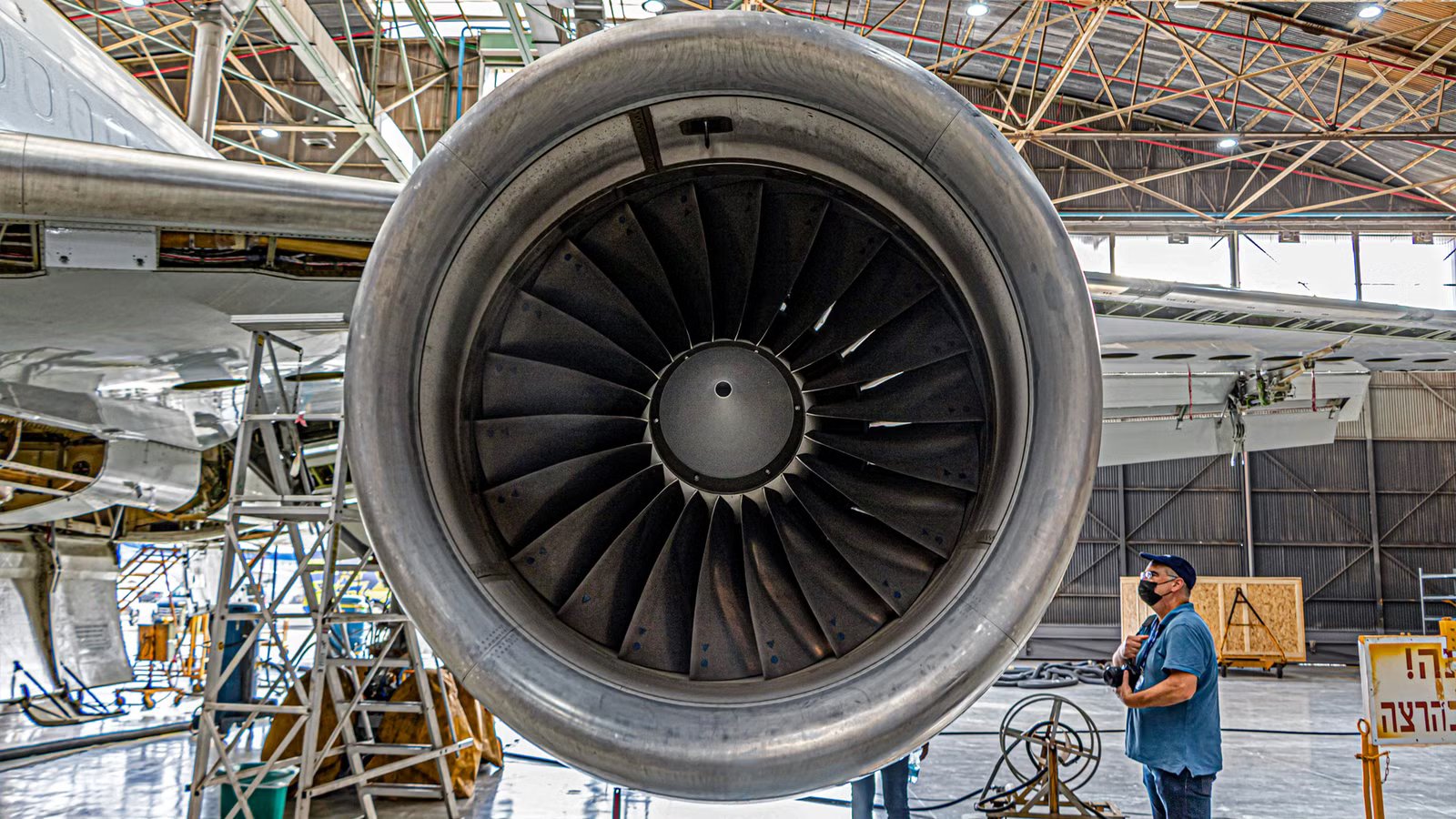
If you know a lot about aviation, then you’ll be familiar with the names Pratt & Whitney and Rolls-Royce. These two renowned engine makers are not only among the most popular commercial turbofan makers but also two of the most legendary aircraft engine builders in history. Just four companies in the world produce approximately 99% of the global commercial airliner engine market. Pratt and Whitney typically ranks as the second largest by total production and market share. Rolls-Royce is typically considered to have the smallest unit volume of the four, but outsized revenue as the company targets higher value opportunities.
CFM International, which is a joint venture between GE Aerospace and Safran, is generally considered the most popular power plant supplier in the world. This is largely thanks to its narrowbody market share, supplying the Airbus A320 family. GE Aerospace is closely ranked with Pratt & Whitney, with the two occasionally trading slots depending on performance in any given year. Pratt & Whitney is focused on a “disruptive integration” strategy with its Geared Turbofan (GTF) engine, which offers significant fuel burn and noise reduction benefits for narrowbody aircraft. Rolls-Royce currently powers around one-third of the global widebody fleet and focuses on the “evolutionary excellence” of its Trent engines.
Two Icons At A Glance

The history of Pratt & Whitney spans two different periods. The 19th century saw the company begin as a manufacturer of precision machine tools, and the 20th century saw it grow into a world leader in aviation engines. The “Wasp” was the company’s first product. It was a strong, air-cooled radial engine whose exceptional power-to-weight ratio and dependability transformed both military and commercial aviation.
Pratt & Whitney saw tremendous growth during World War II, and its dependable engines powered many Allied air forces, such as the B-24 Liberator and PBY Catalina. The business switched to jet propulsion and turbines after the war. The famous Boeing B-52 Stratofortress, as well as the early Boeing 707 and Douglas DC-8, were all powered by its J57 engine, which was first introduced in 1953.
When World War I broke out in 1914, the British government asked Rolls-Royce, which had been founded in 1904 as a luxury car manufacturer, to start producing aircraft engines. The “Merlin” engine, Henry Royce’s final design, debuted in 1933 and went on to become a famous and incredibly successful engine during World War II.
The Merlin powered the American P-51 Mustang, the Avro Lancaster bomber, and the fabled Supermarine Spitfire and Hawker Hurricane fighters, which played a crucial role in the Battle of Britain. By purchasing Sir Frank Whittle’s work, Rolls-Royce entered the turbine era. In 1944, the Gloster Meteor fighter was powered by the Welland, the first British-designed jet engine to be used in the military.
Pratt & Whitney Today

Managing the persistent problems with the PW1100G GTF engines that power the Airbus A320neo, A220, and Embraer E-Jet E2 families is now P&W’s main priority. Due to an unusual condition in powdered metal used in high-pressure turbine components that might eventually lead to cracking, the historic maker is facing a multi-year examination procedure for hundreds of engines.
Hundreds of customer aircraft have been grounded globally as a result of the defective material in the GTF engines. P&W launched the “GTF Advantage” package and a High-Section Plus (HS+) refi kit to improve cooling and engine durability. Meanwhile, on the defense side of the house, P&W is a significant supplier to the US and the world’s armed forces.
The company continues to produce and sustain the F135 engine, which powers all variants of the F-35 Lightning II fighter jet. In late 2025, the company was awarded over $1.6 billion in contracts for F135 sustainment and nearly $2.9 billion for Lot 18 production engines. The company is developing the XA101 variable cycle for the US Air Force’s sixth-generation fighter program and small turbofans for Collaborative Combat Aircraft (CCA).

What Makes GE9X The World’s Monster Jet Engine?
Unravel the secrets of the massive GE9X, a jet engine that redefines scale and efficiency in the skies.
The Rolls-Royce Portfolio

Across the pond, Rolls-Royce directs most of its company’s effort toward sustaining the global fleet of Trent turbofan engines and refining the design for its current product line. Enhancing the time-on-wing of the current Trent 1000 and Trent 7000 engines, which power Airbus A330neo and Boeing 787 aircraft, is of the utmost importance. After completing flight testing, new high-pressure turbine (HPT) blades with more than twice the durability are beginning to be used.
In 2023, Rolls-Royce successfully demonstrated its prototype UltraFan engine. The next generation, extremely high fuel efficiency powerplants target both narrowbody and widebody aircraft. Currently, it claims to offer a 10% efficiency boost over the Trent XWB. The company’s executive jet portfolio has also grown as bizjet orders have increased since the beginning of the COVID-19 air travel restrictions. The Pearl 10X is being developed for the Dassault Falcon 10X, while the Pearl 700 powers the Gulfstream G700 and G800.
Rolls-Royce is a key partner in the global combat air program (GCAP) consortium developing the power and propulsion systems for the United Kingdom’s 6th-Gen combat aircraft. The company is a key supplier to the US military, powering aircraft like the C-130J, V-22 Osprey, and the MQ-25 unmanned aerial refueling drone.
The Heart Of Modern Airliners

The fundamental engineering design difference between Pratt & Whitney and Rolls-Royce turbofan engines is their core spool architecture, as well as Pratt & Whitney’s unique approach with Geared Turbofan technology. Pratt & Whitney’s modern commercial engines (the PW1000G GTF family) use a geared two-spool design, which differs from traditional architectures.
The GTF has a planetary reduction gearbox between the low-pressure turbine and the fan in the front. This results in a higher bypass ratio, which reduces fuel consumption by up to 16% to 20% while also producing lower noise and emissions than older engines. The gearbox allows the large-diameter fan to rotate at a much slower, optimal speed, while the low-pressure turbine spins much faster, matching its own ideal speed.
Rolls-Royce engine design allows each section of the compressor and turbine to operate closer to its optimal aerodynamic speed across all flight phases; three independent, concentric shafts rotating at different optimal speeds: low-pressure (LP), intermediate-pressure (IP), and high-pressure (HP). This results in a mechanically more complex engine compared to the GTF with more bearings, but it is highly efficient for the long-haul, high-altitude cruise conditions typical of widebody aircraft.

Comparing The 2 Boeing 787 Dreamliner Engines
The Boeing 787 comes with both GE and Rolls-Royce engine options, although GE’s engines have become more popular in recent times.
Powering Airline Innovation

The core difference in business strategy is that Pratt & Whitney targeted the high-volume, fast-growing narrowbody market with a “disruptive technology” approach to gain market share, while Rolls-Royce focused on solidifying its dominance in the high-value, long-haul widebody market and aftermarket-centric model.
P&W spent billions of dollars and more than ten years developing the GTF engine in order to outperform rivals like CFM International. High-thrust, high-value widebody engines were the main focus of Rolls-Royce’s more conservative, “evolutionary” strategy. For widebody efficiency, Rolls-Royce has historically concentrated on gradually enhancing its tried-and-true three-spool architecture. However, they are currently working on the geared UltraFan engine as part of a strategic change.
The risk of using new technology and a clean-sheet design was part of P&W’s strategy. This risk has been highlighted by the GTF’s subsequent in-service reliability problems, but the original strategy was successful in gaining a sizable market share, which the company is currently attempting to maintain and maximize.
Rolls-Royce exited the narrowbody market in the early 2000s to focus on the widebody sector, where it holds a dominant market share of around 58%. Rolls-Royce pioneered the “TotalCare” or “power-by-the-hour” service model, where airlines pay a set fee per flight hour for engine maintenance. This resilient stream of lucrative aftermarket revenue over decades has formed the backbone of its financial stability.

How Do Variable Cycle Engines Work On Fighter Jets?
Variable cycle engines revolutionize fighter jet propulsion with unmatched range and performance to meet any mission head-on.
Defending The Future

In the defense industry, P&W and Rolls-Royce have different business approaches and offer different engineering solutions to clients. The F135 engine is a P&W mainstay product, which powers the quickly expanding F-35 fleet. Notably, Rolls-Royce provides part of the vertical lift system for the F-35B variant. The global fleet currently has over 1,200 aircraft and is predicted to reach 3,000 within the next ten years. Rolls-Royce is currently supplying the Tranche Five series and has been producing the EJ200 powerplant for the Eurofighter Typhoon for many years.
For the sixth-generation GCAP program, Rolls-Royce is creating its first stealth fighter engine. With an emphasis on the first 6th-Gen jet engine, P&W is advancing its third stealth power plant. In addition to creating the first stealth fighter engine in history, P&W is creating one of only two prototypes for the US Air Force’s Adaptive engine program.
It is unclear if the Rolls-Royce engine for the GCAP, which is shared between the UK, Italy, and Japan, will be a variable cycle engine. On another note, Rolls-Royce is slated to provide the upgraded power plant for the US Air Force B-52J upgrade program with the F-130 power plants. These engines are designed to be more reliable, higher-performance, and more fuel-efficient to keep the Stratofortress fleet in the air for decades to come.
Pratt & Whitney has successfully completed both preliminary and detailed design reviews for the XA101. The company is currently in the phase of procuring hardware to build a prototype ground demonstrator engine. The core of the adaptive cycle engine’s innovation is its ability to actively adjust its components to function efficiently across a wide range of flight conditions, something traditional fixed-cycle engines cannot do.
The third stream can be closed off, directing all air to the core and fan streams. This maximizes thrust for demanding maneuvers, takeoffs, and high-speed operations. Airflow can be directed through the third bypass stream, increasing the bypass ratio. This is ideal for long-duration missions or cruising, delivering around 25% better fuel efficiency compared to the current F135 engine.