dailynewsnblog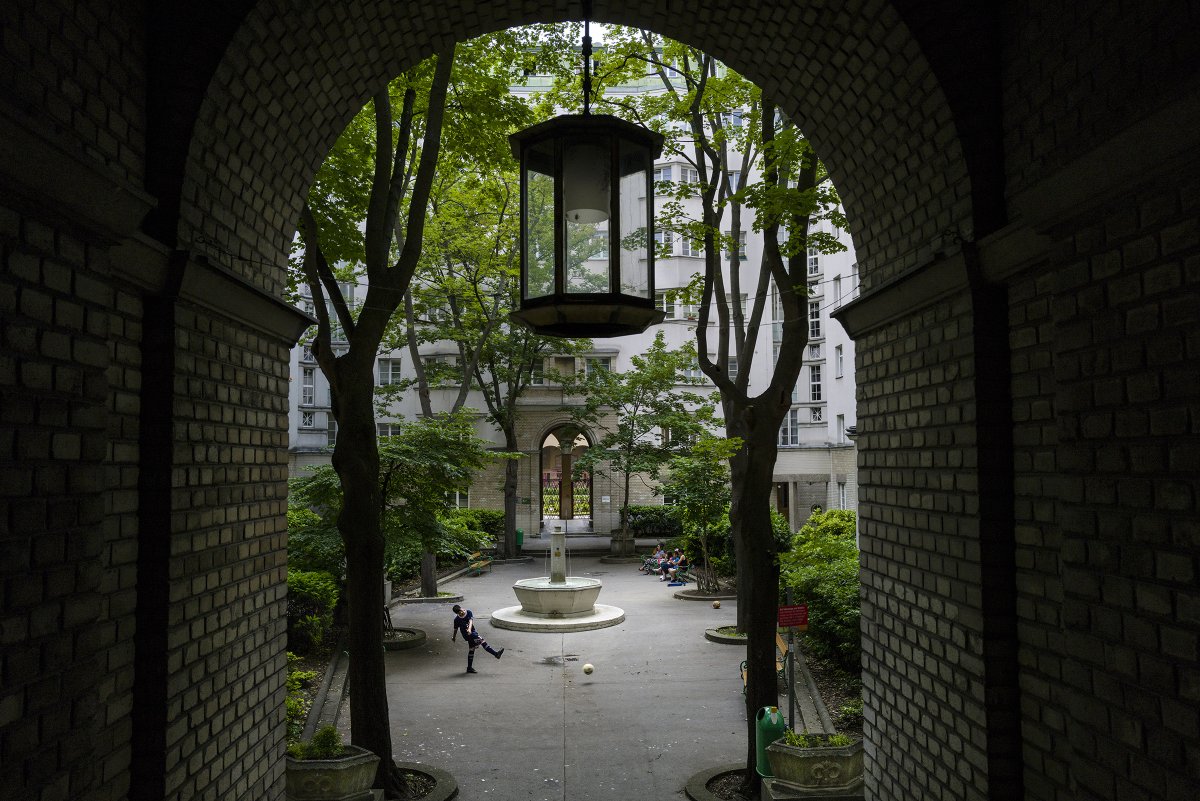
IN-SIGHTS presents another contribution from UBC Professor Condon, published here with his permission.
I have spent thirty years telling anyone who will listen that Vienna solved the housing question a hundred years ago and we still refuse to copy the homework. This week’s collapse of Vancouver’s half-baked 20-storey social-housing amendments is only the latest proof that we are determined to keep failing in the most expensive way rather than succeed in the proven way.
The tale of the tape shown below.
Vienna did three things that Vancouver refuses to do:
They took land speculation off the table. Between 1919 and 1934 the city taxed the daylights out of large landowners, bought huge tracts at pre-boom prices, and has never sold them back. Today, the City of Vienna owns enough land to house another 400,000 people without touching a single private parcel.
They invented the limited-profit housing association (Gemeinnützige Bauvereinigungen). These entities can borrow at municipal bond rates, pay no dividend above a capped 3–4 %, and are required to recycle every euro of profit into new units. Most developers build non market housing, not market housing.
They kept the heights humane.
Walk through Leopoldstadt or Favoriten today: the famous Gemeindebauten (municipal blocks) from the 1920s are five to seven storeys, built around generous courtyards with kindergartens, libraries, and laundries. Even brand-new social projects along the Gürtel rarely exceed ten storeys. Nobody is slamming 20-storey towers into 1910 heritage streets and pretending it is “progressive.”
Vancouver’s defeated amendments this week were the photographic negative of the Vienna model: their broader proposals to upzone most of the city without taxing the land lift proposed to hand speculative windfalls to private owners while hoping non-profits could somehow outbid them for the same city inflated sites, and they did it by threatening 20-storey buildings in quiet, leafy streets. No wonder residents revolted.
If Councillor Boyle’s original 2021 motion (the one I praised) had been paired with Vienna-style tools — a city land bank, exclusive density rights for non-profits, and a hard cap on private profit — we could have built thousands of non-market homes by now without a single 20-storey tower.
Instead we keep proving that the definition of insanity is doing the same market-led, speculation-fueled experiment and expecting a different result.
Vienna has shown for a century that you can densify gently, capture uplift for the commons, and still have a city of courtyards, streetcars, and rents that haven’t gone up in real terms since the 1970s.
We could copy that model tomorrow. All that’s missing is the political will to tell the landowners and luxury developers that their century-long jackpot is over.
Until we do, every new upzoning plan — no matter how boldly it is marketed — will end up exactly like this week’s: defeated, deservedly, by furious residents who know they are being asked to surrender their neighbourhoods so that someone else can get rich.
| ISSUE | VIENNA (RED VIENNA → TODAY | VANCOUVER 2025 |
| Share of housing that is non-market. | 60% (43% Municipal + 17% Limited-Profit-Co-ops) | 3% (Co-ops + City-owned) |
| Who captures the land-value uplift from upzoning? | 100% captured by the city or limited-profit associations; private speculators locked out. | 90-100% captured by private landowners and developers. |
| Typical new rental tenure in upzoned areas. | 100% social or cost-rental (rents €500-€800/month for a 2-bedroom in 2025. | 90+% market rental or strata condo (average new 2-bedroom rent $3,900/month. |
| Height in traditional low-rise neighbourhoods. | Almost never above 7-8 storeys, new social projects are mid-rise courtyard blocks. | Council just tried (and failed) to impose 20-storey towers on tree-lined streets. |
| Funding mechanisms. | City owns the land bank, leases it at nominal rates to non-profits. Land-value tax funds construction. | City sells or rezones land to the highest bidder. Non-profits can’t compete. |
| Affordability rule. | By law, rent may not exceed operating + debt costs. No profit dividend above 3-4%. | No legal cap. “Affordable” units often priced at 90-100% of market. |
| Wait list for social housing. | ~12,000 households (for a city of 2 million) ~ manageable. | ~18,000 households in Metro Vancouver and growing by ~2,000 per year. |
| Political continuity. | Social Democrats governed 1919-1934, then again 1945-today; policy survives elections. | Every new council reinvents the wheel; 4-year election cycle kills long-term plans. |
| ~ end of Prof. Condon’s article ~ |
A 2022 Politico report stated that living in Vienna’s social housing is an indicator of high-quality urban life, rather than a misfortune. Author Aitor Hernández-Morale tells the story of a young man who rents a one-bedroom apartment for around €330 (C$530) monthly.
His rental agreement has no expiration date, meaning a landlord can’t kick him out or hike up his rent…
“Social housing policies in Vienna have been shaped by the political commitment that housing is a basic right,” Deputy Mayor Kathrin Gaal told POLITICO…
The success of Vienna’s system isn’t only based on the size of the building stock and the reduced rents, but the beauty of the buildings. The homes are attractive enough to make them a draw for the middle class, a factor that has helped prevent the estates from becoming social ghettos.
City residents’ access to quality, affordable housing has helped vault Vienna to the top of the world’s most liveable cities, and made it a model to be emulated…
Elsewhere, worries about public housing arise from several fears and concerns:
- Developers who enjoy influence at City Hall prefer profit-driven projects and would rather build housing units that sell for prices with seven, not six, figures.1
- Reservations arise from historical issues with large, poorly managed projects that led to concentrated poverty and social disorder.
- People fear that large public housing projects are linked to social isolation and high crime rates.
- Neighbouring homeowners worry that introducing public housing will lower their own property values.
- Concerns arise that residents of public housing won’t “fit in,” changing the neighbourhood’s established “character.”
- Negative portrayals in media can amplify these fears, making them seem more widespread and realistic than they often are.
1 In 1972, my wife and I bought our first home in Surrey, a 1,230 square foot, 3-bedroom townhouse built by a company owned by Alvin Narod, one of BC’s most respected developers. We paid $16,900, which in today’s dollars is $125,300. The unit’s 2025 appraisal for property taxes is $651,800.