dailynewsnblog
 Singapore Airlines and Cathay Pacific are two of the world’s best airlines. Not only do they operate under a similar business model in Southeast Asia, but their home countries/cities, Singapore and Hong Kong, are local economic competitors. Both airlines represent their home cities and have become famous for their incredible onboard experience and inflight service. Today, we will compare the two to explore which of the two offers the better business class. This will primarily focus on the hard product, given that an airline’s soft product is more variable.
Singapore Airlines is based out of Singapore Changi Airport, while Cathay Pacific’s operations are based out of Hong Kong International Airport. Cathay Pacific is the larger of the two airlines by fleet size, consisting of 159 aircraft made up of the Airbus A321neo, Airbus A330-300, Airbus A350-900, Airbus A350-1000, Boeing 777-300, and Boeing 777-300ER. Singapore Airlines operates 144 passenger aircraft, consisting of the Airbus A350-900, Airbus A350-900ULR, Airbus A380-800, Boeing 737 MAX 8, Boeing 777-300ER, and Boeing 787-10.
The Ground Experience: A Slight Edge For Cathay Pacific

Before setting foot on an aircraft, business class passengers on virtually every airline are permitted to enter a lounge. Both Singapore Airlines and Cathay Pacific operate two of the world’s best business class lounges, but of the two, Cathay Pacific’s “The Pier, Business” lounge edges ahead. The Pier is simply larger and features more amenities than the SilverKris lounge at Changi, and it features unique concepts unmatched by virtually any other business class lounge in the world.
Perhaps the unique aspect of The Pier is the dining. Rather than offering a buffet and a restaurant area like other top lounges, Cathay Pacific has created five main dining areas. The Food Hall is a market-style area that features a wide variety of Western-style meal options. The famous Noodle Bar serves made-to-order Hong Kong local classics. The lounge naturally includes a bar area, but it also features the Tea House and the Coffee Cart. In addition, The Pier offers passengers a wellness area and a plethora of seating, rest, and work areas.
The SilverKris lounge is large and seldom feels crowded. Singapore Airlines offers extensive dining options, and the SilverKris lounge is also renowned for the quality of its meals. In addition, the SilverKris lounge offers guests a wide variety of seating options, plentiful work areas, and relaxation pods. Both lounges are exceptional, but Cathay Pacific’s The Pier, Business is more innovative. In a recent list of the world’s best business class lounges covered by Simple Flying, the SilverKris lounge was ranked seventh, while The Pier, Business was placed at the fifth position.
Narrowbody Business Class: Singapore Airlines

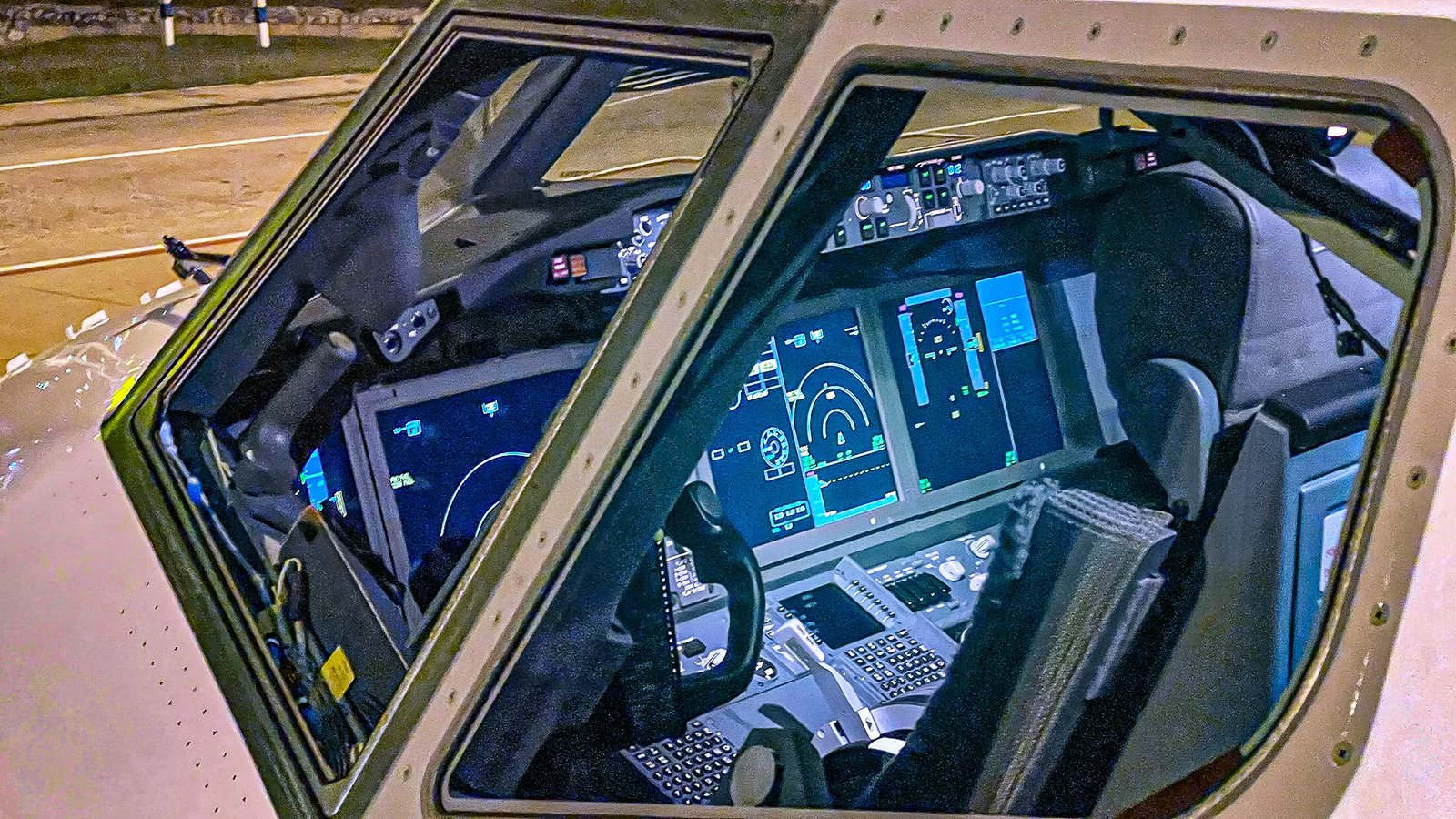
Cathay Pacific operates 16 Airbus A321neo aircraft with an additional 14 on order, while Singapore Airlines operates 19 Boeing 737 MAX 8 aircraft with another ten on order. Data from aeroLOPA shows that Cathay Pacific installs 12 business class seats on its A321neos, while Singapore Airlines installs ten business class seats on its 737 MAX 8s. Naturally, these planes feature different interiors than their widebody aircraft, and when comparing these seats, Singapore Airlines is the clear winner.
Cathay Pacific uses a modified version of the Collins Aerospace Air Rest seat. This is a hardshell recliner seat configured in a four-abreast layout. The truly impressive aspect of these seats is the technology, as Cathay Pacific offers large 4K ultra-HD screens with Bluetooth pairing, along with universal AC, USB-A, and USB-C power ports. In addition, the hardshell concept means that a passenger reclining their seat in front of you doesn’t reduce personal space.
|
Airline |
Aircraft |
Business |
Economy |
Total |
|---|---|---|---|---|
|
Cathay Pacific |
Airbus A321neo |
12 (Collins Air Rest) |
190 (HAECO Vector) |
202 |
|
Singapore Airlines |
Boeing 737 MAX 8 |
10 Thompson Vantage) |
144 (Collins Meridian) |
154 |
Singapore Airlines’ tech isn’t as impressive on the 737 MAX 8 (fewer charging options, an older screen), but the carrier takes the win because these planes feature the Thompson Vantage. This is a fully flat seat commonly used by other airlines for long-distance narrowbody flights (such as  Aer Lingus with its Airbus A321XLRs), yet this aircraft is used for regional routes. The seat layout also alternates between four-abreast and two-abreast, whereas every business class seat on Cathay Pacific’s A321neo is four-abreast.

5 Superior Premium Economy Seats You Can Book Today
Premium economy offers elevated amenities without the business-class price tag.
Widebody Regional Business Class: Singapore Airlines

Because of the size of their short-haul networks and the dynamics of the airline industry in Asia, both Cathay Pacific and Singapore Airlines operate large fleets of widebodies configured with a different business class product for shorter routes. Cathay Pacific uses the Boeing 777-300 and subfleets of the Airbus A330-300, while Singapore Airlines uses the Boeing 787-10 and a subfleet of the Airbus A350-900 for this purpose.
Cathay Pacific uses a variety of seat models for regional business class, though all are ultimately hardshell recliner seats. The hardshell concept has advantages and disadvantages, and is a relatively divisive topic in the world of airline interiors. What remains true is that Cathay Pacific’s recliner seats offer incredible legroom, even though space is reduced when you recline your seat. These seats are configured six-abreast on the Airbus A330 and seven-abreast on the Boeing 777-300, and they’re ultimately older than the seats on the Airbus A321neo with worse technology.
|
Airline |
Aircraft |
Regional Business Class Layout |
|---|---|---|
|
Cathay Pacific |
Airbus A330-300 |
2-2-2 |
|
Boeing 777-300 |
2-3-2 |
|
|
Singapore Airlines |
Airbus A350-900 |
1-2-1 |
|
Boeing 787-10 |
1-2-1 |
This area is another where Singapore Airlines shines. Singapore Airlines installs the Stelia Symphony on its regional A350s and its Boeing 787s. This is a fully flat seat arranged in a staggered configuration, and every seat has direct aisle access, making for an overall superior experience to Cathay Pacific’s regional business class in virtually every way. These seats also naturally feature more privacy than Cathay Pacific’s recliners, and they’re far more modern with superior technology.
Long Haul Business Class: A Tie

Cathay Pacific primarily uses the Safran Cirrus II for long-haul business class. It installs this seat on select Airbus A330-300s, all Airbus A350-900s and A350-1000s, as well as most Boeing 777-300ERs. Singapore Airlines, meanwhile, uses a bespoke seat from Jamco for long-haul business class. It installs this seat on most Airbus A350-900s and all A350-900ULRs, along with all Boeing 777-300ERs. Meanwhile, its Airbus A380s feature an updated version of this seat.
The Safran Cirrus II is a reverse herringbone seat that has essentially become the standard for the type. These seats are exceptionally private, and essentially every seat is identical to the others. The Singapore Airlines Jamco seat, meanwhile, is exceptionally wide while also being spacious, and is one of the unique business class seats in the world. Despite their age (having debuted in 2013 on the 777), they remain world-class.
The flaw is that the seat has to be flipped over to be used as a bed, and it features a small footwell on the side, making sleeping uncomfortable for some passengers. The updated variant of the Airbus A380 comes with updated technology and more privacy, while also being able to recline into bed mode. However, it still features a small footwell. The enormous Jamco seats on Singapore Airlines are better for flying during the day, but if you’re looking to sleep, Cathay Pacific is the better option.

The Most Spacious Widebody Business Class Seats You Can Book Today
Making use of the Skytrax World’s Best Business Class Airlines 2025 award rankings, this article introduces five roomy seats.
Next Generation Business Class: Cathay Pacific By Default

In 2024, Cathay Pacific debuted Aria Suites, its next-generation business class seat. It’s based on the Collins Elements, a reverse herringbone seat. The basic concept is the same as its prior business class seats, but what sets the Aria Suites apart is the addition of a privacy door and a new 24-inch (60.96 centimeter) 4K UHD screen. These seats also feature four ways to charge devices and additional storage. Cathay Pacific originally intended to debut these seats on the Boeing 777-9, but program delays led the carrier to begin installing them on existing Boeing 777-300ER aircraft instead.
The Cathay Pacific Aria Suite is exceptional, but what ultimately gives it the edge in this area is that Singapore Airlines has yet to begin selling its own next-generation business class seat. The airline teased these new seats in 2024 with a brief video, showcasing a privacy door and a seat that appeared to be in a staggered layout. However, these seats aren’t expected to debut until 2026 when Singapore Airlines begins retrofitting its Airbus A350-900s. They will be installed on the long-haul A350-900 fleet, the A350-900ULR, and the Boeing 777-9.
It remains to be seen how they compare to Aria Suites, which, for now, is the best seat offered by either airline. Otherwise, the long-haul business class seats offered by both carriers have their own advantages and disadvantages, while Singapore Airlines offers a superior regional business class experience. Meanwhile, Cathay Pacific edges out Singapore Airlines when it comes to the ground experience.