dailynewsnblog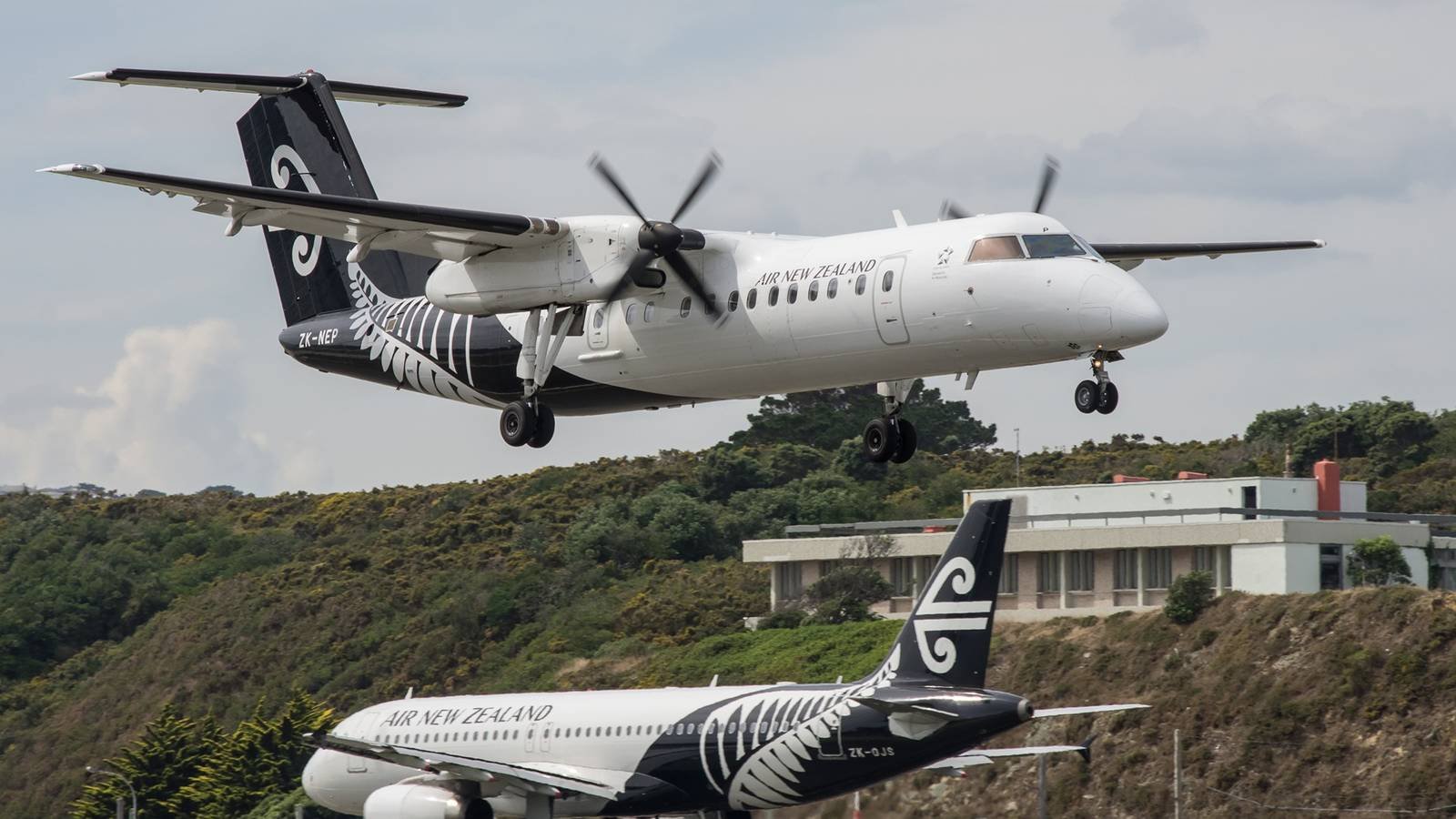
Two aircraft came within seconds of a mid-air collision, the New Zealand Transport Accident Investigation Commission (TAIC) has found. This near-miss involved two aircraft: an Air New Zealand Q-300 and a Beech Duchess, the latter operated by a local flying school.
The commission noted that the near-miss came down to several failures in the way the airspace in this South Pacific country is managed. The close call occurred in the skies above the Northland city of Whangarei Airport, where the airspace has not been reviewed in more than a decade.
A Close Call

The report published by RNZ identifies that on Monday, August 28, 2023, an Air New Zealand Q300 flight departed from Whangarei Airport (WRE) bound for Auckland International Airport (AKL). There were 40 passengers onboard, an 80% occupancy for the 50-seater aircraft. As the aircraft had departed, it was destined for the country’s largest airport, Auckland. At the same time, a flying school aircraft was flying from Ardmore to Whangarei, following a similar flight paths.
The Q-300 had been operating at approximately 6,000 feet when the Beech Duchess descended to the same altitude in front of the commercial airplane. The Air New Zealand crew was alerted to a potential collision through the aircraft’s airbonre collision avoidance system, and the flight was given clearance to climb to 8,000 feet.
The two planes were just 41 seconds apart, or 4.9 miles (eight kilometers) apart at the closest point, traveling at 434 miles (700 kilometers) for their closing speed (how it is calculated how quickly two objects are approaching one another).
An Investigation Was Opened

Following the incident, the TAIC launched an investigation into the near-miss, which identified that the controller and flight service officer had not provided sufficient timely traffic information, and subsequently put both flights into uncontrolled airspace. Recurring concern had been raised by previous pilots and the airport operators, but the last review for the region’s airspace had not been undertaken since 2014.
This resulted in both airplanes operating within the clouds, and unable to sight one another, this led to the potential head on collission, and saw the Beech in a vulnerable position where it was left to coordinate its own avoidance. Further investigation noted that there is a long-standing review needed into the design of the Northland sector airspace.
Additionally, the review found that there was no responsible agency that was mandated to administer the ongoing review of national airspaces and identify any existing or emerging risks that could lead to another near-miss event. The Civil Aviation Authority has since been working with airspace stakeholders in Whangarei to work on safety improvements. The CAA is also set to undertake reviews of uncontrolled airspaces across the country, including Timaru, Hokitika, Whakatane, and the Kapiti Coast.

Air New Zealand Airbus A320 Mid-Flight Engine Loss Was Caused By A Damaged Cockpit Switch
Several other shutdown events have been linked to the same component defect.
Air New Zealand Regional Aircraft Fleet

Air New Zealand operates two different turboprop aircraft to service the many towns and cities that require non-stop flights to the country’s three largest cities (  Auckland Airport, Wellington Airport, and Christchurch). These are provided by the 29 ATR 72-600 aircraft, which have an average age of 7.1 years, alongside an additional 23 Q300 aircraft (with a much older average age of 17.2 years). Other aircraft in the wider Air NZ fleet include the Boeing 777-300ER, 787, Airbus A320ceo (domestic operations), and A320 and A321neo.
These airpanes are perfect due to the unique landscape and dispersed population across the country. The turbo-props are fuel-efficient and ideal to operate shorter regional routes, and service smaller airports that can face adverse weather conditions. These flights provide connectivity not only to the country’s three largest cities, but also feed into the airline’s wider domestic jet network and international operations.
The turboprops are the network’s backbone, and operate to all 20 of Air New Zealand domestic destinations, stretching from as far north as the Bay of Islands (KKE), to as far south as Invercargill (IVC) – the most southerly airport operated in the commonwealth. For Air New Zealand, these airplanes offer the right balance for operational cost, versatility, and capacity.