dailynewsnblog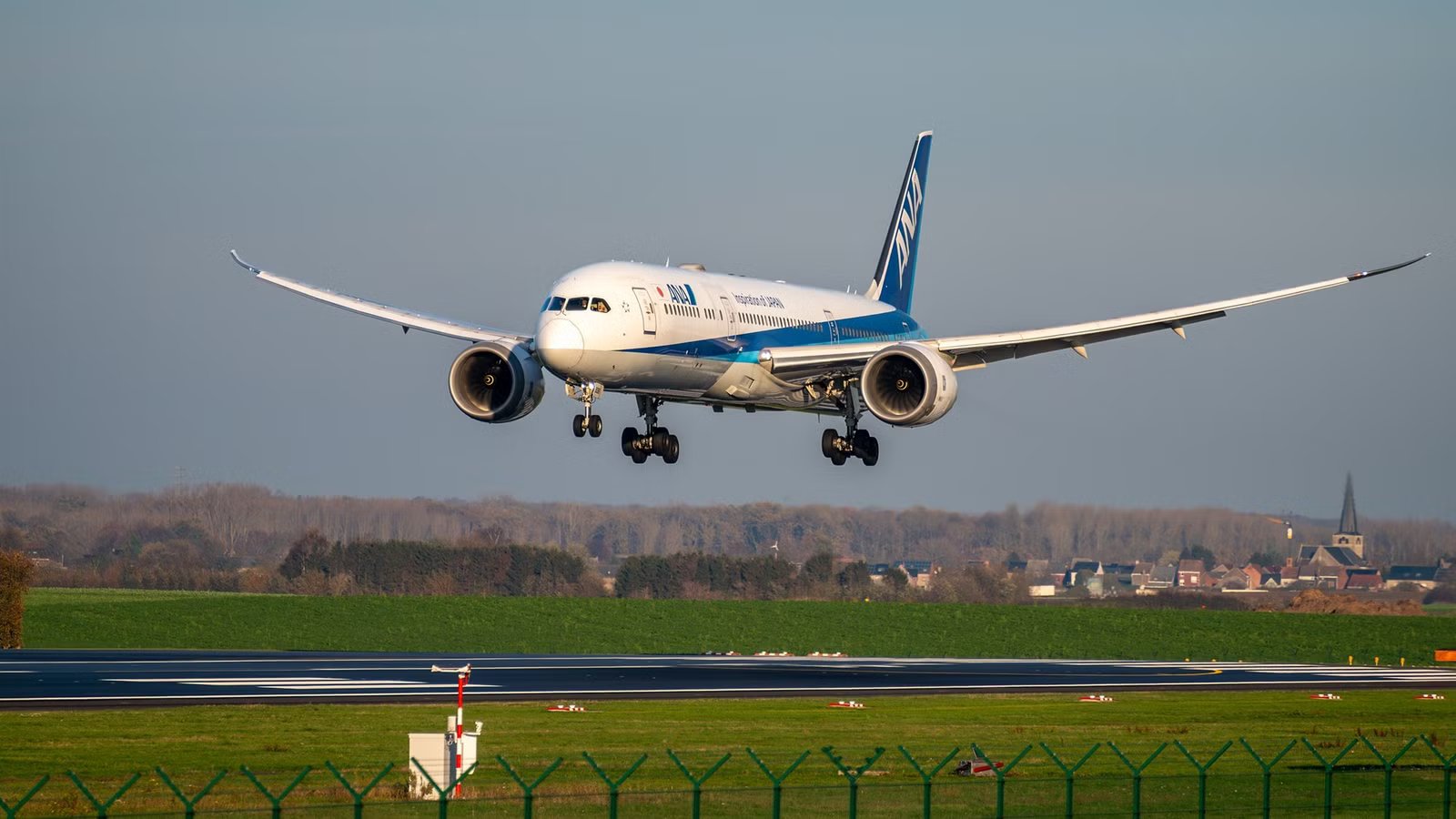
The Boeing 787 Dreamliner is one of the most popular widebody airliners ever made, with over 2,200 orders ever since the type was launched in 2004. In 2025, the 787 outsold all Airbus widebodies combined, with the 787-9 variant being the star of the market, while the 787-10 is also gaining traction. The 787-8 was the initial variant to launch and as such, makes up a sizeable chunk of 787s in service, although this variant is seldom ordered today.
Each variant of the 787 Dreamliner captures a different niche of the widebody market, but the aircraft as a whole sits at the sweet spot of the widebody market. The Airbus A330neo is similarly sized but burns more fuel on longer routes, while the Airbus A350 and Boeing 777X are larger. As such, the 787 is by far the most popular widebody airliner on sale. But despite this, sales figures are far from evenly distributed between variants, and very few airlines operate all three variants of the 787. Using data from ch-aviation, these are the only carriers that use all three Dreamliner variants.
Overview Of The Boeing 787 Dreamliner

The Boeing 787 was originally designed as the base 787-8, the larger and more capable 787-9, along with the regional 787-3, which was later cancelled. The Dreamliner is equipped with the General Electric GEnx-1B or the Rolls-Royce Trent 1000. Sizewise, the 787-8 is most comparable to the Airbus A330-200 and succeeds the Boeing 767-400ER regarding passenger capacity, while the 787-9 is sized similarly to the Airbus A330-300 but with significantly longer range.
The 787-8 features a Maximum Takeoff Weight (MTOW) of 227.9 tons. The 787-9 not only comes with an increased fuselage length, but also has a strengthened structure to support a MTOW of 254.7 tons, which gives the 787-9 a brochure range of 7,565 NM (14,010 km). Qantas and Air New Zealand routinely operate the Dreamliner on flights even longer, and its range exceeds that of the 787-8. The 787-8 is smaller, but the 787-9 is more capable and more economical to operate, eroding the market for the 787-8.
The 787-10 was launched later in 2013. It’s a simple stretch of the 787-9, and it has a passenger capacity greater than the Boeing 777-200ER, albeit with shorter range. It has incredibly low operating costs, but is less capable than many other widebodies on sale today. As such, it’s commonly used on short and medium-haul routes as an efficient people-mover, although it also routinely operates shorter transpacific routes and flights from the US west coast to Europe.
Japan’s All Nippon Airways

All Nippon Airways (ANA) was the launch customer for the Boeing 787 in 2011, and operates a fleet of 87 Dreamliners. This is made up of 33 787-8s, 44 787-9s, and 10 787-10s. The 787 is the backbone of ANA’s widebody fleet, with each version featuring various layouts for domestic and international flights. The domestic Dreamliners feature a progressive increase in capacity in all classes, with new 787-9 and 787-10 deliveries replacing ANA’s aging fleet of Boeing 777-200s and 777-300s.
The international 787-8s are used for low-demand destinations within Asia and to Europe. These include cities such as Vienna, Stockholm, and Jakarta. The 787-10 in its international layout is a natural upgauge from the 787-8, but more leisure-focused, and is utilized on higher demand routes within Asia (such as Ho Chi Minh or Bangkok), but not to Europe, given its more limited range. However, the Boeing 787-9 in its international configuration is used as a premium aircraft, with a larger business class cabin than the 787-10, and also operates routes to North America.
|
Aircraft (Data from aeroLOPA) |
Business |
Premium Economy |
Economy |
Total Seats |
|---|---|---|---|---|
|
Boeing 787-8 (788) |
32 |
14 |
138 |
184 |
|
Boeing 787-8 (78M) |
42 |
N/A |
198 |
240 |
|
Boeing 787-8 (78P/Domestic) |
12 |
N/A |
323 |
335 |
|
Boeing 787-9 (789) |
48 |
21 |
146 |
215 |
|
Boeing 787-9 (789) |
40 |
14 |
192 |
246 |
|
Boeing 787-9 (789/The Room FX) |
48 |
21 |
137 |
206 |
|
Boeing 787-9 (789/Domestic) |
18 |
N/A |
377 |
395 |
|
Boeing 787-9 (78G/Domestic) |
28 |
N/A |
347 |
375 |
|
Boeing 787-10 (781) |
38 |
21 |
235 |
294 |
|
Boeing 787-10 (78K/Domestic) |
28 |
N/A |
401 |
429 |
Data from aeroLOPA shows that ANA installs either 32 or 42 business class seats on its international 787-8 aircraft. The 787-10 in an international configuration comes with 38 business class seats. The international 787-9s, however, come with either 40 or 48 business class seats, which is significantly more than the 787-8 or 787-10. The 787-9s with 48 business class seats are deployed on longer routes to premium destinations in Europe and North America, almost serving as a smaller version of the flagship Boeing 777-300ER.

All Nippon Airways Adds Flights To 3 More European Airports In 2024
The carrier now plans to serve nine European airports, a record high.
British Airways Out of London-Heathrow

 British Airways bases all 42 Boeing 787s at London Heathrow Airport. The fleet is split between 12 787-8s, 18 787-9s, and 12 787-10s. While the 787-9 is currently the most common Dreamliner in British Airways’ fleet, the 787-10 will become far more prevalent in the future. The carrier currently has 38 787-10s on order, meaning that there will be 50 787-10s in the airline’s fleet in the future, and British Airways also holds 16 options. British Airways is also the only 787 operator within International Airlines Group (IAG).
The 787-8s are used to low-demand destinations, featuring fewer seats in every cabin and three service levels (business, premium economy, economy). Data from aeroLOPA shows that the 787-9 comes with eight first class seats, additional business and premium economy seats, but slightly fewer economy seats. The 787-10 also has eight first class seats, along with more business class seats and a larger economy cabin, although it does have slightly fewer premium economy seats than the 787-8 or 787-9 subfleets with Club Suites.
While the 787-8s are used to serve smaller cities, the other two Dreamliner variants feature far more premium configurations. The 787-9s are still used to cities with less overall demand but stronger premium demand, especially destinations with demand for first class service. The 787-10s, meanwhile, are used alongside other aircraft to some of British Airways’ most popular destinations. This includes cities like Boston, New York-JFK, Dubai, Doha, and Chicago O’Hare.
United Airlines, The 787’s Biggest Fan

 United Airlines is the largest customer for the Boeing 787. It already operates 76 examples, and has an additional 145 on order. United bases the Dreamliner in all of its seven hubs in the continental US (Newark, Washington-Dulles, Chicago O’Hare, Houston, Denver, San Francisco, Los Angeles), and the 787 is the carrier’s second-largest widebody fleet (after the Boeing 777). The airline is the world’s second-largest 787 operator, and it currently flies 12 787-8s, 45 787-9s, and 21 787-10s.
The 787-8s feature fewer Polaris seats than any other international United widebody, with only 28 seats. The 787-9 features 48 Polaris seats, but aeroLOPA shows that the 787-10 is configured with only 44 Polaris seats. The 787-8 is configured relatively densely compared to the rest of United’s fleet, and it’s used for flights to European destinations from its Chicago and Washington hubs, as well as services to Africa. The 787-9, meanwhile, is United’s bread and butter aircraft.
This variant is deployed on a wide variety of routes, ranging from services between the US West Coast and Europe all the way to the carrier’s longest flights, such as San Francisco to Singapore and Houston to Sydney. The 787-10, meanwhile, primarily serves as more of a “people mover” given its capacity of 318 passengers, and is often used to serve major destinations in Europe. However, United does stretch the legs of the 787-10, and even operates the world’s longest scheduled 787-10 service from Chicago-O’Hare to Tokyo-Haneda.

All White: Alaska Airlines Receives 1st Boeing 787-9 Dreamliner At LAX
A new jet arrives as a clean slate for the growing carrier.
The Roles Of Each Variant In The Boeing 787 Family

Worldwide, only three airlines operate the full range of the 787 family. Korean Air (which flies the 787-9 and 787-10) is technically also a member of this group with a sole 787-8, but this aircraft is configured in an executive layout and exclusively used on behalf of Samsung. As a whole, however, airlines either use both the 787-8 and the 787-9, the 787-9 along wth the 787-10, or only one of these three variants.
The 787-9 is by far the most ordered Dreamliner variant. Compared to the 787-8, it has a longer range, more passenger capacity, and a larger cargo hold. While there is less risk in operating a smaller aircraft, the 787-9’s per-seat costs are significantly lower, which reduces the need to sell fewer seats since the extra seats come at only a marginal premium for airlines. Most 787-8 operators were early customers who acquired the aircraft before the 787-9 entered service, with American Airlines being perhaps the most notable exception.
|
Variant |
Deliveries |
Orders |
|---|---|---|
|
787-8 |
397 |
431 |
|
787-9 |
676 |
1,375 |
|
787-10 |
124 |
396 |
|
Total |
1,198 |
2,202 |
The 787-10 only entered service in 2018 and is the newest 787 variant, meaning that there are relatively few in service. In addition, the 787-10 has reduced range, limiting its flexibility. However, Boeing has recently bumped the MTOW of the 787-9 (259.2T) and the 787-10 (260.4T), which will boost the range of both airliners and increase demand for the 787-10. Air Canada, which already flies the 787-8 and 787-9, holds 18 orders for the 787-10, and other 787 operators are sure to order 787-10 as well.