dailynewsnblog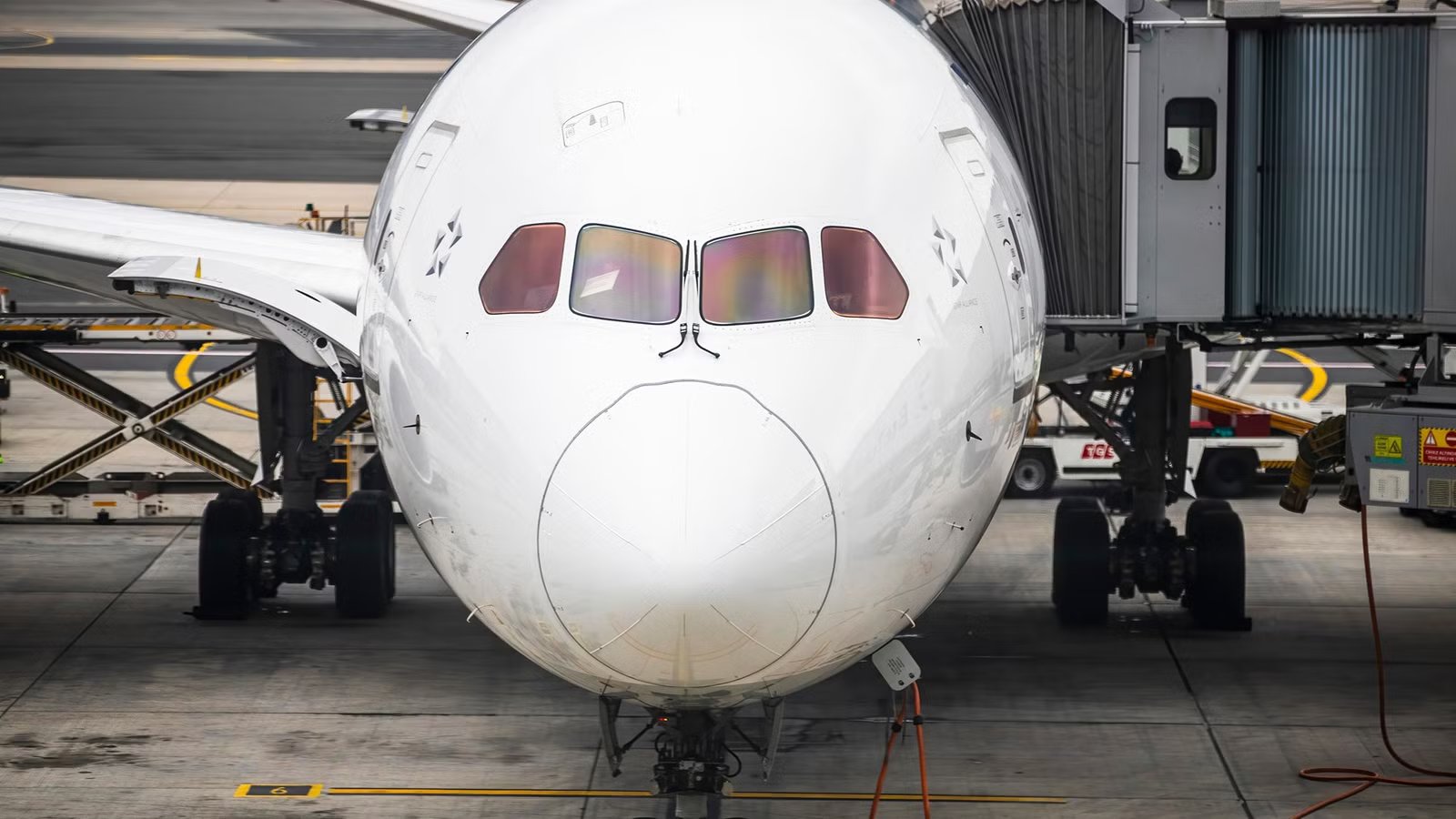
 Alaska Airlines’ first Boeing 787 Dreamliner arrived at Los Angeles International Airport (LAX) on Saturday, December 6. The brand-new widebody touched down all dressed in white, a blank slate, ready for its new livery after completing the ferry flight direct from the factory.
Departing Charleston International Airport (CHS) earlier on Saturday morning, the coast-to-coast transit took just under five hours, according to FlightAware. The aircraft is slated to sport the new “Global Livery” sometime in January 2026. Earlier this year, Alaska announced its growing 787 fleet would all wear the redesigned color scheme by next spring.
The Dreamliner Lights The Way

With the addition of tail number N784HA, the Alaska Dreamliner fleet receives the first 787 that was not acquired as part of the Hawaiian Airlines merger. The 787-9 was originally ordered by Hawaiian, as Planespotters.net data shows, but will wear the new “Aurora Livery” instead. All the widebodies in the newly combined fleet are being reorganized and refitted to serve the carrier’s evolving strategy of international expansion.
The new Alaska Airlines paint scheme is meant to resemble the Aurora Borealis, or the Northern Lights, which are one of the most famous natural phenomena of Alaska. As the airline has been rapidly growing in recent years, especially with the Hawaiian Airlines merger at the end of 2024, the new livery is meant to provide a fresh look that represents the airline’s identity on the tarmac at overseas airfields.
Andrew Harrison, Alaska Airlines’ Chief Commercial Officer, commented in an August press release covering international route growth, saying:
“Our new 787 exterior embodies Alaska’s transition to a global airline with beauty, grace and a nod to our heritage… we’re eager for more and more travelers to recognize our new livery.”
A New Dawn For Alaska Airlines

The recent growth into international, long-haul flying is accompanied by more than just a different paint job. Alaska has also converted some of its Dreamliner orders from 787-9 to the larger 787-10 variant, according to Reuters. The 787 jets that are now part of Alaska, following the integration of the Hawaiian fleet, are migrating to Seattle-Tacoma International (SEA or Sea-Tac), where they will begin serving more international destinations.
In the spring of 2026, Alaska will offer two direct, non-stop routes from Sea-Tac, one to London Heathrow (LHR) and one to Reykjavik International (KEF) in Iceland. The 787 fleet is expected to grow up to as many as 17 aircraft, all serving the global gateway in Seattle. The latest destinations bring the total to five international destinations from Sea-Tac, and Alaska plans to bring that number up to twelve by 2030.
The London route will be a daily, year-round service. Alaska reports that over 400 passengers make the trek across North America and the Atlantic Ocean every day. Collaboration with American Airlines and British Airways is helping to establish Alaska’s European gateway in the capital of the United Kingdom. And beyond the Pacific Northwest, SeaTac offers the perfect stepping stone for European flyers to make their way to other West Coast destinations, including Hawaii and Alaska.

Why Is Alaska Airlines Discontinuing 16 Routes In 2026?
The discontinuations should be seen as a reshuffle rather than cuts to capacity.
Flying On A Dream

On board the Dreamliners, there will be 34 enclosed, business class suites with fully lie-flat seats. Each suite offers a privacy door, an 18-inch 4K seatback screen, wireless charging, and direct aisle access. The 787-9 features a three-class cabin configuration with a total of 300 seats across Business Class, Premium Class, and Main Cabin.
This premium class cabin has 79 extra-legroom seats in a 3-3-3 configuration. While not a separate premium economy seat type, seats have more legroom, more recline, a larger seatback screen than the main cabin, and more service perks, including complimentary cocktails.
The economy cabin has 187 seats, also in 3-3-3 rows with seatback screens and Bluetooth audio. Seats also have USB-A and USB-C power ports, and complimentary meals on long-haul flights.