dailynewsnblog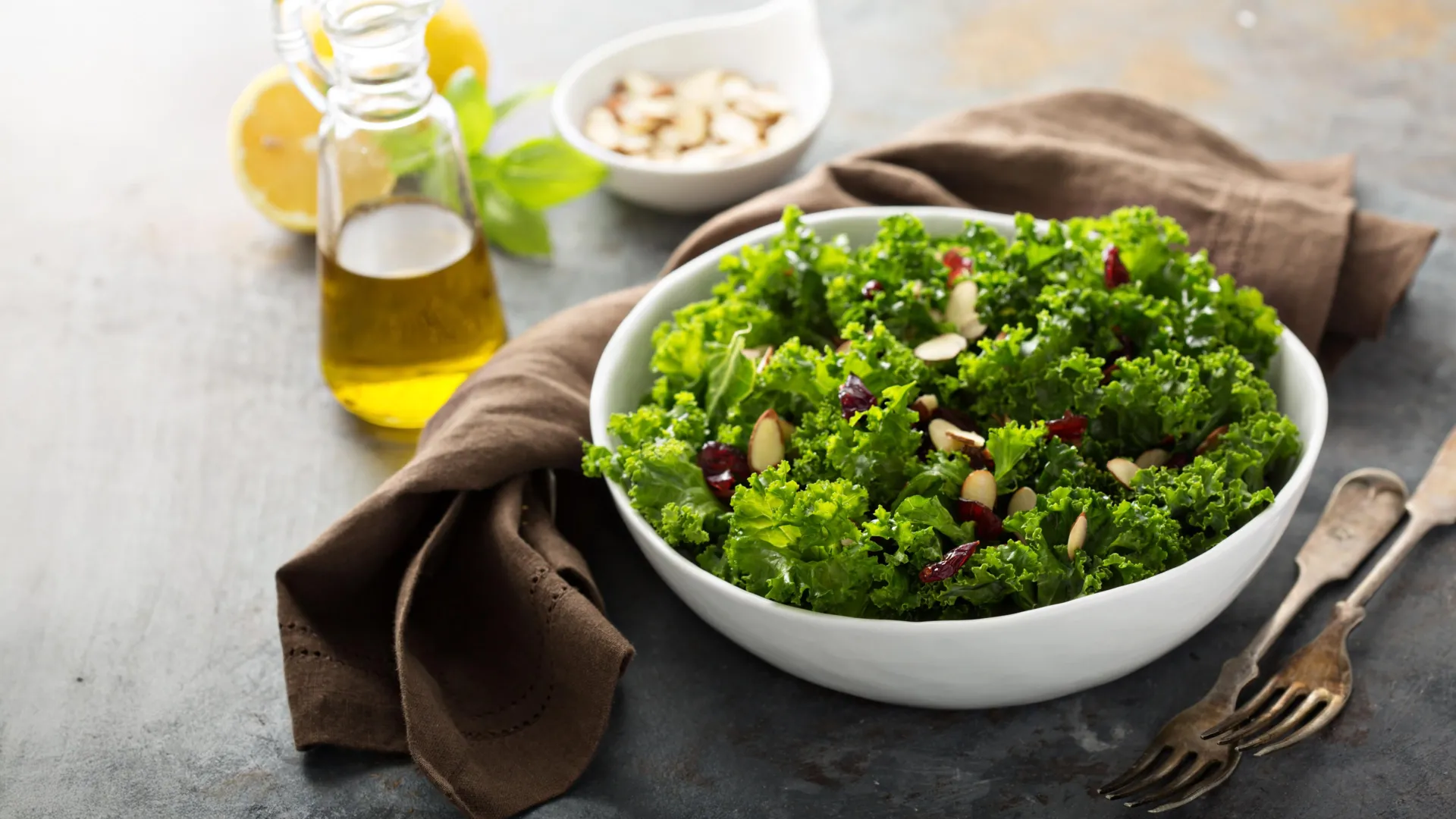
Many people assume a bowl of kale automatically counts as a nutritional powerhouse. However, without the right companion ingredient, that leafy salad may not deliver the benefits you expect.
Fortunately, there is an easy fix.
Researchers at the University of Missouri have identified a simple (and tasty) way to help the body absorb more of kale’s valuable nutrients: using oil-based dressings or sauces. With the right fat source, you can enjoy kale while actually getting more from it.
Oil Helps Release Kale’s Hard-to-Access Nutrients
A study from Mizzou’s College of Agriculture, Food and Natural Resources (CAFNR) found that it makes little difference whether kale is eaten raw or cooked. The key factor that improves nutrient absorption is pairing it with olive oil, mayonnaise or another oil-based dressing. The team is now looking into how nanotechnology-inspired dressings could be designed to boost this effect even further.
“Kale is a nutrient-rich vegetable that contains carotenoids, including lutein, α-carotene and β-carotene, which have beneficial effects on overall health,” Ruojie (Vanessa) Zhang, assistant professor in the Division of Food, Nutrition and Exercise Sciences at CAFNR, said. “The problem is our bodies have a hard time absorbing these nutrients because they are fat-soluble rather than water-soluble.”
Testing Whether Cooking or Special Sauces Improve Absorption
With this challenge in mind, the researchers examined whether cooking kale or using specially formulated dressings/sauces could make carotenoids easier for the body to access. These compounds, along with vitamins C and E and other bioactive plant chemicals in kale, have been associated with stronger immunity, improved vision and lower risk of diseases such as diabetes, heart disease and some cancers.
To test this, the team used a laboratory model that mimics human digestion. They evaluated kale prepared in different ways: raw, cooked, raw or cooked with dressing/sauce, and cooked directly in sauce.
The experiments showed that raw kale on its own resulted in very low carotenoid absorption, and cooking kale slightly reduced absorption even further. The major breakthrough appeared when the researchers added a nanoemulsion-based sauce. In the simulated digestion model, this sauce significantly increased the amount of absorbed carotenoids, whether the kale was raw or cooked. Cooking the kale with the sauce provided the same benefit as adding the sauce after cooking.
A New Strategy for Getting More Nutrition From Vegetables
These results highlight practical, science-backed ways to help the body take in more beneficial nutrients from produce. They also suggest new possibilities for improving everyday meals simply by changing how foods are prepared or seasoned. Zhang hopes future work will lead to innovative dressings and sauces that enhance nutrient absorption not only for kale but for other vegetables as well.
“Our team is committed to advancing food science with the goal of improving human health through the development of innovative foods and technologies,” she said. “We believe impactful science can drive meaningful change in global nutrition and well-being, and we’re excited to contribute to that mission.”
Study Details and Research Team
The study, “Culinary strategies for improving carotenoid bioaccessibility in kale: The role of thermal processing and excipient emulsions,” was published in Food Nutrition.
Co-authors include Dr. Zipei Zhang from Mizzou’s College of Agriculture, Food and Natural Resources; Hangxin Zhu, a doctoral student at Mizzou; and Dr. David Julian McClements from University of Massachusetts, Amherst.