dailynewsnblog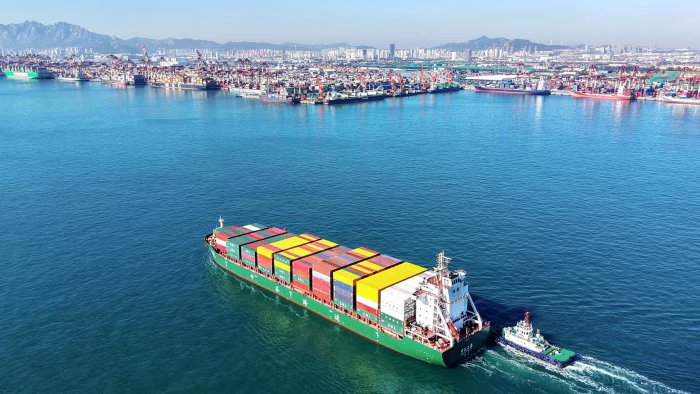
Stay informed with free updates
Simply sign up to the Chinese trade myFT Digest — delivered directly to your inbox.
China’s year-to-date trade surplus in goods has surpassed $1tn for the first time, as exports boom despite US President Donald Trump’s tariff war.
In the first 11 months of this year, China’s trade surplus in dollar terms was $1.076tn, according to data released on Monday by the country’s customs administration, which covers goods but not services.
China’s trade surplus in goods for the full year in 2024 was just shy of $1tn.
The record surplus comes in the wake of a de-escalation in trade tensions between Washington and Beijing, which agreed a yearlong truce in October.
The large gap between exports and imports has drawn criticism from China’s trading partners, with French President Emmanuel Macron pointing to “unbearable” imbalances on a visit to China last week.
China’s exports rose 5.9 per cent in November on a year earlier, while imports added 1.9 per cent, leading to a surplus of $112bn for the month.

Exports to the US have cratered in recent months, and fell 29 per cent in November year on year.
But shipments to other regions, especially south-east Asia, have grown rapidly. Economists believe some of these shipments to south-east Asia, which added 8 per cent last month, are later trans-shipped to the US.
“I think the crux of the matter . . . is that the US hasn’t clamped down on trans-shipments of goods via third-party countries,” said Carlos Casanova, chief Asia economist at UBP.
He added that US demand had been “stable”.
“Because you don’t see a decline in US demand, the region continues to see a surge in exports, and China is benefiting indirectly from that,” he said.
Xi Jinping’s government has relied heavily on exports to drive economic activity amid weak domestic demand and a property slowdown now entering its fifth year.

China was poised to increase its share of global exports to 16.5 per cent by 2030, from 15 per cent now, Morgan Stanley analysts said in a report, adding that they doubted increasing protectionist measures from trading partners could halt this advance.
“Given its dominant position in high-growth emerging sectors like EVs, batteries, and robotics, we believe China will continue to strengthen its position in global manufacturing and trade,” the Morgan Stanley analysts led by chief Asia economist Chetan Ahya wrote.
Data visualisation by Haohsiang Ko in Hong Kong