dailynewsnblog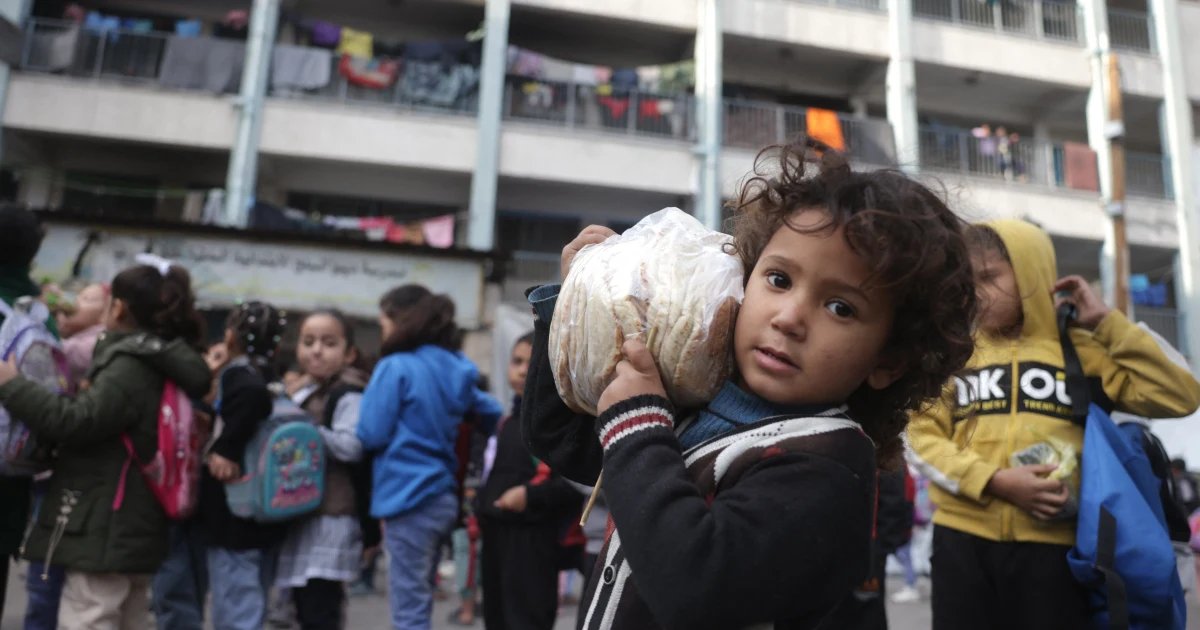
The body of just one Israeli hostage remains in Gaza, nearing the fulfillment of a key plank of President Donald Trump’s 20-point ceasefire plan for the enclave, but major hurdles exist to a planned second phase.
Doubts remain over whether negotiators can overcome those outstanding obstacles, even as they face renewed pressure to advance into phase two — a step intended to prevent any return to the high levels of violence that preceded the ceasefire.
Trump noted last week that phase two would commence “pretty soon,” without giving a more specific timetable. Axios reported on Thursday that the White House is hoping to announce the second phase before Christmas, and unveil the new governance structure for the enclave, citing two U.S. officials and a Western source directly involved in the process.
Phase two of Trump’s plan calls for the establishment of a new governing mechanism in Gaza, the disarmament of Hamas, and the formation of an international stabilization force, known as the ISF, that would take over responsibility from the Israel Defense Forces currently occupying parts of the Gaza Strip.
Qatari Prime Minister Sheikh Mohammed bin Abdulrahman al-Thani, whose country has played a key role in a series of international negotiations, said Saturday that discussions were at a “critical” moment. Mediators were working jointly to push the next phase of the ceasefire forward, he said during a panel at the Doha Forum conference in Qatar.
“A ceasefire cannot be completed unless there is a full withdrawal of Israeli forces, (until) there is stability back in Gaza, people can go in and out, which is not the case today,” he said.
Egypt’s Foreign Minister Badr Abdelatty told the conference that the International Stabilization Force was needed “as soon as possible on the ground,” while Norway’s Foreign Minister Espen Barth Eide said measures must be put in place this month, warning the current ceasefire “cannot hold for many more weeks in its current phase.”
As the international community hopes for progress, the ceasefire’s trajectory so far underscores both its fragile gains and its persistent vulnerabilities.

Since the ceasefire came into effect on 10 October, 20 living hostages and the remains of 27 others have been returned to Israel. The body of the final hostage, Ran Gvili, a 24-year-old police officer killed during Hamas’ Oct. 7, 2023 attack, has yet to be recovered despite a weeks-long search effort. Israeli authorities have steadily released Palestinian prisoners and detainees — both living and dead — as part of the exchange.
Israel has repeatedly said all hostages must be returned before a phase two deal, with Prime Minister Benjamin Netanyahu this week stressing the need for an “intensive and immediate effort” to complete the commitment.
Israel agreed to halt its assault on the Gaza Strip during the ceasefire, but flare-ups and violence have persisted, with Israeli strikes killing more than 350 people since the ceasefire began, taking the death toll in the enclave beyond 70,000, according to Palestinian Health Ministry figures.
The first phase also included a commitment to expand the flow of aid into Gaza, but U.N. experts say the number of trucks permitted to enter has never reached the agreed target of 600 per day.
Israel said Gaza’s Rafah crossing in the south will soon reopen to allow Palestinians to enter Egypt, but it will not reopen the crossing in both directions — another commitment under the deal — until Gvili’s remains are returned.
And as phase one stutters along, analysts warn that phase two presents a host of complex challenges, from security arrangements to competing governance demands, that could slow or even stall the process.
Negotiators are “trying to square circles that simply cannot be squared,” said Dr H.A. Hellyer, a senior associate fellow at the Royal United Services Institute, a defense and security think tank in London.
He wondered whether an international stabilization force could really dismantle Hamas, a target Israel was unable to achieve through its two years of a “brutal” military operation. While Trump’s peace plan stipulates that Hamas will disarm, the group has reasserted control of Gaza during the first phase of the ceasefire and shown no immediate signs of disarmament.
Disarming Hamas through military intervention is “not exactly something that any other power is going to be interested in,” he told NBC News.
And when it comes to Gaza’s governance, Hellyer added, “Trump can create his board of peace,” referring to the group that would sit atop Gaza’s governing structure under Trump’s plan, but “you can’t simply enforce this stuff on the ground without cooperation from the population, unless you just want to turn it into a new type of occupation.”

Turkey’s Foreign Minister Hakan Fidan said on Saturday that negotiations over the Gaza stabilization force remain ongoing, including its mandate and rules of engagement, and that its main objective should be to separate Israelis and Palestinians along the border.
“Thousands of details, questions are in place,” Fidan said. “I think once we deploy ISF, the rest will come.”
But Fawaz Gerges, professor of international relations at the London School of Economics, echoed Hellyer’s concerns, noting that so far, “no state has agreed to support its forces into Gaza and potentially and ultimately get into confrontation with Hamas.”
Gerges also feared that “we will never see the actual implementation of what phase two is supposed to be,” adding it was “an illusion” to call what’s happening in Gaza a ceasefire, “because the Palestinians, particularly civilians, continue to be killed on a daily basis.”
“Even though the humanitarian situation of the Palestinians has improved a bit, it’s still catastrophic,” he said.