dailynewsnblog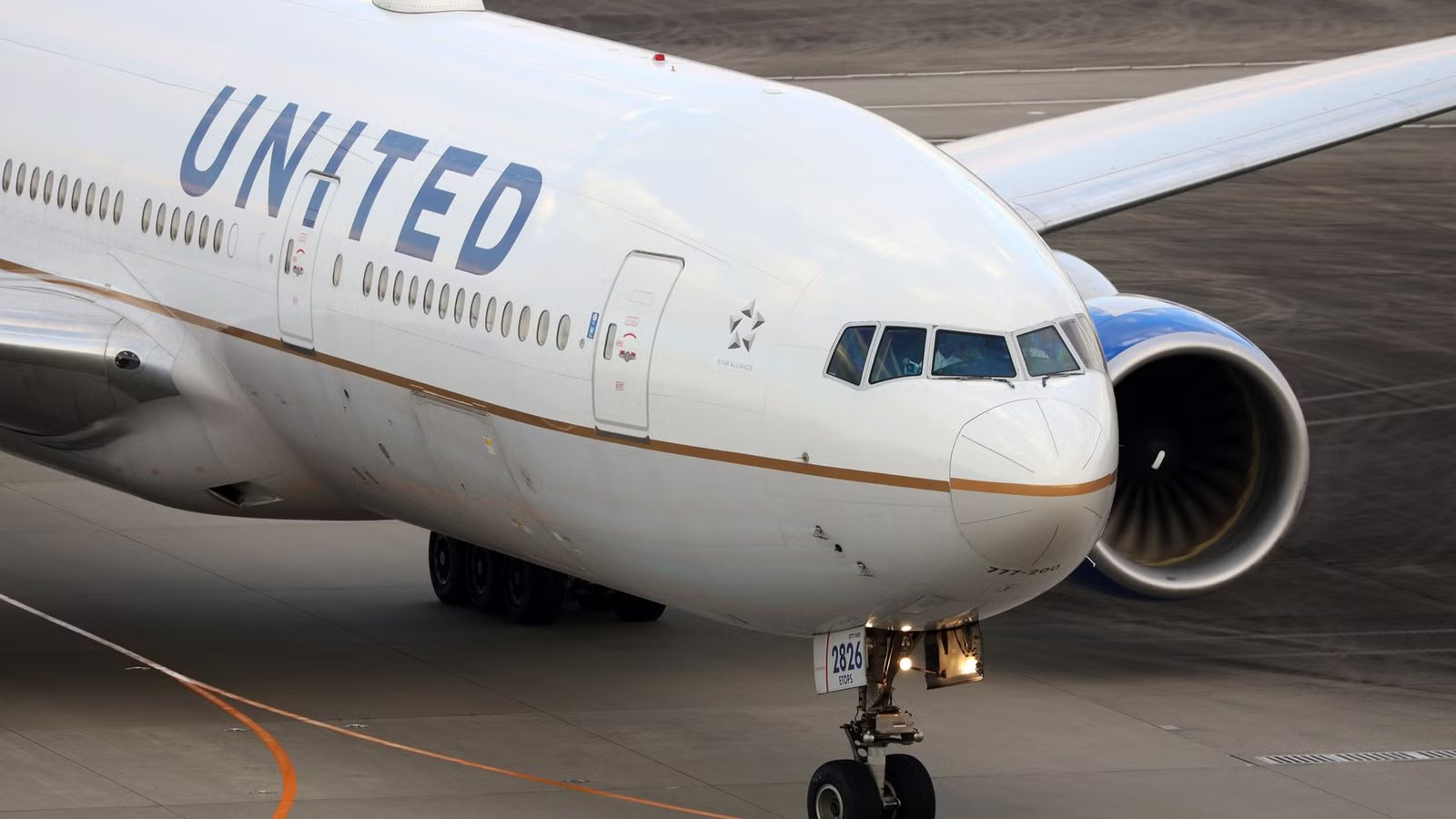
 United Airlines has reportedly grounded one of its Boeing 777-200ER aircraft after it made a diversion to Edinburgh Airport (EDI) due to a burning smell detected on board. The aircraft landed safely, but it has since been removed from service.
According to data from Flightradar24.com, the United Airlines 777-200ER had been operating a flight from London Heathrow Airport (LHR) to San Francisco International Airport (SFO) in the United States.
A Closer Look Into The Diversion

On December 4, 2025, the United Airlines Boeing 777-200ER, registered as N74007, was operating flight UA 949 from London Heathrow Airport (LHR) to San Francisco International Airport (SFO), when the flight crew decided to make an emergency landing at Edinburgh Airport (EDI) due to detected burning smell in the cabin, according to a report by San Francisco Chronicle.
The Boeing 777-200ER departed from LHR at 2:05 PM, carrying 162 passengers and 12 crew members, according to the report. About 90 minutes into the flight, while cruising at 34,000 feet between Scotland and Iceland, the crew transmitted a 7700 squawk code. In an emailed statement to the San Francisco Chronicle, the airline’s spokesperson said:
“United flight 949 safely landed in Edinburgh to address a burning smell. We provided customers with hotel accommodations and rebooked them on other flights to their destinations.”
More About The Boeing 777-200ER

The aircraft involved in the incident is a 26.8-year-old United Airlines 777-200ER widebody equipped with two General Electric GE90 engines. According to ch-aviation data, the aircraft had accumulated 118,307 flight hours and 12,151 flight cycles as of March 31, 2025.
It is worth noting that United Airlines’ Boeing 777-200ER can accommodate a total of 276 passengers in a three-class configuration: 50 in business class, 24 in premium economy, and 202 in economy.
Data from Flightradar24.com indicates that the aircraft has not returned to commercial service since the diversion. Its next scheduled flight is planned for December 7, 2025, operating from San Francisco (SFO) to Tokyo Narita (NRT). The cause of the burning smell has not yet been disclosed. The San Francisco Chronicle report also indicates that the crew reported a fault with a brake temperature sensor.

United Airlines Boeing 777-200ER Grounded After Airframe Vibrations Prompt Diversion To London
A look at the events that led a United 777 to return to its origin and what may have caused it.
Among The Longest-Serving 777s At United

United Airlines operates a substantial widebody fleet. According to ch-aviation data, the Chicago-based carrier has 228 widebody aircraft, including Boeing 767-300ERs, 767-400ERs, 777-200s, 777-200ERs, 777-300ERs, as well as Boeing 787-8, 787-9, and 787-10 Dreamliners. Among these, the Boeing 777-200ER is one of the oldest widebody types in United’s lineup. The airline currently operates 55 of them, with an average age of 25.8 years. Only two other widebody types in the fleet are older on average: the Boeing 767-300ER, at 29.8 years, and the 777-200, at 28.7 years.
As of writing, the youngest aircraft (N77022) is over 15 years old, while the oldest (N787UA) is 29. All aircraft in United Airlines’ fleet were originally delivered to the airline itself or to Continental Airlines before the merger. Given the age of United’s Boeing 777-200ER fleet, it is no surprise that retirement is imminent over the next few years. Per ch-aviation, it is expected that the largest portion of the fleet is to be retired by December 2027, with only the four youngest aircraft having no expected retirement date as of writing.
For years, the Boeing 777-200ER has proven itself as a workhorse for airlines around the world. The aircraft’s combination of range, capacity, and efficiency resulted in a perfect fit to cover the gap between the smaller Boeing 767 and larger Boeing 747. With 55 examples in its fleet, United Airlines is the world’s largest operator of the type.