dailynewsnblog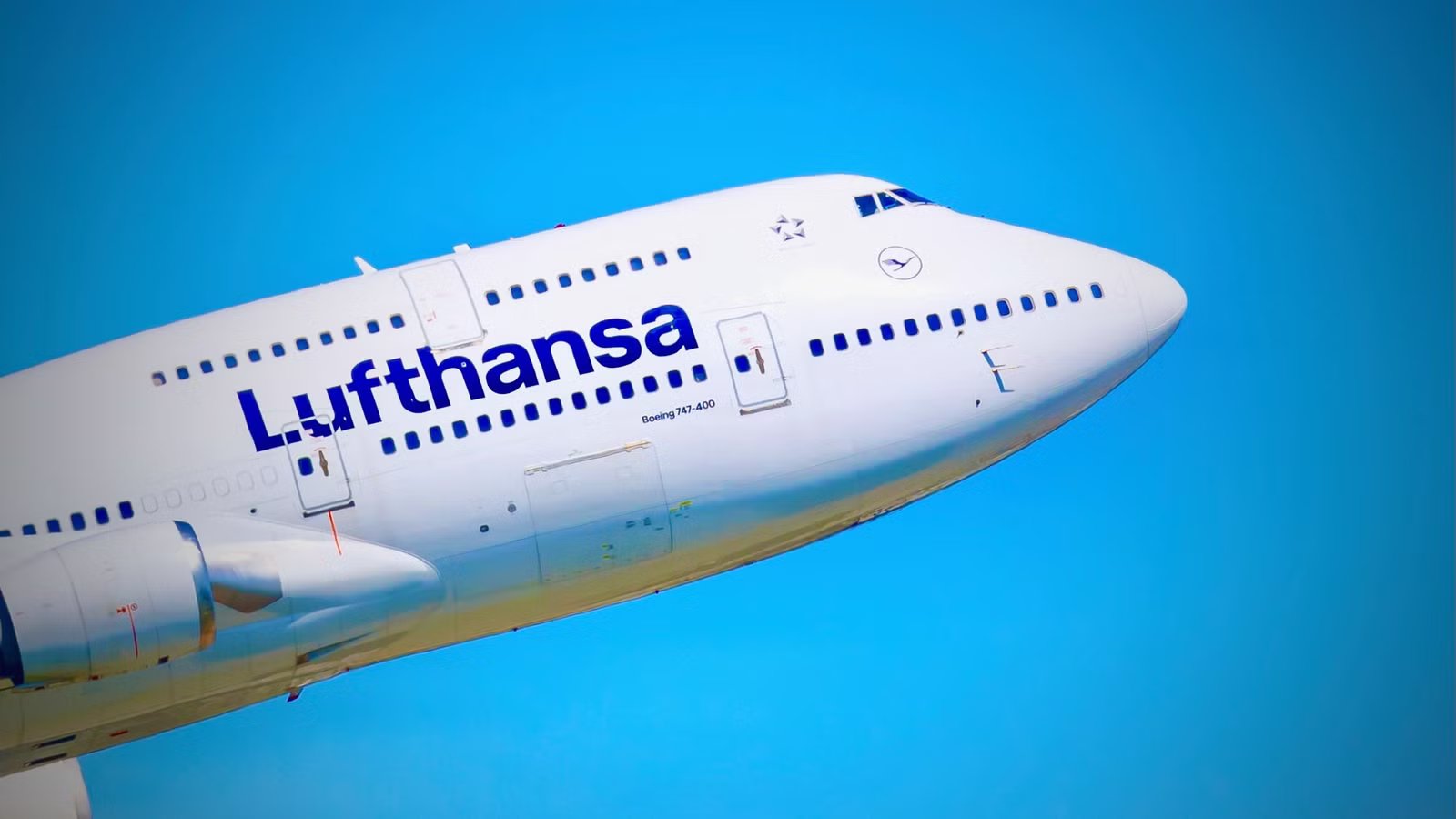
The Boeing 747-8I is the fastest Boeing jet in service, achieving remarkable speeds and carrying hundreds of passengers across continents. It builds on the 747 family’s legacy and offers unique advantages for airlines seeking to maximize long-haul route economics.
The combination of its enormous size with its long range, high cruising speed, and strong fuel efficiency makes the “dash eight” the crown jewel of the 747 family legacy. The 747-8I was dubbed the “intercontinental” for the passenger variant while the cargo version is the 747-8F for “freighter”—both are top of their class in many technical categories – especially airspeed.
Now that we’ve established the “dash eight” currently holds the title of the fastest Boeing passenger jet in operational service, let’s talk about how fast. The modern “Queen of the Skies” routinely cruises at roughly Mach 0.85–0.86 or a speed of about 570 mph (915 km/h) at cruising altitude. Now, while there are other airliners out there capable of this speed as well, they’re nothing quite like the Queen.
The back story

As an improved 747-400 successor, Boeing created the 747-8I by expanding the fuselage, modifying the wing shape and structure as well as the upper deck cabin layout. Of course, they also added modernized avionics and technology, but the new engines were the greatest factor in producing the speed with the main benefit of boosting efficiency. Boeing’s biggest airliner to date, the passenger 747-8I, was built to bridge the gap between the Airbus A380 superjumbo and widebody twin-engine aircraft like the 777-300ER. It was first flown in 2011.
According to Boeing on their design highlights webpage, “The 747-8 Intercontinental and 747-8 Freighter incorporate the GEnx engine—one of the cleanest, quietest, and most fuel-efficient turbofan engines in the world. It is based on the 787 Dreamliner engine, but optimized for the 747-8.”
The GEnX engine was the latest and greatest when the “dash eight” entered service with Lufthansa in 2012. This advanced engine not only improved the fuel economy of the colossal JumboJet but also made the plane much quieter than its predecessor, the 747-400.
As Boeing describes it, “Dual chevrons and a sound-absorbing liner on the nacelle diminish noise during takeoff, and simplified flaps on the wing trailing edge reduce noise during landings. The 747-8 is 15 decibels quieter than the Stage 4/Chapter 4 noise limit that ICAO established for aircraft certified after 2006.”
The wings were redesigned from previous 747s. In place of the 747-400’s winglets, the 747-8I has a redesigned, deeper, thicker wing with contemporary aerodynamics, featuring raked wingtips. At high speeds, these long, sweeping wingtips increase fuel economy and decrease drag. The engine nacelles include scalloped trailing edges, which were first created for the 787 and smooth down the airflow to minimize noise.
Modern materials and design methods were used in the aircraft’s construction to save weight. Each engine provides about 66,500 pounds of thrust, giving the 747-8I the power not only to carry heavier loads but also to sustain faster cruise speeds at altitude.
Dash eight in action

The Boeing 747-8I is a large, efficient jet that can fly up to 8,000 nautical miles without refueling, enabling non-stop flights between major city pairs. With a spacious two-deck interior, it can seat around 400-500 passengers, depending on the airline’s layout. The “dash eight” is designed to be as fuel-efficient as possible for its capacity, with fuel-efficient engines and improved aerodynamics resulting in 15% lower fuel burn and CO₂ emissions per seat compared to the previous-generation 747-400.
This offsets the four-engine operating cost. The aircraft can use existing airport infrastructure nearly interchangeably with 747-400s, easing its integration into fleets. Pilots transitioning from earlier 747s benefit from a virtually identical cockpit layout and handling characteristics. Overall, the 747-8I delivers the intended combination of speed, range, and capacity, allowing airlines like Lufthansa and Korean Air to serve high-demand long-haul routes efficiently.
As Boeing billed their flagship when it came out (and still does online at least):
“The 747-8 has lower operating costs than any passenger airplane—of any size— in service today.”
 Lufthansa uses the 747-8I on routes like Frankfurt to Los Angeles and Frankfurt to Delhi, where its speed and range help maintain tight schedules on ultra-long flights. The jet’s fast cruise speed also means slightly shorter journey times and convenient scheduling, which can be a subtle selling point for both airlines and passengers on premium long-haul services.
Queen of the sky

The 747 has always been a romanticized and beloved aircraft, much more so than virtually any other passenger plane. The double-decker Airbus A380, despite being bigger and newer, has never quite captured the same charm and appeal that surrounds the 747.
The most seasoned 747 pilot in the world, Nick Eades, spent 34 years flying jumbos for British Airways, logging 27,000 hours. “I went on in 1987 and was struck by the sheer size of it. The pilots sat four floors up,” he said.
“It was a real pilot’s aeroplane. It was probably the last aeroplane that was flown by the pilot and not a computer. It was a huge aeroplane but it flew so beautifully even in bad weather. It just was like an ocean liner in the sky. I’ve flown lots of different types of aeroplanes but when I started flying the jumbo, I just had a big silly grin across my face.”
It’s not just the pilots that are still enamored; despite the factory being shut down, Atlas Air continues to acquire more of the giant jets for their cargo fleet. As recently as 2024, the carrier sealed a deal to add three more 747-8Fs to their inventory.
By the numbers

The Boeing 747-8I, the fastest jetliner of the modern era, is the pinnacle of the 747 family and a swan song for four-engine jumbos. In January 2023, Boeing delivered the final 747 ever built, a freighter, marking the end of over 50 years of 747 production. The freighter is expected to remain in service for many years with carriers like Atlas Air and cargolux that have operated it since its debut, thanks to its robust performance.
The United States Air Force has selected the 747-8I platform (designated VC-25B) for the next-generation Air Force One presidential aircraft, underscoring its unique combination of range, speed, and space. The program has been plagued with delays and was recently under heavy scrutiny by Donald Trump and Elon Musk. Boeing claims to have lost significant amounts due to program overruns, but with recent changes, the hope is that the latest iteration of Air Force One will get back on track.
The first two 747-8Is for Air Force One are still undergoing conversion and testing, with the Air Force confirming the model’s cruise speed of Mach 0.855, making it the fastest commercial jet in the world. The “dash eight” holds a special distinction, as taking a flight aboard one of these giants is as close as one can get to flying a passenger jet at the speed of sound.
Below are selected specifications for Boeing’s incredible 747-8i.
- Passenger Capacity (typical three-class): 410 seats
- Range: 7,730 nautical miles (14,310 km)
- Length: 250 feet 2 inches (76.3 m)
- Wingspan: 224 feet 5 inches (68.4 m)
- Height: 63 feet 6 inches (19.4 m)
- Cruise Speed: Mach 0.86 (around 570 mph or 917 km/h)
- Top Speed: 706 mph (917 km/h)
- Maximum Takeoff Weight: 987,000 lb (447,696 kg)
-
Engines:
GE Aerospace
GEnx-2B, each producing 66,500 lb (295.7 kN) of thrust
The production line may have been shuttered, but thanks to the special program of the USAF, the VC-25Bs will be the last two 747s built (at least for now), gracing the skies with two more majestic giants.