dailynewsnblog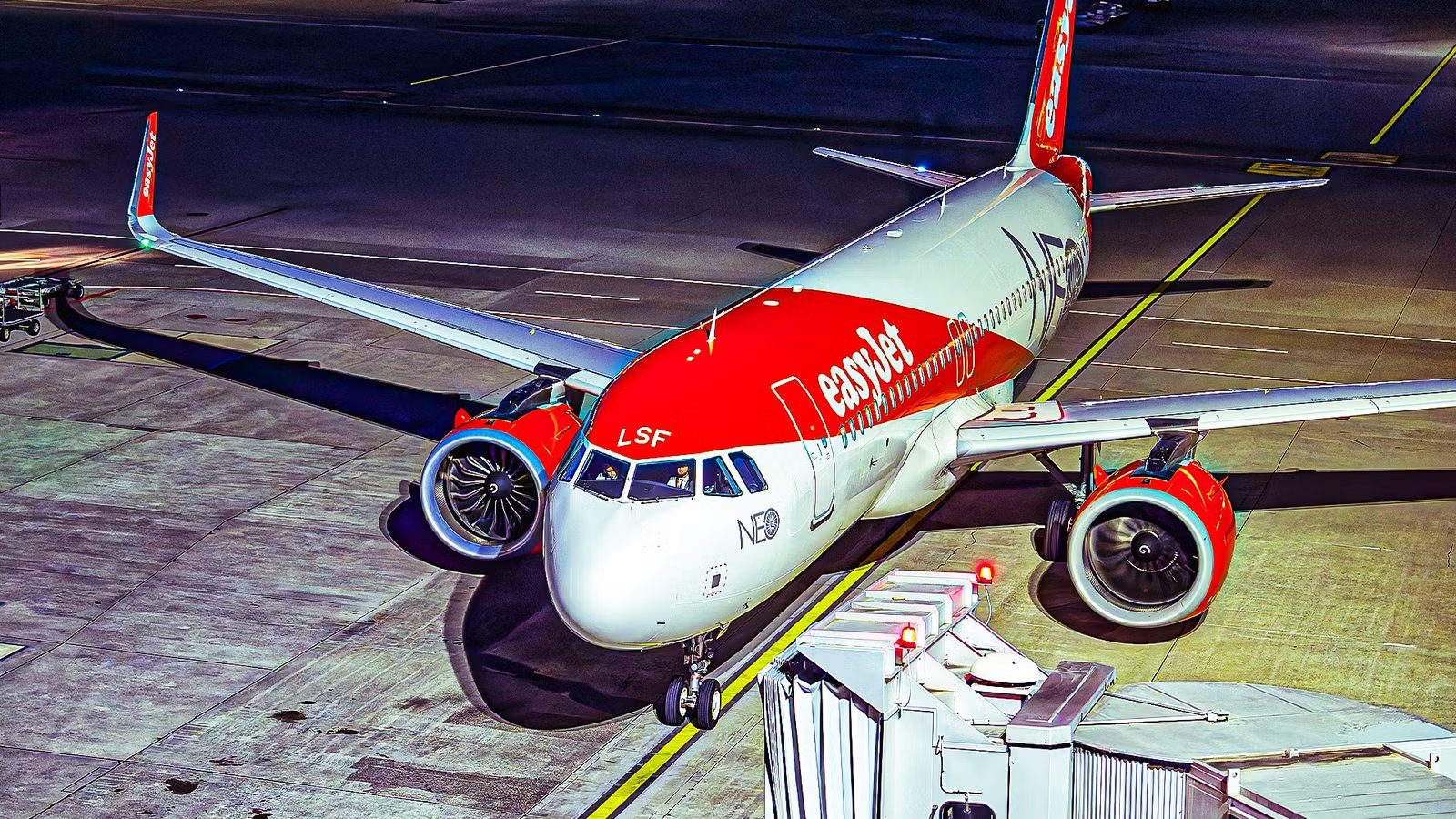
The European-built Airbus A320neo (with the moniker “NEO” standing for “new engine option”) is an upgraded version of the iconic Airbus A320, which has become quite the backbone of short- and medium-haul fleets all across the globe. More than 4,200 Airbus A320neo family aircraft have been delivered as of 2025, and thousands more remain on order. The aircraft captures an impressive 15–20% reduction in fuel burn relative to its predecessors, combining operational efficiency with Airbus’ familiar narrowbody commonality. Across the globe, more than 120 airlines operate this type, ranging from low-cost carriers to major full-service airlines.
Among them, IndiGo leads the group, with one of the largest Airbus A320neo fleets in the world, while budget airlines in Europe and North America, alongside several major Asian and Chinese carriers, have also adopted the type at scale. The result here is a global footprint that spans high-density budget routes, classic regional corridors, and even some long-and-thin kinds of markets. In this article, we analyze the airlines that operate the largest Airbus A320neo fleets, why the aircraft itself has become so impressively dominant, and how this proliferation itself helps reshape the overall network footprint. This offers a clearer picture of the Airbus A320neo’s role as the world’s leading single-aisle workhorse. We note that here we specifically analyze the Airbus A320neo, not the entire NEO family as a whole. All data used in this piece is from the aviation industry database ch-aviation.
5
easyJet
73 examples

easyJet’s Airbus A320neo fleet is a core lever for lowering overall unit costs in a multi-base European network that is constrained by airport slots and is highly sensitive to both fuel and emissions costs. With an Airbus A320neo fleet in the mid-70s and a sizable backlog that remains undelivered, easyJet can retire older Airbus A319s and refresh capacity while keeping schedule depth at major airports such as London Gatwick Airport (LGW) and other key bases. This makes the operational payoff fairly straightforward for easyJet as newer aircraft reduce fuel burn per seat and generally improve overall dispatch reliability, which matters when a single delay can cascade across tightly timed aircraft rotations.
|
Category |
Specification |
|---|---|
|
Major hubs |
London Gatwick (LGW), Geneva (GVA) |
|
Outstanding A320neo orders |
125 |
From a commercial perspective, the Airbus A320neo is the default capacity unit that fits a wide range of missions, ranging from short domestic shuttles to longer intra-European sectors, something which ultimately allows easyJet to match demand without overcommitting seats. It also interacts with easyJet’s broader fleet evolution towards the larger Airbus A321neo on the densest routes, enabling upgauging where slots are scarce while keeping the Airbus A320neo as a versatile filler.
With 125 Airbus A320neo orders outstanding, the carrier has years of replacement-driven efficiency gains embedded into its long-term plans, supporting overall margin resilience even if European short-haul pricing remains extremely competitive. Order decisions tilt some future deliveries towards larger aircraft, but the Airbus A320neo undeniably remains a core element of the airline’s baseline fleet.
4
Frontier Airlines
86 examples

Frontier Airlines’ Airbus A320neo fleet is the backbone of an ultra-low-cost network built around price-sensitive US leisure-oriented demand. With around 82 Airbus A320neo, the airline can profitably serve thinner city pairs that can be stimulated with very low fares, but do not always justify the higher seat count that an Airbus A321 would require every day of the week. This flexibility is crucial for Frontier’s seasonal playbook, as aircraft can pivot towards holiday peaks, secondary airports, and new point-to-point markets without locking the schedule into only the largest hubs.
|
Category |
Specification |
|---|---|
|
Major hubs |
Denver (DEN), Orlando (MCO), Las Vegas (LAS) |
|
Outstanding A320neo orders |
22 |
From an operational perspective, the Airbus A320neo and the Airbus A321neo are somewhat similar. With 12 Airbus A320neos still on order through 2026, remaining deliveries help smooth retirements and keep the fleet young, while the Airbus A320neo continues to function as Frontier’s network scalpel for right-sizing overall capacity.
The aircraft’s high-density layout aligns nicely with the Frontier Airlines cost structure, as it maximizes seats per departure on routes where fares are elastic. In a softer demand period, keeping an Airbus A320neo core helps avoid excessive overcapacity, as it allows Frontier to preserve network breadth with less overall earnings volatility.

Boeing 737 MAX Vs. Airbus A320neo: Which Has More Orders?
Airbus leads in narrowbody commitments.
3
Air India
93 examples

The Air India Airbus A320neo fleet is the bridge between a legacy narrowbody operation and the Tata-led transformation of the airline’s product and network history. With roughly 94 Airbus A320neos in service and more of the type on the way, the aircraft is becoming the everyday metro connector for India. The aircraft operates dense domestic shuttles, business-heavy routes, and short-haul international sectors that funnel passengers into long-haul banks at both Delhi and Mumbai.
|
Category |
Specification |
|---|---|
|
Major hubs |
Delhi (DEL) |
|
Outstanding A320neo orders |
90 |
The Airbus A320neo’s operating economics are a key reason why the aircraft sells. Newer jets are the fastest pathway to offering consistent cabins to customers, predictable reliability that customers can trust, and smoother on-time performance. This is all critical as Air India absorbs aircraft from a variety of different sources and works through the retrofitting process, all because fleet commonality reduces the operational friction of mixing configurations.
From a competitive standpoint, the Airbus A320neo helps defend the airline’s market share against aggressive low-cost carriers, all while still supporting connectivity for premium travelers and alliance feed. With 90 Airbus A320neo orders outstanding, Air India can keep renewing the narrowbody fleet, retiring older Airbus A320 jets, and gradually shifting from maintain and patch to a more scalable, growth-ready schedule built on a younger core. As Airbus A321neos ramp up for higher-demand markets, the A320neo remains a viable alternative for routes that offer high-capacity demand. Where the aircraft really excels is frequency, as it can accommodate the high-frequency turns required by low-cost operators. At the same time, it can also operate efficiently enough to keep overall unit costs low, while also offering enough capacity to ensure that Air India continues to turn a tidy profit.
2
China Eastern Airlines
121 examples

For China Eastern Airlines, the Airbus A320neo sits at the center of a domestic trunk-plus-regional strategy that is anchored by its Shanghai hub while also supporting major bases like Kunming and Xi’an. The carrier has a modern fleet of around 121 Airbus A320neos that serve as an efficient platform for high-frequency routes where schedule convenience drives revenue, and where incremental fuel and maintenance improvements compound across thousands of short sectors.
|
Category |
Specification |
|---|---|
|
Major hub |
Shanghai (PVG) |
|
Outstanding A320neo orders |
21 |
In practice, the aircraft is ideal for China’s extremely dense route map. It can efficiently rotate between business-heavy trunk routes, tourism peak services, and dispersal flying that feeds into long-haul departures. Compared with older Airbus A320-family aircraft, the Airbus A320neo helps defend margins in price-competitive markets and reduces the operational penalty of adding frequency rather than simply upgauging to a larger model.
The aircraft also complements a broader mixed fleet operated by the airline, helping give network planners tighter right-sizing between demand peaks and off-peak periods while keeping common pilot and maintenance processes across the airline’s narrowbody base. With 17 Airbus A320neo jets still on order, the near-term story is continuing modernization and replacement, using the type to maintain reliability and product consistency as the airline fine-tunes capacity across China’s improving but still volatile travel cycles. The Airbus A320neo can rebuild short-haul international flying with lower risk than widebodies, letting China Eastern add seats in smaller increments as demand and regulation evolve.

Why Did American Airlines Order The Airbus A321neo?
The A321neo has a larger capacity than the smaller A320, allowing American to transport more people without relying on wide bodies.
1
IndiGo
176 examples

The Indigo Airbus A320neo fleet is the workhorse that enables the airline’s ultra-high-frequency, short-to-medium-haul model across India and nearby international markets. With roughly 179 Airbus A320neos in service, and a deep pipeline of additional deliveries, the airline has effectively standardized on a gauge that balances seat economics with the ability to sustain frequency.
|
Category |
Specification |
|---|---|
|
Major hubs |
Delhi (DEL), Mumbai (BOM) |
|
Outstanding A320neo orders |
235 |
This matters in India, where demand is huge but uneven. The same aircraft can run dense metro shuttles in the morning, connect tier-two cities within a day, and still cover short international sectors at night. A large common NEO fleet also simplifies crew training, maintenance planning, and spare-parts provisioning, something which ultimately lets IndiGo push utilization while keeping disruption recovery fast when weather or ATC constraints hit.
From a strategic perspective, the Airbus A320neo sits along the Airbus A321neo as IndiGo upgauges on the busiest corridors, and the Airbus A320neo remains the flexible, default frame for day-to-day network tuning. With 235 Airbus A320neo orders still outstanding, IndiGo’s plan signals confidence in sustained traffic growth and reinforces scale leverage in leases, MRO, and airport support. This also positions the airline to continue retiring older Airbus A320ceo aircraft, smoothing fuel and maintenance costs as the network expands. A standardized Airbus A320neo fleet makes launching and redeploying routes quicker, without worrying about major performance or cabin differences.