dailynewsnblog
This is today’s edition of The Download, our weekday newsletter that provides a daily dose of what’s going on in the world of technology.
AI chatbots can sway voters better than political advertisements
The news: Chatting with a politically biased AI model is more effective than political ads at nudging both Democrats and Republicans to support presidential candidates of the opposing party, new research shows.
The catch: The chatbots swayed opinions by citing facts and evidence, but they were not always accurate—in fact, the researchers found, the most persuasive models said the most untrue things. The findings are the latest in an emerging body of research demonstrating the persuasive power of LLMs. They raise profound questions about how generative AI could reshape elections. Read the full story.
—Michelle Kim
The era of AI persuasion in elections is about to begin
—Tal Feldman is a JD candidate at Yale Law School who focuses on technology and national security. Aneesh Pappu is a PhD student and Knight-Hennessy scholar at Stanford University who focuses on agentic AI and technology policy.
The fear that elections could be overwhelmed by AI-generated realistic fake media has gone mainstream—and for good reason.
But that’s only half the story. The deeper threat isn’t that AI can just imitate people—it’s that it can actively persuade people. And new research published this week shows just how powerful that persuasion can be. AI chatbots can shift voters’ views by a substantial margin, far more than traditional political advertising tends to do.
In the coming years, we will see the rise of AI that can personalize arguments, test what works, and quietly reshape political views at scale. That shift—from imitation to active persuasion—should worry us deeply. Read the full story.
The ads that sell the sizzle of genetic trait discrimination
—Antonio Regalado, senior editor for biomedicine
One day this fall, I watched an electronic sign outside the Broadway-Lafayette subway station in Manhattan switch seamlessly between an ad for makeup and one promoting the website Pickyourbaby.com, which promises a way for potential parents to use genetic tests to influence their baby’s traits, including eye color, hair color, and IQ.
Inside the station, every surface was wrapped with more of its ads—babies on turnstiles, on staircases, on banners overhead. “Think about it. Makeup and then genetic optimization,” exulted Kian Sadeghi, the 26-year-old founder of Nucleus Genomics, the startup running the ads.
The day after the campaign launched, Sadeghi and I had briefly sparred online. He’d been on X showing off a phone app where parents can click through traits like eye color and hair color. I snapped back that all this sounded a lot like Uber Eats—another crappy, frictionless future invented by entrepreneurs, but this time you’d click for a baby.
That night, I agreed to meet Sadeghi in the station under a banner that read, “IQ is 50% genetic.” Read on to see how Antonio’s conversation with Sadeghi went.
This story first appeared in The Checkup, MIT Technology Review’s weekly biotech newsletter. To receive it in your inbox every Thursday, and read articles like this first, sign up here.
The must-reads
I’ve combed the internet to find you today’s most fun/important/scary/fascinating stories about technology.
1 The metaverse’s future looks murkier than ever
OG believer Mark Zuckerberg is planning deep cuts to the division’s budget. (Bloomberg $)
+ However some of that money will be diverted toward smart glasses and wearables. (NYT $)
+ Meta just managed to poach one of Apple’s top design chiefs. (Bloomberg $)
2 Kids are effectively AI’s guinea pigs
And regulators are slowly starting to take note of the risks. (The Economist $)
+ You need to talk to your kid about AI. Here are 6 things you should say. (MIT Technology Review)
3 How a group of women changed UK law on non-consensual deepfakes
It’s a big victory, and they managed to secure it with stunning speed. (The Guardian)
+ But bans on deepfakes take us only so far—here’s what else we need. (MIT Technology Review)
+ An AI image generator startup just leaked a huge trove of nude images. (Wired $)
4 OpenAI is acquiring an AI model training startup
Its researchers have been impressed by the monitoring and de-bugging tools built by Neptune. (NBC)
+ It’s not just you: the speed of AI deal-making really is accelerating. (NYT $)
5 Russia has blocked Apple’s FaceTime video calling feature
It seems the Kremlin views any platform it doesn’t control as dangerous. (Reuters $)
+ How Russia killed its tech industry. (MIT Technology Review)
6 The trouble with AI browsers
This reviewer tested five of them and found them to be far more effort than they’re worth. (The Verge $)
+ AI means the end of internet search as we’ve known it. (MIT Technology Review)
7 An anti-AI activist has disappeared
Sam Kirchner went AWOL after failing to show up at a scheduled court hearing, and friends are worried. (The Atlantic$)
8 Taiwanese chip workers are creating a community in the Arizona desert
A TSMC project to build chip factories is rapidly transforming this corner of the US. (NYT $)
9 This hearing aid has become a status symbol
Rich people with hearing issues swear by a product made by startup Fortell. (Wired $)
+ Apple AirPods can be a gateway hearing aid. (MIT Technology Review)
10 A plane crashed after one of its 3D-printed parts melted 

Just because you can do something, that doesn’t mean you should. (BBC)
Quote of the day
“Some people claim we can scale up current technology and get to general intelligence…I think that’s bullshit, if you’ll pardon my French.”
—AI researcher Yann LeCun explains why he’s leaving Meta to set up a world-model startup, Sifted reports.
One more thing
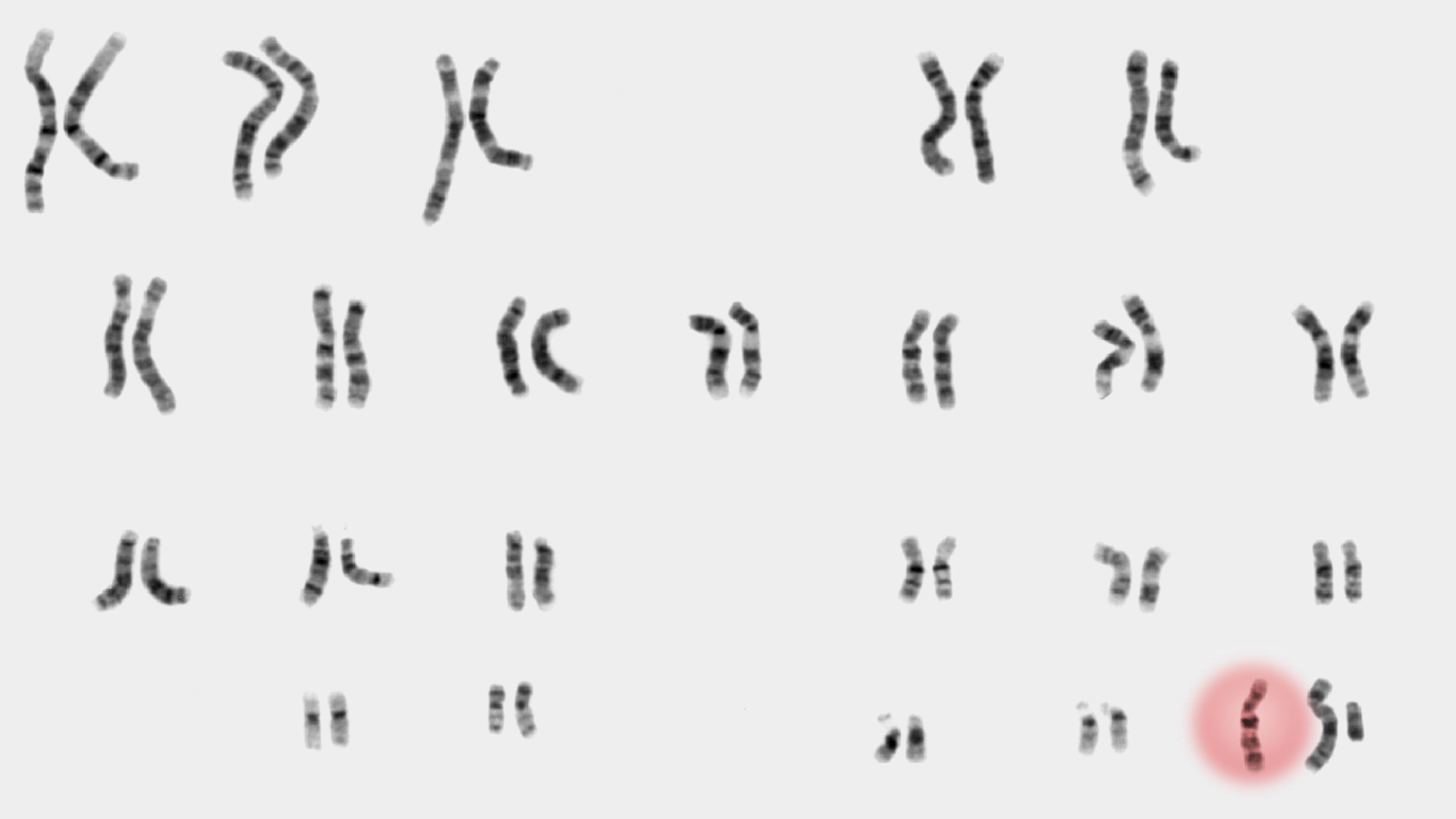
What to expect when you’re expecting an extra X or Y chromosome
Sex chromosome variations, in which people have a surplus or missing X or Y, occur in as many as one in 400 births. Yet the majority of people affected don’t even know they have them, because these conditions can fly under the radar.
As more expectant parents opt for noninvasive prenatal testing in hopes of ruling out serious conditions, many of them are surprised to discover instead that their fetus has a far less severe—but far less well-known—condition.
And because so many sex chromosome variations have historically gone undiagnosed, many ob-gyns are not familiar with these conditions, leaving families to navigate the unexpected news on their own. Read the full story.
—Bonnie Rochman
We can still have nice things
A place for comfort, fun and distraction to brighten up your day. (Got any ideas? Drop me a line or skeet ’em at me.)
+ It’s never too early to start practicing your bûche de Noëlskills for the holidays.
+ Brandi Carlile, you will always be famous.
+ What do bartenders get up to after finishing their Thanksgiving shift? It’s time to find out.
+ Pitchfork’s controversial list of the best albums of the year is here!