dailynewsnblog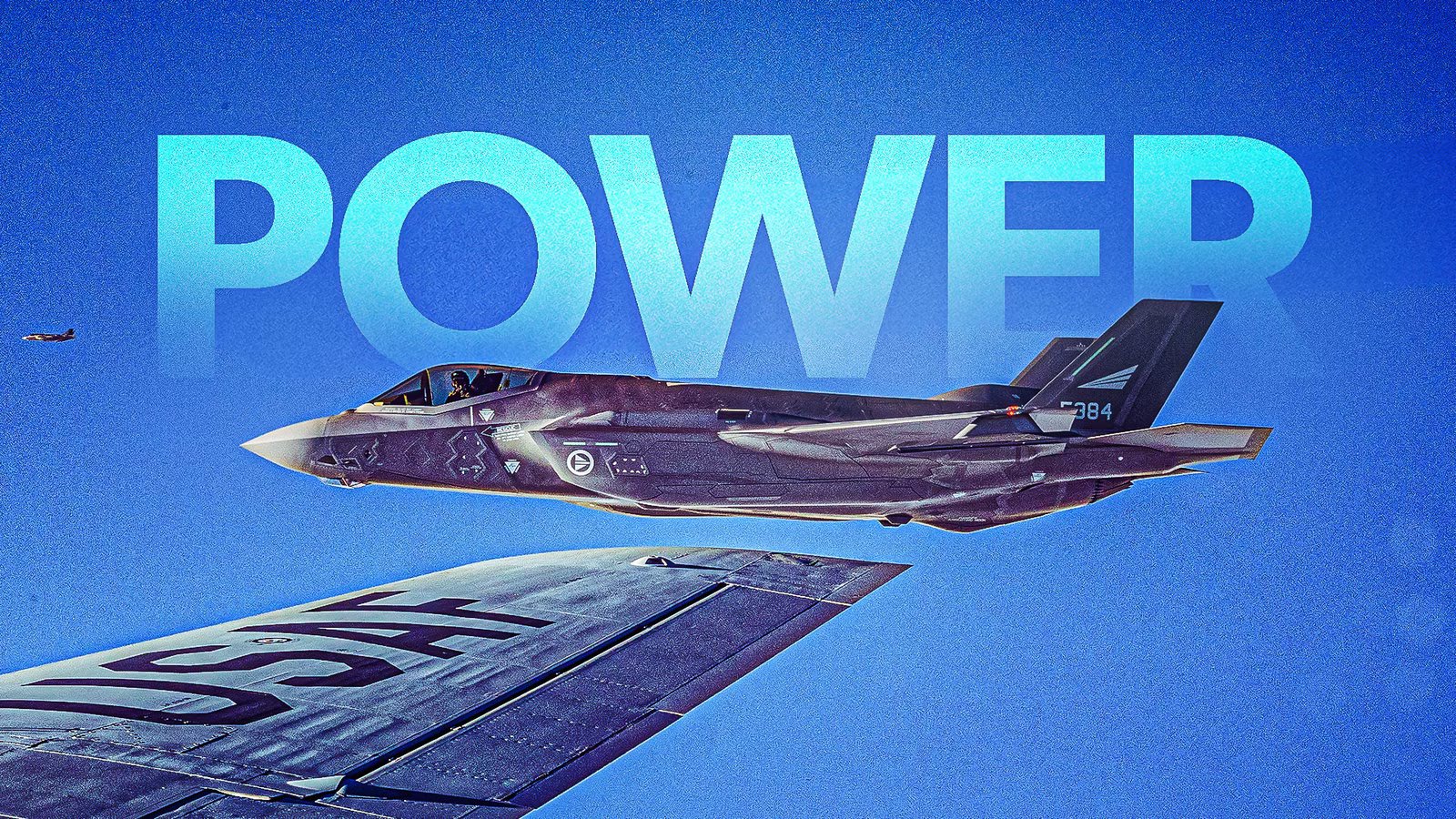
The Lockheed Martin F-35 Lightning II is a family of single-engine, stealth multirole fighters designed to excel in air-to-air, air-to-ground, and electronic warfare missions. The F-35 incorporates advanced sensor fusion, low-observable shaping, and secure networked communications to give pilots unparalleled situational awareness. Its design emphasizes strength, adaptability, and the ability to operate effectively in highly contested environments.
The aircraft comes in three primary variants: the conventional-takeoff F-35A, the short-takeoff/vertical-landing F-35B, and the carrier-capable F-35C, allowing it to serve the diverse needs of the US Air Force, Marine Corps, Navy, and numerous allied nations. With its combination of stealth, agility, and cutting-edge avionics, the F-35 has established itself as a powerhouse of military aviation. Join us as we explore what exactly helps this aircraft dominate the skies.
The Joint Strike Fighter (JSF) Program

The roots of the F-35 Lightning II development began in the early 1990s. The idea for the aircraft came as the US sought a single aircraft family to replace several aging fighters across the Air Force, Navy, and Marine Corps. This desire ultimately led to the formation of the Joint Strike Force Program (JSF).
The JSF program aimed to reduce costs by creating three variants that shared a common airframe and systems. The bar for features was set high with requirements including advanced stealth, advanced sensors, multirole capability, and long-term upgrade potential. The program was intended to continue US air dominance into the 21st century while strengthening allied-aligned operations. With multiple partner nations involved, funding and development were spread internationally.
As a part of the program, Lockheed Martin and  Boeing built competing prototypes (the X-35 and X-32), with Lockheed Martin succeeding in what would become the present-day F-35 Lightning II. Since the start of production in 2006, the F-35 has flown over 1,000,000 hours, and over 1,255 units have been produced for the 20 countries that operate the aircraft. These include the United Kingdom, Canada, Denmark, and Greece.
Physical Power: Engine, Thrust, Speed & Maneuverability

One way the F-35 establishes its metaphorical ‘power’ in the air is through its literal physical power and speed. The F-35 is powered by the Pratt & Whitney F135, the most powerful fighter engine ever built, producing over 40,000 lbs of thrust, enabling extreme acceleration and superior performance. This incredible thrust allows the jet to reach Mach 1.6 (about 1,200 mph), giving it high-supersonic speed for both intercept and strike missions.
Its massive power output supports short takeoff and vertical landing (STOVL) capability for the F-35B variant, enabled by the unique lift-fan system. The aircraft can sustain up to 9g maneuvers, depending on variant, giving it a unique, in some ways ‘old-fashioned’ dogfighting agility, although it is optimized more for stealthy internal weapons carriage.
|
Attribute |
F-35 (Some data varies by variant) |
|---|---|
|
Crew |
1 |
|
Empty Weight |
29,300 lb (13,300 kg) |
|
Maximum Takeoff Weight (MTOW) |
70,000 lb (31,800 kg) |
|
Internal Fuel Capacity |
18,250–18,500 lb (8,278 kg) |
|
Engine / Propulsion |
1 × Pratt & Whitney F135 turbofan |
|
Maximum Speed |
Mach 1.6 (1,200 mph/1,930 km/h) |
|
Combat Radius (internal fuel) |
590nm (1,090 km) (depending on mission profile) |
|
Range (internal fuel) |
1,200nm (2,200 km) |
|
Weapons Payload Capacity |
Up to 18,000 lb (8,160 kg) internal and external |
|
G-Limits / Maneuverability |
Up to +9.0 G |
Relatively large internal fuel capacity, combined with a relatively high engine efficiency, alongside the ability to refuel inflight, gives the F-35 significant range and combat radius compared to older fighters. This allows for flexible deployment of the aircraft, as well as a reduction in resources required for certain missions. The engine’s design also reduces infrared signature while maintaining power, enabling it to remain stealthy without sacrificing thrust.

Why The F-35 Is The US Air Force’s Most Important Fighter Jet
Discover why the F-35 is the US Air Force’s most critical fighter — from stealth and sensors to strategy, readiness, and future upgrades
Advanced Sensors, Avionics & Situational Awareness

Another key area in which the F-35 demonstrates its power is through its deeply integrated, highly advanced technologies. The aircraft fuses data from an extensive sensor suite, including the AN/AAQ-37 Distributed Aperture System (DAS), six infrared cameras providing true 360° spherical awareness, missile-warning capability, and day/night imagery. Working alongside DAS is the Electro-Optical Targeting System (EOTS), which offers long-range identification, tracking, and precision targeting while maintaining the aircraft’s stealth profile.
The F-35 also incorporates the cutting-edge Helmet-Mounted Display System (HMDS), which projects all essential flight, sensor, and threat information directly onto the pilot’s visor. By integrating imagery from DAS, the HMDS enables the pilot to “see through” the aircraft, providing unprecedented visibility in day, night, and adverse-weather conditions. This significantly enhances situational awareness, accuracy, and reaction time, all while reducing pilot workload and fatigue during complex missions.
Supporting these systems is the AN/APG-81 AESA radar and an advanced electronic-warfare/electronic-countermeasure suite that helps the F-35 detect, track, classify, and counter threats from long distances. These systems allow the aircraft to conduct high-resolution imaging, electronic attack, and multi-target tracking with exceptional reliability. Together, this comprehensive fusion of radar, infrared, and electronic-warfare capabilities gives the F-35 superiority over other aircraft, solidifying its role as one of the most advanced multirole fighters in the world.
Multirole Flexibility & Combat Versatility

As set out in its original plan, the F-35 has proved itself as a true multirole fighter jet. It can perform air-to-air combat, precision air-to-ground strikes, electronic warfare, reconnaissance, and surveillance, essentially consolidating multiple roles in a single aircraft. This presents a clear advantage for militaries worldwide, allowing them to replace multiple aircraft with one. Consolidating assets such as flight crews and maintenance gives great operational flexibility.
This versatility allows operators to retire older, specialized aircraft (like older fighters or ground-attack jets) and replace them with F-35s, reducing fleet complexity while expanding mission options. The internal weapon-and-fuel carriage enables stealthy strike missions; when stealth is less critical, it can carry external ordnance for heavier payloads or extended range, adapting to mission requirements.
Another key design feature of the aircraft is its open architecture and modular system design. This approach is critical because it allows the platform to integrate new capabilities throughout its service life without requiring major structural redesigns. By enabling rapid insertion of upgraded sensors, enhanced processing hardware, advanced weapons, and emerging technologies such as autonomous drone-teaming interfaces, the aircraft can continuously evolve in step with, or ahead of, modern threat environments.

How Many Miles Per Gallon Does An F-35 Get?
Jet fighters are not necessarily known for their fuel efficiency, but is the F-35 Lightning II any different?
Networked Warfare And Coalition

The F-35 is designed and built around a fully “net-centric” operational philosophy. This means that its communications systems, data links, and sensor-fusion capabilities are engineered to gather, process, and distribute information seamlessly across a broader network. By integrating data from onboard sensors with inputs from other aircraft, ground forces, naval platforms, and command-and-control networks, the jet functions as both a frontline combat asset and an intelligence-sharing node.
Because many allied nations field the F-35, the aircraft benefits from a standardized architecture for communications, mission systems, and logistics. This common framework ensures a high degree of interoperability among allied operators, making it possible to conduct joint missions with aligned situational awareness, shared threat identification, and coordinated tactical responses. In practice, this integration enhances effectiveness, reduces the ‘friction’ normally associated with multinational operations, and strengthens deterrence by providing a unified combat ecosystem.
The aircraft’s onboard processing and open architecture support future upgrades, potentially including drone teaming, more advanced sensors, and next-generation weapons, enhancing long-term joint force capabilities. This networked capability gives F-35 operators a force-multiplying effect: one F-35 can act as a “sensor node”, feed targeting or intelligence data to other platforms (air, land, sea), boosting the effectiveness of the broader force.
Strategic Impact: Modernizing Air Forces And Deterrence

The F-35 is still, and always has been, intended to replace multiple older legacy aircraft. Streamlining fleets and reducing the number of different platforms needed, while upgrading overall capability across air forces. Its combination of stealth, sensors, and multirole functionality makes it relevant in both air-to-air conflicts (contested airspace against advanced defenses) and more conventional missions (close air support, strike, reconnaissance, coalition operations).
By pooling development and production across many partner nations, the F-35 program supports allied cooperation and shared logistics, strengthening collective defense. As a fifth generation fighter, the F-35 sets a baseline for modern air dominance, complicating adversaries’ planning, raising the cost and risk of hostile air operations, and thus serving as a strategic deterrent beyond its tactical value.
The Lockheed Martin F-35 Lightning II has established itself as a true powerhouse of the skies, embodying the pinnacle of 5th-generation fighter technology through its revolutionary blend of stealth, sensor fusion, and networked combat capabilities. It represents a monumental leap forward in air combat, moving beyond the traditional concept of a fighter jet to become a multirole, information-dominant warfare platform.