dailynewsnblog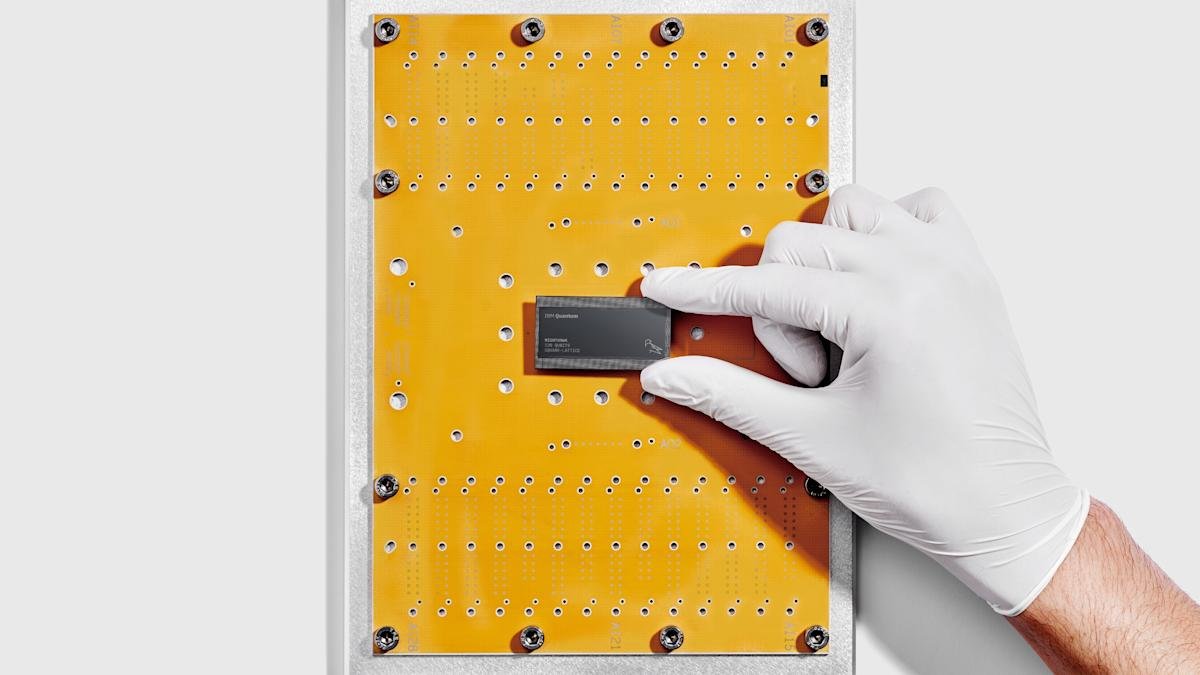
IBM has introduced two different quantum chips that it believes could help demonstrate “quantum advantage,” or the ability for a quantum computer to solve a problem faster than a classical computer, by the end of 2026. The new chips, Nighthawk and Loon, should help do that by taking different approaches to connecting qubits in a quantum computer, producing fewer errors and supporting more complex computations.
Of the two new chips, IBM Quantum Nighthawk is the one the company believes it can iterate on to produce quantum advantage. By the end of 2025, the version of Nighthawk IBM will provide to its partners will have “120 qubits linked together with 218 next-generation tunable couplers” arranged in a square lattice to connect with their neighbors. IBM claims this will allow Nighthawk to “execute circuits with 30 percent more complexity” while maintaining lower error rates. It’ll also let it handle more demanding computational problems “that require up to 5,000 two-qubit gates,” the company says.

The IBM Quantum Loon chip. (IBM)
IBM Quantum Loon is the more experimental of the two chips, connecting qubits not just horizontally on the chip, but vertically, too, New Scientist writes. Whichever chip proves to be more useful, the added connectivity options allows for fewer errors and more complex computations, which could lead to new real-world applications for quantum computers.
To pair with its new chips, IBM says it’s also contributing to a new community-led quantum advantage tracker backed by Algorithmiq, researchers from the Flatiron Institute and BlueQubit. The tracker “supports three experiments for quantum advantage across observable estimation, variational problems, and problems with efficient classical verification,” IBM says, and the company has invited the wider research community to contribute to it.
As New Scientist notes, IBM’s approach is different from competitors like Google because it’s focused on connecting qubits together in smaller groups. Google introduced its Willow chip in 2024 as being theoretically capable of demonstrating quantum advantage. A year later in 2025, the company announced its “Quantum Echoes” algorithm for Willow, “the first-ever verifiable quantum advantage running the out-of-order time correlator (OTOC) algorithm.”