dailynewsnblog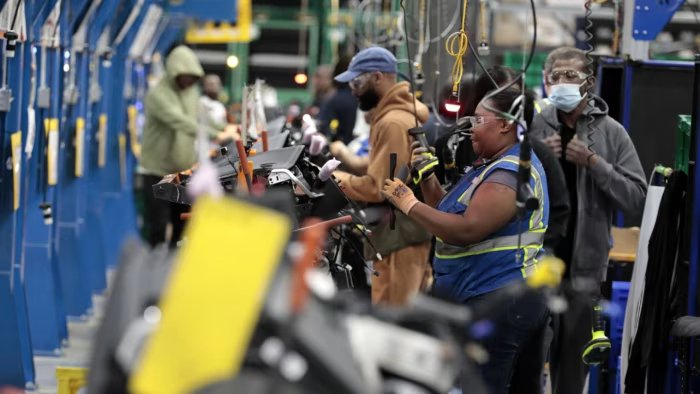
In the first months of chaos unleashed by President Donald Trump’s trade war, US carmakers felt far from shielded from higher tariffs that were meant to boost American manufacturers and protect them from foreign competition.
Jim Farley, Ford chief executive, described his group as “the most American company with a $2bn liability” while Stellantis chair John Elkann warned that the US car industry was being “put at risk” by the levies. General Motors was also caught in the middle of the Trump storm because of its large manufacturing operations in South Korea, Mexico and Canada for vehicles that are sold in the US.
But prospects for the so-called Big Three have recently improved.
Both GM and Ford have reduced the estimated size of their maximum tariff exposure for this year from a combined $7bn to $5bn.
As GM raised its profit guidance in October, chief financial officer Paul Jacobson indicated to investors that next year would be “even better than 2025,” driving up its share price by 15 per cent.
“GM is stronger and more resilient than ever. We are adjusting our business to a new tariff and regulatory environment,” Jacobson said.
Ford also said it would have upgraded its outlook if not for a hit on profit of up to $2bn from a fire at an aluminium supplier’s plant in New York.
Stellantis, which owns the Chrysler, Jeep and Dodge brands, said it now expected a net tariff impact of €1bn, instead of €1.5bn for the full year.
Behind the optimism are new relief measures recently announced by the Trump administration to offset the 25 per cent tariffs on imports of foreign-made components.
In addition to those measures, the US president is also proposing to roll back regulations to reduce emissions from vehicles, which would ease the pressure on carmakers to sell lossmaking electric vehicles.
Barclays analyst Dan Levy says there is a “clear case for multiple re-rating” for GM’s stock.

“Tariff pressures are easing and macro is supportive,” Levy says. “And arguably more importantly, with EV regulations easing and hopes of EV losses narrowing, it reduces a significant overhang for the stock.”
US carmakers have moved quickly to expand their domestic manufacturing capabilities to offset the tariff impact. But beyond tariffs, the opportunity to sell more higher-margin petrol models in the US has boosted confidence among industry executives to increase their bet on the US market.
In mid-October, Stellantis pledged to invest a record $13bn in the US over the next four years, which would increase annual vehicle production by 50 per cent and create more than 5,000 jobs at its plants in Illinois, Ohio, Michigan and Indiana.
The group had been struggling to rebuild its market share in the US but there have been early signs of improvement under its new chief executive Antonio Filosa. Those include sales in North America rising 35 per cent from a year earlier during the July to September quarter.
One person with knowledge of the decision to invest in expanding US production adds that changes in Trump’s policies on electric vehicles was a key factor.
“The new regulations . . . are giving back US customers their freedom of choice. We welcome them very well. We believe those represent to us a very good news for the short, medium and long term,” Filosa told analysts in October.
Another big factor has been the mitigation measures for the tariffs that the US carmakers have been working on with Trump administration officials.
In April, the US launched a rebate scheme allowing carmakers that assemble vehicles in the US to reclaim up to 3.75 per cent of the retail value of the car for the next year.
The Trump administration recently said it would extend that rebate scheme to 2030, allowing car and truck manufacturers to claim the 3.75 per cent value for the next five years.
The reimbursements to offset tariffs on auto parts was also expanded to include engines, while the latest announcement also hinted at lower tariffs in the future for steel and aluminium from Mexico and Canada that were compliant with the USMCA (US, Canada and Mexico) trade deal.

Tom Narayan, analyst at RBC Capital Markets, says US carmakers are now better positioned than their European rivals. “You don’t have to sell all the EVs as aggressively as you do in Europe. And at the same time, the tariff resolution . . . really does benefit the US guys more than the Europeans,” he adds.
Still, investors remain cautious as GM and Ford also deal with the costly investments they had already made to increase EV production.
GM recently booked a $1.6bn charge to scale back its EV production and has warned of more losses ahead following the cancellation of tax credits for EV purchases in the US. Stellantis also warned of new charges to be booked in the second half of the year as it reviews its product line-up.
Analysts warn that Ford may soon follow suit. When asked at the company’s earnings briefing in October about the $3.6bn in EV losses the company reported in the nine months to September, Farley pointed to “very big decisions” ahead without elaborating.
“The competition is getting tougher . . . and the industry faces lower returns due to the EV overcapacity and global pressures,” he told the analysts.