dailynewsnblog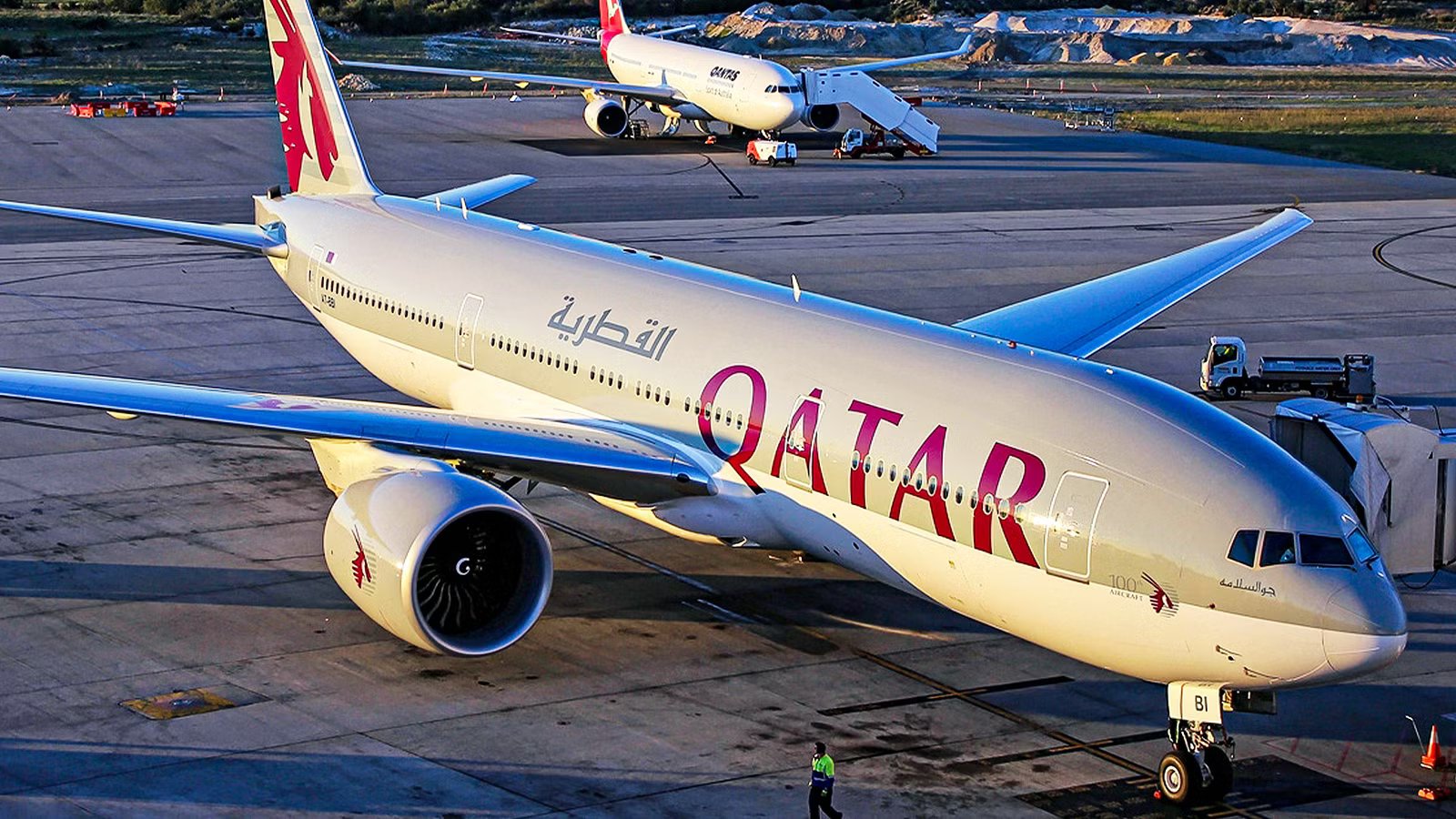
Ultra-long-haul flights capture the imagination like few other things in the aviation industry, but operating routes like from Australia to Europe or the US to Southeast Asia is expensive. As aircraft range has increased, we’ve seen an increase in the number of ultra-long-haul routes opening up, but this has also come with improvements in aircraft efficiency, which has further improved the economics of these routes.
Over the past ten years, there has been an explosion in the number of ultra-long-haul flights, and the two aircraft that have most enabled this are the Airbus A350 and Boeing 787-9. Not only are they incredibly capable, but they’re among the most fuel-efficient aircraft ever made, and they’re the reason why almost all of today’s ultra-long-haul routes are even feasible. Using data from Cirium, an aviation data analytics company, these are the world’s seven longest nonstop routes in 2026.
7
Auckland – New York
7,671 nautical miles (14,207 km)

Air New Zealand first launched nonstop services from Auckland to JFK in 2022. This was one of the most exciting new route launches at the time, and ever since it was launched, it has operated year-round three times per week. This is Air New Zealand’s longest route, and one of the longest routes using the Boeing 787.
In 2023, Qantas also jumped on this route. Auckland actually serves as a stopover point for its services from Sydney to JFK, as this route is too long to be served nonstop, and this was a resumption of a one-stop flight that it operated to JFK before the COVID-19 pandemic, which previously flew via Los Angeles with a Boeing 747-400. Although Air New Zealand is the flag carrier of New Zealand, Qantas has a larger presence on this route, as its flights operate between thrice weekly and daily.
Just like Air New Zealand, Qantas uses the Boeing 787-9 on this route. As per aeroLOPA, Qantas installs 236 seats on its Boeing 787-9s, split between 42 business class seats, 28 premium economy seats, and 166 economy seats. Meanwhile, Air New Zealand has three configurations for its 787-9 fleet, with either 299 seats (18 business class, 21 premium economy, 260 economy), 275 seats (27 business class, 33 premium economy, 215 economy), or 272 seats (26 business class, 33 premium economy, 213 economy).
6
Perth – Paris
7,702 nautical miles (14,264 km)

Qantas operates its largest hub out of Sydney Kingsford Smith Airport (SYD), and it also has major operations out of Melbourne Airport, as well as Brisbane Airport. Meanwhile, it’s transformed its hub in Perth Airport (PER), its only major hub in Western Australia, into a hub for nonstop services to Europe with the Boeing 787-9.
The Airbus A380 and Boeing 787 are the only aircraft currently in Qantas’ fleet that can reach continental Europe nonstop from Perth, but the 787 has half the engines and less than half the seats. This makes it cheaper to operate and, more importantly, less risky, since the market from Perth to Paris is relatively small.
London-Heathrow was Qantas’ first nonstop European destination served from Perth, and its second destination was Rome. While this may have come as a surprise to some, Rome has strong premium leisure demand with high yields from Australia, which have sustained seasonal service for almost four years. Meanwhile, it has flown year-round service to  Paris Charles De Gaulle Airport (CDG) since 2024, currently operating thrice weekly.

Up To 18 Hours: The World’s Longest Airbus A350 Flights
From Singapore to New York and soon Sydney to London, the Airbus A350 is redefining ultra-long-haul flying with record-breaking non-stop routes.
5
Melbourne – Dallas/Fort Worth
7,814 nautical miles (14,472 km)

Qantas is a member of oneworld, and it has operated a transpacific joint venture with American Airlines since 2019. As such, the two carriers essentially act as one regarding services between Australia and the United States, coordinating schedules and prices while also code-sharing.
Dallas/Fort Worth International Airport (DFW) is American Airlines’ largest hub, and its location in Texas makes it ideal for capturing connections between the eastern part of the US and Australia. American Airlines directly operates winter seasonal flights between DFW and Brisbane Airport with the Boeing 787-9, while it relies on Qantas for year-round services from DFW to Sydney (using the Airbus A380) and Melbourne (using the 787).
During the northern winter season, Qantas generally operates the route from DFW to Melbourne Airport four times per week, while it is flown three times per week during the northern summer season. This is the longest out of the three routes between DFW and Australia, and it’s the only one to operate less than daily (although American’s Brisbane route does not operate during the summer).
4
Perth – London
7,829 nautical miles (14,499 km)

One of Qantas’ riskiest ventures came in 2018, when it launched daily nonstop services between Perth Airport and London Heathrow Airport (LHR). This was the first nonstop route between Australia and Europe, and it remains the world’s longest Boeing 787 route, with flight times blocked for up to 17 hours and 30 minutes.
Given its length, Qantas was making a bold gamble on whether passengers would prefer a nonstop route over a stopover in Dubai or Singapore, where its existing European services stopped. However, the route proved to be a huge success, and Qantas plans to upgauge this route to the Airbus A350-1000ULR, which will also operate its nonstop services from Sydney and Melbourne to London and New York.
|
Origin |
Destination |
Distance (nautical miles) |
Distance (km) |
Aircraft |
|---|---|---|---|---|
|
Sydney Kingsford Smith Airport (SYD) |
London Heathrow Airport (LHR) |
9,188 nautical miles |
17,016 km |
Airbus A350-1000ULR |
|
Melbourne Airport (MEL) |
London Heathrow Airport (LHR) |
9,127 nautical miles |
16,904 km |
Airbus A350-1000ULR |
|
Melbourne Airport (MEL) |
John F. Kennedy International Airport (JFK) |
9,015 nautical miles |
16,695 km |
Airbus A350-1000ULR |
|
Sydney Kingsford Smith Airport (SYD) |
John F. Kennedy International Airport (JFK) |
8,646 nautical miles |
16,013 km |
Airbus A350-1000ULR |
|
Perth Airport (PER) |
London Heathrow Airport (LHR) |
7,829 nautical miles |
14,499 km |
Boeing 787-9 (Future: Airbus A350-1000ULR) |
Qantas’ flights from Perth to Paris and Rome feature tag-on flights to Sydney, also using the Boeing 787. Initially, the flight number for the Heathrow route was also placed on a 787 flight to Melbourne (technically making this a one-stop service), but this has since been discontinued, and the flight now solely operates between Perth and London.
3
Doha – Auckland
7,848 nautical miles (14,535 km)

In 2017,  Qatar Airways launched new nonstop services between Doha Hamad International Airport (DOH) and Auckland Airport (AKL). With this new route, there is now a new longest flight in the world. Flights originally operated with the Boeing 777-200LR, and are blocked for up to 16 hours headed to Auckland, while the return to Doha is blocked for 17 hours and 10 minutes.
This route switched to the Airbus A350-1000 in the 2020s, but in 2025, Qatar Airways switched it back to the 777-200LR. The reason for this change is unclear, but the 777-200LR is legendary for being perhaps the most capable airliner ever made. Not only does it have an incredible range, but it can lift high payloads across longer distances than any other widebody, and it has excellent takeoff performance, too. This is why Qatar Airways and Emirates both use the 777-200LR for some of their longest, most challenging routes.
Data from aeroLOPA shows that Qatar Airways installs either 272 or 276 seats on its 777-200LRs, depending on whether the aircraft is equipped with QSuites or Qatar’s older business class, based on the Collins Aerospace Minipod. Both configurations feature 42 business class seats, but the layout with QSuites features 230 economy seats, whereas the older configuration has 234 economy seats.

The United States’ Longest Nonstop Routes In 2025
US airlines push the limits of range across both domestic and international networks. The latest 2025 available seat mile (ASM) data reveals a mix of endurance and demand shaping the country’s longest services.
2
Singapore – Newark
8,285 nautical miles (15,344 km)

In 2004,  Singapore Airlines began taking delivery of new Airbus A340-500s and subsequently launched non-stop services from Singapore Changi Airport (SIN) to Los Angeles International Airport (LAX) and Newark Liberty International Airport (EWR), which were then the two longest routes in the world. The A340-500s were retired in 2013 due to high fuel costs, and these nonstop routes ended.
In 2018, Singapore Airlines began taking delivery of a new variant of the Airbus A350-900, the A350-900ULR, and relaunched daily nonstop flights from Singapore to Newark. The A350-900ULR is similar to the A350-900, but features unique software to increase usable volume in the aircraft’s fuel tanks, along with a deactivated forward cargo hold. In addition, the A350-900ULR came with aerodynamic improvements and a bump in gross weight, which were later made standard for all A350-900s.
This route was suspended during the COVID-19 pandemic, but it returned in 2022 and has operated continuously since then. Singapore Airlines is famous for the premium-heavy layout that its A350-900ULRs feature, as they’re configured with just 161 seats. This is split between 67 business class seats and 94 premium economy seats. While this is a significant amount of premium capacity, the duration for which this route has operated signals consistently strong performance.
1
Singapore – New York
8,288 nautical miles (15,349 km)

During the COVID-19 pandemic, Singapore Airlines suspended its nonstop services to Newark. In its place, however, the esteemed carrier began operating flights to  New York JFK Airport. The primary motivation was strong demand for cargo due to a global reduction in widebody flying, and as such, it utilized the standard Airbus A350-900, since it has more cargo capacity.
In 2021, Singapore Airlines swapped the A350-900 out for the A350-900ULR, and since 2022, it’s flown the A350-900ULR to both JFK and Newark. With only seven A350-900ULRs in Singapore Airlines’ fleet, this has required Singapore Airlines to pull the A350-900ULR from the route to Los Angeles, which can be flown nonstop with a newer A350-900. Today, the A350-900ULRs only fly to JFK, Newark, and San Francisco (to capture heavy premium demand).
Singapore Airlines operates two daily A350-900ULRs to the New York area, and it also operates a daily flight to JFK with a Boeing 777-300ER, which stops in Frankfurt. While this is a massive level of capacity, Singapore Airlines continues to see strong demand for its services. It will be refurbishing its A350-900ULRs with new seats in 2027, and the aircraft will have just 132 seats, split between 58 premium economy seats, 70 business class seats, and four first class seats.