dailynewsnblog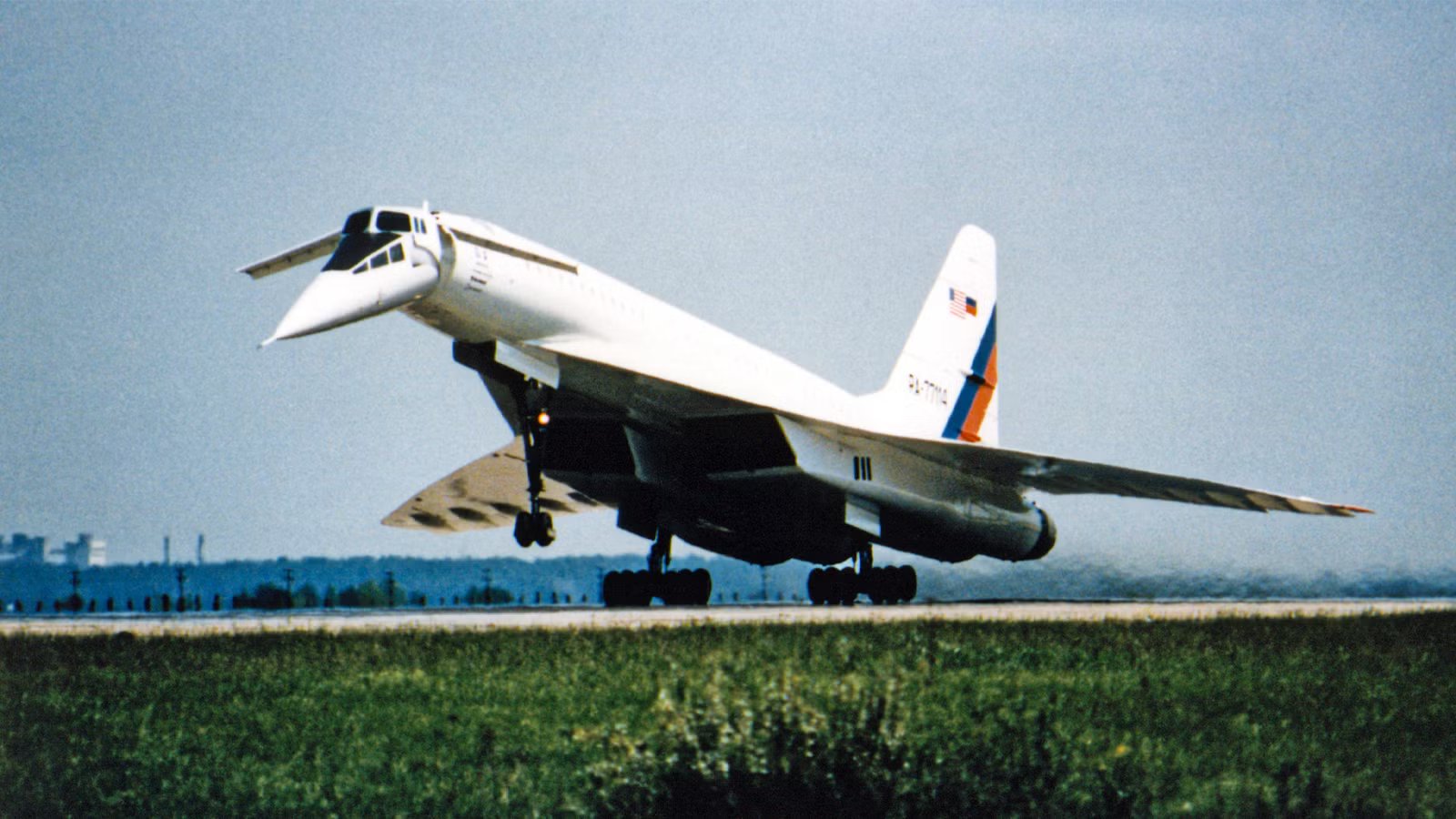
The success of an airliner is generally measured by the number of sales it receives relative to the size of its market and development costs. Today, manufacturers generally have a good read on the airline industry, and as such, generally create aircraft that are successful. Meanwhile, programs with modest sales, like the Airbus A330neo or the Boeing 777X, tend to be low-cost programs that don’t need huge sales to make a profit.
Historically, however, manufacturers were much more willing to experiment, and this created some unique sales duds. While Concorde was a spectacular sales failure, it still managed to become an icon of aviation and a pop culture icon when it was in service.
Generally, however, planes that fail are only built for a few years in low numbers and then disappear into obscurity. They represent different views of the future of the aviation market, and while this was often due to a misreading of the market, this was also sometimes due to design challenges or the circumstances of the time. These are six obscure jet airliners with extremely short production runs.
Tupolev Tu-144
15 airframes built

The dawn of the jetliner revolutionized air travel, cutting travel times in half and opening up new nonstop routes, while providing a more comfortable ride. However, in the 1960s, as jetliners just started becoming widespread, many expected supersonic transports to be the next leap forward, cutting travel times once again while cruising at 60,000 feet. Although the joint British-French Concorde was a failure, with 20 built across 14 years of production, it became a pop culture icon for its speed and quiet, comfortable ride.
The Tupolev Tu-144 was the Soviet Union’s answer to Concorde, but even though the plane was produced for slightly longer, it’s known to few in the West outside the aviation industry. Despite looking like Concorde, the Tu-144 featured more rudimentary technology with less refined aerodynamics. Unlike Concorde, which was renowned for feeling normal while pushing the boundary of what was possible, the Tu-144’s cabin noise was among the loudest of any commercial aircraft, while the plane was plagued by reliability problems.
The Tu-144 was larger and faster than Concorde, and it entered service slightly just a month before its rival, but both aircraft couldn’t escape the economics that doomed commercial supersonic flights. While the 14 production Concordes served for decades and found some success as a status symbol for the ultra-rich, the Tu-144 was a political status symbol. The Tu-144 was built for over a decade, but it only ever operated 55 passenger flights for seven months on a single route from Moscow to Alma-Ata from 1977 to 1978.
Dassault Mercure
12 airframes built

Before Airbus became a force in the airline market, Europe’s aviation industry was defined by a number of smaller manufacturers that built planes for their own countries, but otherwise struggled. In the 1960s, Dassault, a French manufacturer known for its successful fighters and business jets, sought to build a rival to the small Boeing 737-200 and McDonnell Douglas DC-9.
The Dassault Mercure would use the same Pratt & Whitney JT8D engines as its American competitors, but it would be optimized for shorter routes. Despite being larger than a Boeing 737-200, the Mercure was lighter, and its wing was designed for quick climbs rather than cruise performance. In addition, the Mercure was designed to be stretched into larger variants. The plane was expected to be a hit, and Dassault built four assembly lines in anticipation of demand.
|
Dassault Mercure Assembly Plants |
|---|
|
Istres, France |
|
Martignas, France |
|
Poitiers, France |
|
Seclin, France |
The Mercure entered service in 1974, during the 1970s Oil Crisis, but the biggest factor behind its failure was its range of 1,125 NM (2,084 km). While the Mercure was the most efficient aircraft of its day on routes within its range, airlines preferred aircraft with the flexibility to also fly longer routes. The Mercure had enough range for regional routes within France, for instance, but its range was limiting even for other European carriers. Only ten Mercures were ever sold to Air Inter, the type’s only operator, which also acquired one of the prototypes.

Lightning Speed: 8 Planes Owned By John Travolta
One of the most multi-faceted entertainers owns a diverse array of personal aircraft.
Antonov An-10 Ukraina
104 airframes built

The Antonov An-10 is the commercial passenger version of the An-12 military transport. It was developed from the smaller An-8, but featured four turboprop engines and a circular, pressurized fuselage. The An-10 was a large, spacious aircraft, initially designed to fit 85 passengers in a spacious configuration, and could fly a distance of up to 2,200 NM (4,075 km).
While the An-10’s cabin was comfortable for passengers, it made poor use of the interior, with a low cabin floor and wide fuselage, resulting in a heavy plane that couldn’t carry much payload. The Ilyushin Il-18 could carry much more payload compared to its maximum takeoff weight, although the An-10 was still better than the jet-powered Tupolev Tu-104 in this regard.
The An-10 entered service in 1959 with  Aeroflot, and 104 were built until production ended the following year. The aircraft’s service history was spotty, as it experienced 15 accidents from 1958 to 1972. Initially, the An-10 was found to be vulnerable to icing conditions, but later on, the An-10 began experiencing metal fatigue cracks in its wings, which led to in-flight separations. Following a fatal crash in 1972, Aeroflot retired the An-10 from its fleet, ending its commercial career.
De Havilland Comet 1
21 airframes built

While the Boeing 707 and later Douglas DC-8 ushered in the Jet Age, the De Havilland Comet 1 was the world’s first commercial jet aircraft. It entered service in 1952 with BOAC, and quickly attracted headlines as jet propulsion proved itself. The Comet 1 could cruise at an unprecedented 42,000 feet while flying at Mach 0.73, which was significantly faster than any other airliner at the time.
There were 13 Comet 1 aircraft produced, along with eight Comet 1A aircraft that featured higher fuel and weight capacity. The Comet attracted a huge amount of interest from airlines around the world, including Pan American World Airways, but the type has since become known for three fatal crashes caused by structural failures, which led to the entire fleet of Comets being grounded in 1954, just two years after entering service.
|
Early Jetliners |
Entry Into Service |
|---|---|
|
De Havilland Comet |
1952 |
|
Tupolev Tu-104 |
1956 |
|
Boeing 707 |
1958 |
|
Douglas DC-8 |
1959 |
|
Sud Aviation Caravelle |
1959 |
The in-flight breakups were attributed to metal fatigue caused by flaws in the Comet’s design, and while De Havilland worked to redesign the Comet, none of the grounded aircraft ever flew again. During the four-year period in which the Comet was grounded, the Americans developed larger, more economical, and more capable jets of their own. Meanwhile, De Havilland ended up selling fewer than 50 improved Comet 4s, which entered service in 1958.

4 Cool Facts About Elvis’ Convair 880
The former Delta Air Lines jet is adorned with 24K-gold-plated finishes
Convair 880
65 airframes built

In the 1950s, Boeing and Douglas both developed large jet-powered airliners, which quickly attracted huge interest from airlines. Seeing that jetliners were the future, American manufacturer Convair, which was best known for its military aircraft and the CV-240 airliner, sought to jump in, but wanted to avoid competing directly against the 707 and DC-8.
The Convair 880’s selling point was speed, as it was the world’s fastest airliner when it was introduced in 1960. A quadjet, the 880 was equipped with four General Electric CJ-805 enines, whereas the 707 and DC-8 were initially powered by the Pratt & Whitney JT3C. It featured a five-abreast layout, one seat fewer than its rivals, and the 880 was also a fundamentally smaller airliner than its competitors.
While the 880 was promoted as the world’s fastest airliner, its actual top speed was only marginally higher than the 707 and DC-8, if at all. Meanwhile, the CJ-805 engines burned more fuel than the JT3C, and the 880 seated fewer passengers, resulting in much higher operating costs. Furthermore, the 880 was late to the market while also having a short range of roughly 2,500 NM (4,600 km), and it was late to the market, too.
Convair 990 Coronado
37 airframes built

The Convair 990 Coronado was a development of the 880, which the manufacturer made as a response to an American Airlines request for an airliner that could fly nonstop transcontinental routes faster than existing airliners. American requested Convair to stretch the 880, and, to meet the speed requirements, Convair equipped the new 990 with the General Electric CJ-805-23 turbofans. In addition, Convair refined the jet’s aerodynamics by adding large anti-shock bodies that could also hold extra fuel.
The initial 990 couldn’t meet the speed requirements agreed upon by Convair and  American Airlines, which were set at Mach 0.89. This led American Airlines to reduce its order for the 990, and Convair ended up significantly refining the aircraft into the 990A, which was able to cruise at Mach 0.89.
The Convair 990 and 990A ended up suffering the same problem as the earlier 880, in that they burned too much fuel to be economical, while also being smaller than their competitors. In 1960, the Boeing 720 entered service, and this aircraft, a smaller derivative of the 707, competed in the same size category as the Convairs, while being far more compelling economically. The 880 ended production just two years after entering service in 1960, while production of the 990 ended just one year after it entered service in 1962.