dailynewsnblog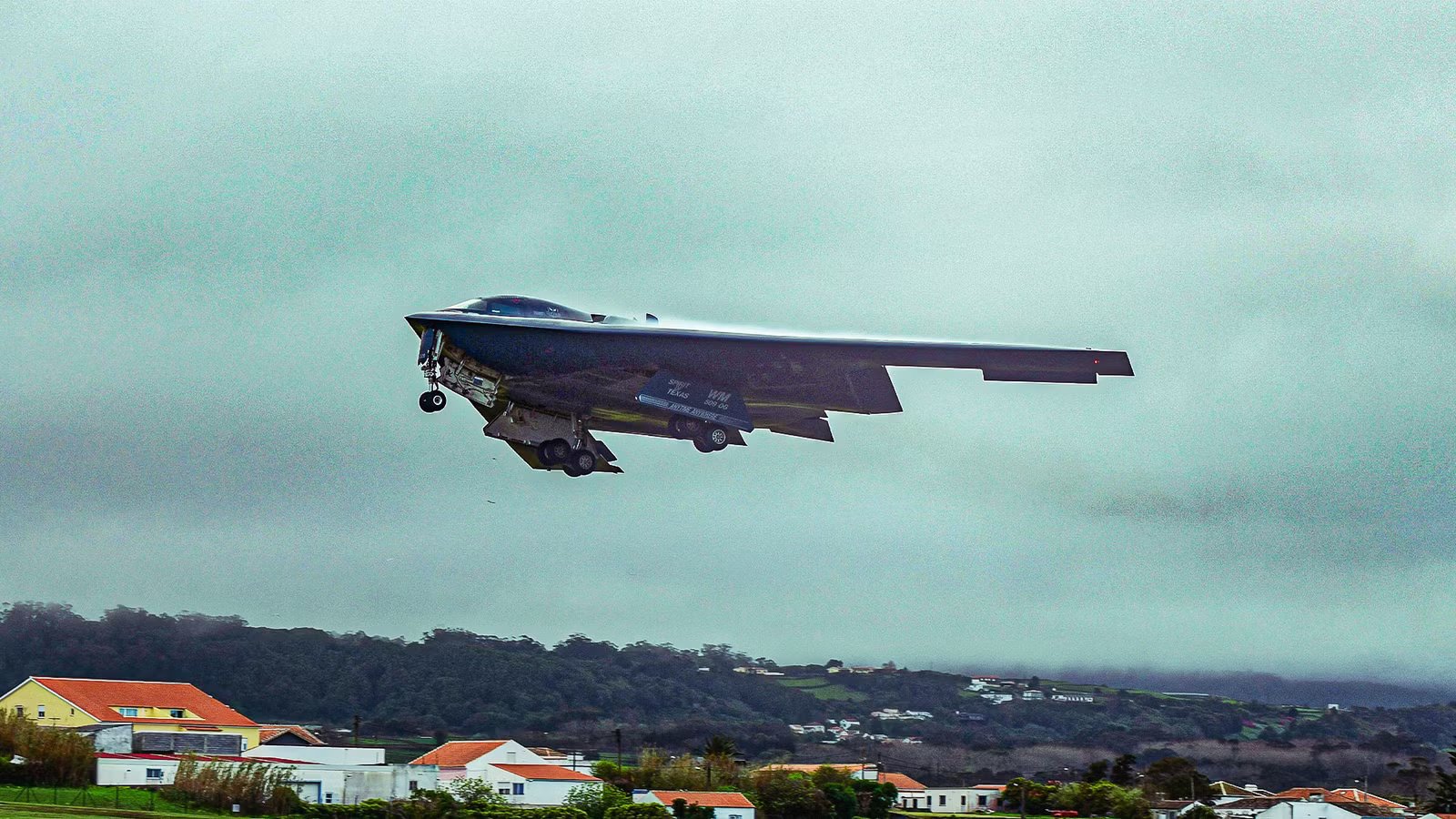
Military aviation history is filled with aircraft built in the hundreds or even thousands, but some of the most advanced and strategically important aircraft were produced in surprisingly small numbers. The Northrop B-2 Spirit, for example, saw just 21 aircraft built, while the Lockheed SR-71 Blackbird, one of the fastest aircraft ever flown, totaled only 32 airframes. In many cases, high costs, changing military doctrines, or the end of the Cold War dramatically reduced production runs.
Using production figures and program histories, this list looks at six military aircraft that were produced in particularly low numbers despite their importance. Ranked by total production, these aircraft range from nuclear bombers to stealth attack aircraft and reconnaissance legends, showing that influence and production volume do not always go hand in hand.
6
Lockheed F-117 Nighthawk: 64 Black Jets
The stealth attack aircraft developed in total secrecy

The Lockheed F-117 Nighthawk was the world’s first operational stealth combat aircraft, developed in deep secrecy during the late Cold War by Lockheed’s Skunk Works. Its distinctive faceted shape was designed to scatter radar waves rather than for aerodynamic efficiency, making it extremely difficult to detect and ideal for precision strikes against heavily defended targets.
Despite its designation letter “F”, which is reserved for fighters, the F-117 is actually a precision strike aircraft designed to deliver laser-guided bombs against high-value targets such as command bunkers, radar sites, and air defense installations. The aircraft was aerodynamically unstable and relied entirely on fly-by-wire flight controls, which at the time represented cutting-edge technology.
Total production reached 64 aircraft, including five YF-117 pre-production aircraft and 59 operational F-117A aircraft. Production numbers were intentionally kept low due to the aircraft’s specialized mission, high cost, and the classified nature of the program, which limited how widely it could be deployed.
The aircraft made its combat debut during Operation Just Cause in Panama in 1989 and became internationally famous during the 1991 Persian Gulf War, where it struck heavily defended targets in Baghdad. The F-117 was officially retired from frontline service in 2008, although several aircraft have remained in limited use for testing and training, meaning the Nighthawk has never completely disappeared from US Air Force operations.

6 Aircraft That Represent The Future Of Air Combat
Discover six aircraft redefining modern air warfare, from stealth fighters to missile trucks, shaping the balance of air power in 2026 and beyond.
5
Dassault Mirage IV: 62 Delta-wing Bombers And Spy Planes
France’s nuclear deterrent during the cold war

The Dassault Mirage IV was France’s supersonic strategic bomber and formed the airborne component of the country’s nuclear deterrent, known as the Force de frappe. Developed in the late 1950s and entering service in the mid-1960s, the aircraft was designed for high-speed, high-altitude penetration missions carrying nuclear gravity bombs deep into enemy territory.
What makes the Mirage IV particularly interesting is that its relatively small production run was not the result of budget problems or program cancellation, but rather a deliberate strategic decision. France did not aim to build a massive strategic bomber fleet like the United States or the Soviet Union. Instead, its nuclear doctrine focused on maintaining a smaller but credible deterrent force capable of guaranteeing retaliation in the event of a nuclear attack.
A total of 62 Mirage IV aircraft were built. As air defense systems improved during the Cold War, the aircraft’s role evolved from high-altitude nuclear strike to low-level penetration missions and later to strategic reconnaissance. In its reconnaissance configuration, the Mirage IVP remained in service into the early 2000s, long after its original nuclear strike role had ended. Despite its relatively small production run, the Mirage IV served for nearly four decades. The aircraft demonstrated how a limited number of highly specialized aircraft could play a central role in national defense strategy, particularly when tied to nuclear deterrence policy rather than conventional warfare.
4
Hawker Siddeley Nimrod: 49 RAF Cold War Classics
Britain’s maritime patrol and anti-submarine warfare jet

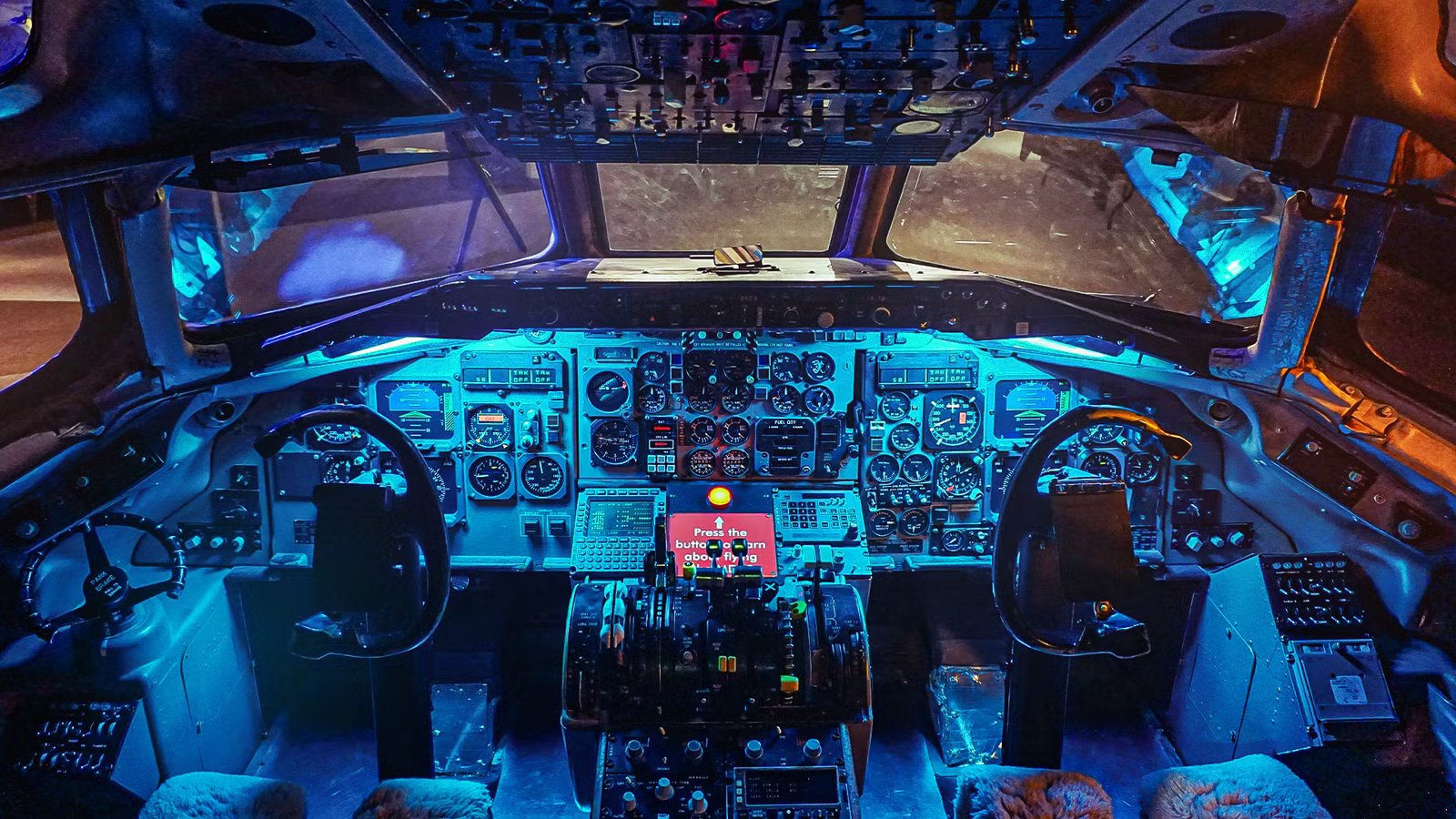
The Hawker Siddeley Nimrod was the Royal Air Force’s long-range maritime patrol, anti-submarine warfare (ASW), and reconnaissance aircraft, developed from the de Havilland Comet, the world’s first commercial jet airliner. The Nimrod first flew on 23 May 1967 and entered RAF service on 2 October 1969, replacing the Avro Shackleton in the maritime patrol role.
Unlike other maritime patrol aircraft that were derived from civil airliners, the Nimrod retained the Comet’s jet engines, giving it relatively high transit speeds to patrol areas while still maintaining long endurance once on station. The aircraft was extensively modified compared to the Comet, with a redesigned fuselage, weapons bay, strengthened structure, and advanced radar and sensor systems for maritime surveillance and anti-submarine warfare.
The Nimrod family included several variants. The MR.1 and later MR.2 were the main maritime patrol and ASW versions, while three Nimrod R.1 aircraft were built for signals intelligence and electronic intelligence missions. The AEW.3 airborne early warning variant was developed in the 1970s but ultimately canceled after major technical problems. Decades later, the Nimrod MRA.4 rebuild program attempted to modernize the fleet with new wings, engines, and avionics, but this program was also canceled before entering service.
Operationally, the Nimrod proved extremely valuable despite its small fleet size. During the Cold War, Nimrods conducted anti-submarine patrols tracking Soviet submarines in the North Atlantic and Norwegian Sea. The aircraft also supported operations during the Falklands War, the Gulf War, and later conflicts in Iraq and Afghanistan, where some aircraft were adapted for overland surveillance and intelligence roles. The Nimrod’s production run was relatively small by Cold War standards. In total, 49 production aircraft plus two prototypes were built for the RAF. This modest number reflected both the aircraft’s highly specialized role and the United Kingdom’s more limited maritime patrol requirements compared to the United States or the Soviet Union, which operated much larger fleets of patrol aircraft.
3
Tupolev Tu-160: 38 White Swans And Counting
Russia’s supersonic nuclear bomber remains in production decades after its debut

The Tupolev Tu-160, known by NATO as the “Blackjack,” is the largest and fastest supersonic bomber ever built still in service, and it represents the final evolution of Soviet Cold War bomber design. Featuring variable-sweep wings, enormous fuel capacity, and the ability to carry long-range nuclear and conventional cruise missiles, the aircraft was designed for intercontinental strike missions.
Initial production took place in the 1980s at the Kazan Aircraft Production Association, but the collapse of the Soviet Union in 1991 halted production and left several aircraft unfinished. Some airframes were inherited by Ukraine after the dissolution of the USSR, with several later transferred to Russia as part of debt settlement agreements in the late 1990s.
Original Soviet and early Russian production totaled 36 aircraft, although not all were operational at the same time due to storage, modernization, and airframe condition. What makes the Tu-160 particularly unusual is that production did not truly end. In the 2010s, Russia restarted production in the form of the modernized Tu-160M and Tu-160M2 variants, effectively continuing a bomber program that began during the Cold War.
Each Tu-160 is considered a major strategic asset due to its speed, range, and large cruise missile payload. Because of this, even a relatively small fleet can provide significant long-range strike capability, which helps explain why production numbers have always remained limited compared to tactical aircraft.

7 Reasons Why The US Air Force Still Operates The B-52
From nuclear deterrence to missile truck missions, the B-52 Stratofortress remains essential to US airpower even in 2026.
2
Lockheed SR-71 Blackbird: 32 Aircraft Built
The high-speed reconnaissance aircraft that still holds records

The SR-71 Blackbird still holds the title as the fastest air-breathing manned aircraft ever built, capable of flying at Mach 3.2 at altitudes around 85,000 feet. Developed by Lockheed’s legendary Skunk Works under Clarence “Kelly” Johnson, the innovative shape of the USAF aircraft was based on the earlier A‑12 Oxcart program. The Lockheed A‑12, operated by the CIA, was produced in roughly a dozen examples, but since the A‑12 was a civilian‑agency program, it is excluded from this military‑only list.
What made the SR-71 truly remarkable was not just its speed, but its intelligence-gathering capability. The aircraft could survey roughly 100,000 square miles of the Earth’s surface in a single hour and could reportedly photograph objects as small as a car license plate from 80,000 feet. In practice, its primary defense was simple: if a missile was launched at it, the crew would accelerate and outrun the threat.
In total, Lockheed built just 32 Blackbirds, including the SR-71A operational aircraft, two SR-71B trainer variants, and the SR-71C trainer. The aircraft’s structure was made from approximately 85% titanium to withstand the extreme temperatures generated during sustained Mach 3 flight, where surface temperatures could exceed 572°F ( 300°C) in some areas. Operating the SR-71 was extremely demanding and expensive. After each mission, the aircraft required extensive maintenance and inspection, meaning that, on average, each SR-71 flew only about once per week.
Despite regularly flying over or near heavily defended territory during the Cold War, no SR-71 was ever shot down — the aircraft simply flew too fast and too high for interceptors and missiles to reach it reliably. The SR-71 was officially retired in 1989 due to budget pressures, briefly returned to service in 1995, and NASA flew the final Blackbird mission in October 1999. As of 2026, the aircraft still holds the world speed and altitude records set in 1976, more than half a century later, which says a great deal about just how far ahead of its time the Blackbird really was.
1
Northrop B-2 Spirit: 21 Flying Wings
The stealth bomber that became a symbol of modern air power

The B-2 Spirit Bomber is widely considered the most advanced strategic bomber ever built and is also one of the rarest operational military aircraft in history. When the program began in the mid-1980s, the US Air Force originally planned to build 132 aircraft, a number later reduced to 75 as costs began to rise. However, the end of the Cold War dramatically changed the program’s future. With the Soviet Union collapsing and defense budgets shrinking, President George H.W. Bush announced in his 1992 State of the Union address that production would be capped at just 20 aircraft. A 21st airframe, originally built as a test aircraft, was later converted to operational status, bringing the final total to 21 B-2 bombers.
Production ran from 1988 to 2000, and because development costs were spread across such a small fleet, the average unit cost reached approximately $2.1 billion per aircraft, making the B-2 the most expensive military aircraft ever built. Its flying wing design, constructed largely from carbon-fiber composites and built to extremely tight manufacturing tolerances, gives the aircraft a minimal radar cross-section, allowing it to penetrate some of the most sophisticated air defense systems in the world.
The fleet has also been reduced over time. One B-2 was destroyed in a crash at Andersen Air Force Base in Guam in 2008, and another aircraft was retired after being severely damaged in a fire in 2022. This left just 19 aircraft in operational service as of 2024. Despite the small fleet size, the B-2 remains a central component of US long-range strike capability, and the US Air Force plans to operate the aircraft until around 2032, when it will gradually be replaced by the B-21 Raider. The B-2 Spirit ranks first on this list because it has the lowest production total among these aircraft, making it one of the rarest and most exclusive operational bombers in military aviation history.