dailynewsnblog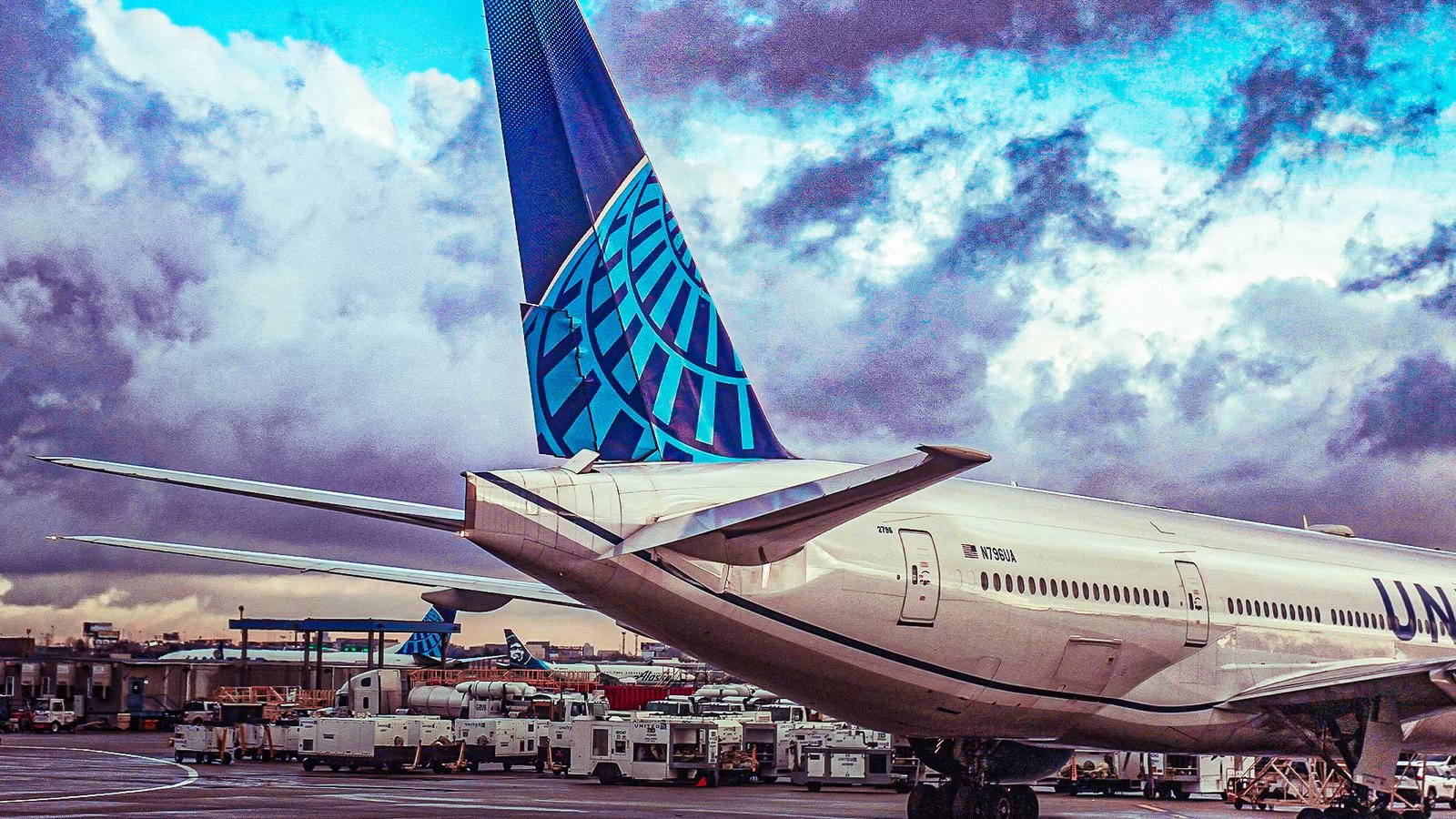
The scale of today’s North American aviation industry is a staggering testament to modern engineering and logistics. The continent’s major carriers manage massive fleets that collectively facilitate the movement of millions of passengers every single day. These six airlines represent the absolute pinnacle of operational capacity, showcasing the immense coordination required to maintain thousands of aircraft across vast domestic and international networks.
The criteria for being the largest have evolved to include not just the number of hulls but the strategic modernization of these assets. Each carrier has its own way of balancing aging airframes with next-generation deliveries like the Airbus A321neo and the Boeing 787-10. By examining these six powerhouses, we gain a clearer picture of who truly dominates the North American skies and how they are positioning themselves for a more efficient future.
6
Air Canada
222 aircraft

 Air Canada maintains its position as the sixth-largest operator in North America with a main fleet of approximately 222 aircraft, according to the latest data from Planespotters.net. As the primary flag carrier of the North, the airline manages a highly diverse inventory that allows it to bridge the gap between thin domestic routes and high-demand international corridors. This versatility is the basis of the overall strategy, enabling it to compete effectively against much larger US-based carriers by focusing on precision and premium service rather than purely on the total number of hulls in the air.
The airline has heavily invested in the Airbus A220-300, operating 42 of the Canadian-built jets to serve secondary markets with exceptional comfort. Meanwhile, its widebody operations are anchored by the Boeing 787 Dreamliner and the 777-300ER, which form the backbone of its trans-Pacific and trans-Atlantic networks. With new orders for the A350-1000 and 787-10 recently announced, Air Canada is aggressively modernizing its long-haul capabilities to ensure it remains a top-tier global player for the remainder of the decade.
Air Canada has placed a strategic focus on right-sizing its operations rather than chasing sheer volume. While its fleet count is smaller than the US giants, its presence abroad is exceptionally robust, with frequent services to destinations across Eurasia and South America, according to Business Traveler. Through its primary hubs in  Toronto and Vancouver, the airline remains the dominant international force in the northern half of the continent, proving that a well-curated fleet can be just as impactful as a massive one.
5
Alaska Airlines & Hawaiian Airlines
413 aircraft

According to Planespotters.net, the  Alaska Air Group now commands a unified mainline fleet of approximately 413 aircraft following its successful integration with Hawaiian Airlines. This combination creates a formidable operator that bridges the gap between the Continental United States and the Pacific archipelago. By merging Alaska’s narrowbody efficiency with Hawaiian’s widebody long-haul capabilities, the group has secured a dominant position on the West Coast.
At the forefront is a fleet led by 248 examples of 737 aircraft, including a growing number of MAX variants. On the Hawaiian side, the inclusion of 24 Airbus A330-200s and a new order for 787-9 aircraft provides the necessary lift for high-capacity routes far beyond what Alaska could have achieved on its own. This diverse mix allows for specialized operations across varying distances and climates.
This fleet comes in at number five with a collective scale of its two distinct brands, which now operate under a single holding company. While it remains smaller than the traditional major players, its unique geographic advantage and focus on the leisure-heavy Hawaiian market give it an outsized impact. The group’s expansion into Japan and other East Asian markets further cements its role as a critical Pacific gateway in 2026.

One Year On: Was Alaska Airlines’ Merger With Hawaiian Worth It?
There have already been some notable improvements in the first year of integration.
4
Southwest Airlines
800 aircraft

 Southwest Airlines holds the fourth position in North America with a fleet of approximately 800 aircraft, according to Planespotters.net numbers. As the world’s largest operator of the 737, the Dallas-based carrier remains strictly committed to its famous single-type philosophy. This streamlined approach minimizes maintenance complexity and flight crew training costs, allowing the airline to maintain a high-frequency, point-to-point network across the continent.
The airline is currently in the midst of a massive modernization phase, systematically replacing aging 737-700s with the more fuel-efficient 737 MAX 8. The MAX variants now represent a significant portion of their active inventory, offering superior range and reduced carbon emissions. By late 2026, the carrier will have also successfully integrated high-speed satellite connectivity across most of its fleet to remain competitive in the modern market.
Southwest’s fleet is composed entirely of narrowbody aircraft, which inherently limits its operations to domestic and near-international destinations. Unlike legacy carriers, Southwest lacks the widebody fleet needed to reach the East Asian market or European hubs. However, its focus on domestic volume keeps it a dominant force in the United States. For a low-cost carrier to have achieved the fleet size it has, Southwest should be very proud to have beaten tough competition.
3
Delta Air Lines
996 aircraft

 Delta Air Lines holds the third position in North America with a fleet of 996 aircraft, according to Planespotters.net. Unlike its primary peers, which often focus on a single manufacturer for certain roles, Delta maintains a diverse mix of Airbus and
  Boeing jets. This dual-source strategy provides the carrier with unique operational ability and flexibility across its vast global network.
The airline is currently refreshing its inventory with the A321neo and the A350-900. These next-generation aircraft are replacing aging 757 and 767 models throughout the system. The A321neo has fast become the primary option for high-demand transcontinental routes, offering significantly improved fuel efficiency and a modernized passenger experience.
This ranking reflects Delta’s strategic focus on premium yields rather than just pursuing the highest total hull count. The carrier utilizes its long-range widebody fleet to dominate key East Asian corridors, specifically through its major hub at  Tokyo Haneda Airport(HND). This ensures Delta remains a top-tier international force while maintaining one of the most modern fleets out there.
2
American Airlines
1,021 aircraft

 American Airlines secures the second position in North America with a massive fleet of approximately 1,021 aircraft, Planespotters.net data shows. Based in
  Dallas/Fort Worth International Airport(DFW), the carrier operates a staggering volume of short-to-medium-haul flights, utilizing a robust narrowbody strategy to connect its massive hubs in Dallas, Charlotte, and Miami. This high-frequency model is designed to maximize domestic connectivity while maintaining a lean operational profile.
American’s fleet is anchored by the A321 and 737 families, which together comprise over 700 of its total aircraft. To help grow this portion of the fleet, the airline is deeply invested in the new A321XLR, a long-range narrowbody that allows it to serve smaller European markets directly from its East Coast hubs. This shift reduces the reliance on larger widebodies for thinner international routes.
American has true domestic dominance, and the scale of its narrowbody operations is unlike any other carrier globally. While it has streamlined its widebody fleet to consist entirely of 787 and 777 aircraft, it lacks the overall fleet count to overtake the number one spot. Its focus remains on being the primary connector for the American heartland through its unmatched regional and mainline integration. This massive short-haul network acts as a powerful feeder system, funneling passengers from secondary cities into flagship international hubs like Dallas-Fort Worth and Miami. By prioritizing this high-frequency domestic grid, the airline ensures it remains the most accessible choice for millions of travelers regardless of their final destination.

The World’s Largest Airline By Fleet Size
A battle of the giants.
1
United Airlines
1,094 aircraft

 United Airlines officially secures the top position in North America for 2026, operating a massive fleet of 1,094 aircraft, according to Planespotters.net. This milestone follows a record-breaking delivery plan, with the Chicago-based carrier set to induct 250 new airframes over the next two years. United surpassed its legacy rivals to become the largest fleet operator not just in the United States, but globally.
The catalyst for this growth is the United Next strategy, a comprehensive modernization effort that has seen 237 737 MAX and 67 A321neo aircraft join the fleet since 2021. Furthermore, United is currently undergoing the largest widebody expansion in US history. With 20 new Boeing 787-9s arriving this year alone, the airline is aggressively phasing out older 767s in favor of the efficiency of the Dreamliner family.
United’s leadership is defined by its Elevated interior experience, which is being rolled out across both narrowbody and widebody sub-fleets. By the end of the year, the carrier will have successfully differentiated itself by offering more premium lie-flat seats than any other North American competitor, particularly on its high-yield transpacific and transatlantic routes. This massive commitment to premium capacity ensures that United can further utilize its Tokyo Narita hub to bridge the gap between North America and the high-demand East Asian market. By maintaining this consistent level of luxury across its record-breaking fleet, the airline is redefining what global connectivity looks like for the modern business traveler.