dailynewsnblog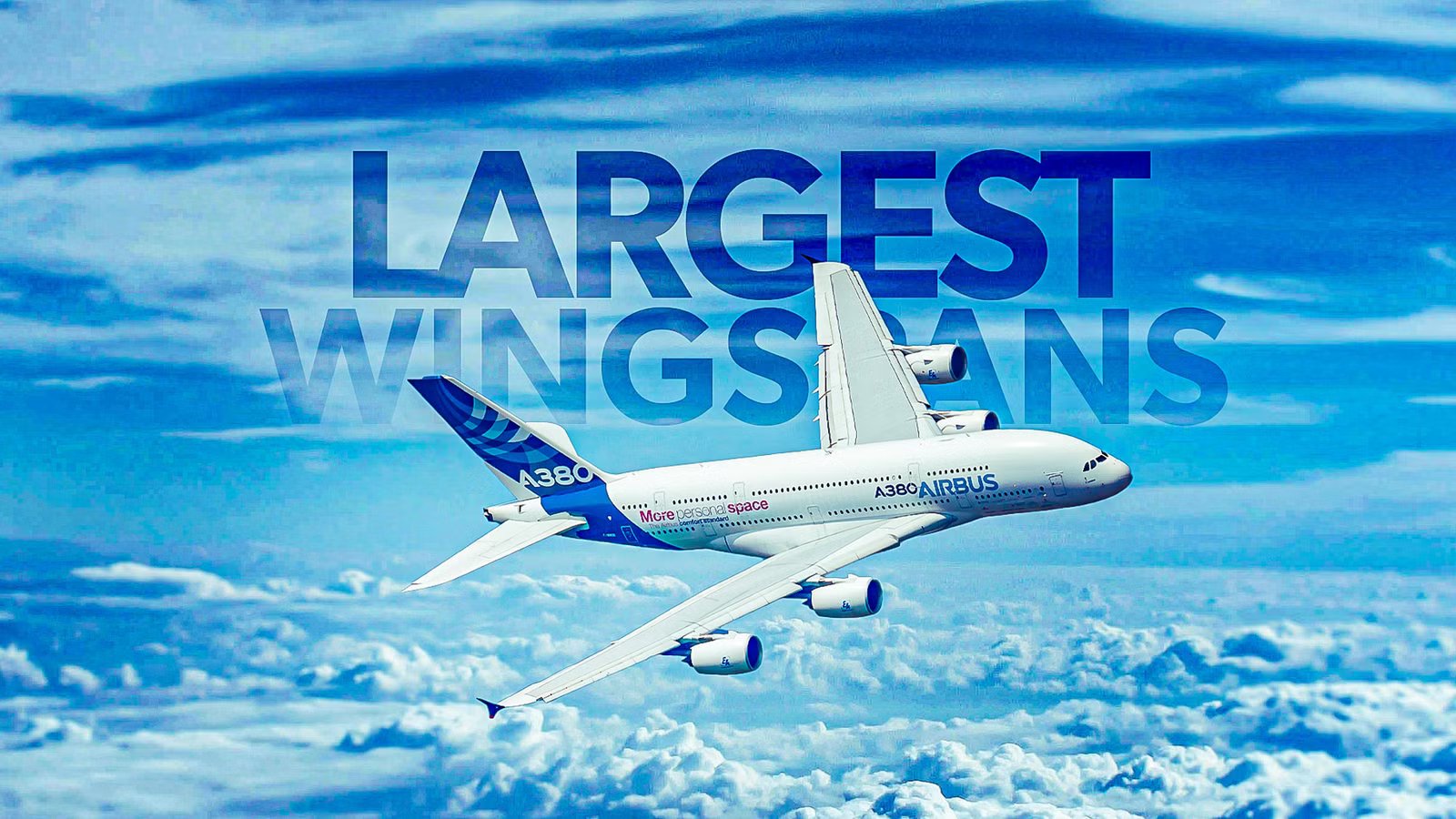
From superjumbos to next-generation widebody aircraft, the race to achieve the highest fuel efficiency and the greatest payload is driving commercial aircraft to larger and larger wingspans with every iteration. Yet to enter full-rate production, the latest and greatest twin-aisle commercial jet will even have folding wingtips in an industry first, as the Boeing 777X attempts to change the game.
The reigning wingspan champion is also the world’s largest aircraft by seat count, Airbus’ amazing superjumbo, the A380. Sadly, the former largest commercial jet was destroyed during the Russian invasion of Ukraine when the Antonov An-225 Mriya was caught in crossfire. It is possible that one day the second unfinished prototype may be completed, but until then, these six jetliners are the world’s widest commercial aircraft by wingspan.
6
Airbus A350-1000
212 feet

The A350-1000 is the largest and most powerful variant of the A350 family. These jets are the Next Generation, clean sheet widebody design that represents the very best of commercial aircraft technology from Airbus. It is hailed as the long-haul champion for its exceptional fuel efficiency over long-range routes, thanks to the advanced composite construction and Rolls-Royce Trent XWB-97 power plants.
Qantas is getting ready to debut the world’s longest revenue service from Australia to the United Kingdom when it receives the aircraft for the special project. The first specially modified A350-1000ULR (Ultra Long Range) is on the assembly line and scheduled for delivery. The airline hopes to begin service from Australia to London and New York in early 2027 with an itinerary that will last over 22 hours from takeoff to touchdown.
In addition to its enormous size, fuel efficiency, and range, the A350 has one of the best passenger experiences in long-haul flying, thanks to its Airspace cabin that features several innovative technologies. The cabin air is pressurized to 6,000 feet, which is lower than the 8,000 ft found in legacy widebody jets, and it is recycled every two to three minutes to improve air quality.
It is also three decibels quieter than previous-generation twin-aisle jets. It also has better shoulder room and a more spacious overhead architecture. Full LED ambient lighting allows for customization to simulate the natural daylight cycle or set a tranquil mood to reduce fatigue. Qatar Airways is currently the largest operator with 28 in active service.
5
Boeing 777-300ER
212 feet

The Boeing 777-300ER essentially killed the four-engine jet. Until the Boeing 787 Dreamliner overtook it, the 777-300ER was the best-selling widebody airliner in history. There are currently 700 in active service, and it still holds the distinguishing honor of being one of the most important pioneers of twin jet operations in the history of commercial flying.
Before this aircraft, flying 350 or more passengers across the Pacific required four engines, like the 747, for both power and safety. Its enormous wingspan of more than 212 feet, paired with the General Electric GE90-115B engines, made it capable of transoceanic and transcontinental flying with such exceptional reliability that it literally changed the rule book.
The 777-300ER pioneered the ‘Big Twin’ era by achieving Extended-range Twin-engine Operational Performance Standards, or ETOPS, ratings that were previously unheard of. The 777-300ER proved that two massive engines were not only enough but significantly better for an airline’s bottom line. Not only was the GE 90 the most powerful engine in commercial service until the GE9X was made for the 777X, but it saved 20 to 25% of fuel cost compared to quad jets and almost 40% in maintenance.
4
Boeing 747-8
224 feet

Referred to as the queen of the skies, since the jumbo jet first debuted as the world’s first twin aisle, widebody airliner, the 747 remains one of the largest aircraft in commercial service. The assembly line was officially shut down in 2023, and the global fleet continues to diminish as fuel and maintenance costs make its upkeep untenable under the economics of modern-day passenger flying. All the same, a few airlines have deemed it worthy to continue flying the prestigious and much-loved double-decker jet, meaning it earns the fourth spot on the list of the widest wingspan commercial aircraft today.
It’s even longer than its wingspan of 224 feet, with the nose-to-tail length breaking the 250-foot mark. In fact, it was only recently surpassed by the Boeing 777-9, which is yet to go into full-scale production. Notably, its 140-ton cargo payload capacity and hinged nose-door have also made it extremely popular in the freighter industry. Despite its fading away from jet bridges at hubs around the world, the 747-8F and conversion models still have a long career ahead of them in the air cargo business.

The 5 Greatest Quadjets Of All Time
Discover the best of a dying breed.
3
Boeing 777-9
235 feet

Boeing 777X is as famous for its enormous size as it is for its incredibly late debut into full commercial service. Originally slated for the first deliveries to go to launch customer Lufthansa in 2020, Boeing is now aiming for full certification this year, with the first deliveries to be in 2027. However, when the incredibly enormous widebody jet does finally take off, it will introduce a host of incredible new technologies, with the folding wing tips as the headline feature.
This jet is not as high-capacity as the double-deckers that it is supposed to replace, the 747 and A380, but it has very competitive capacity and is not restricted to special airports like the jumbo jets that it succeeds. The 777-9 features an advanced carbon-fiber composite wing that is longer and more flexible than previous designs, contributing to a 20% drop in fuel consumption.
Borrowing technology from the 787 Dreamliner, the interior offers larger windows, higher humidity levels, and a wider cabin architecture. It is also powered by two General Electric GE9X engines, the largest and most powerful commercial jet engines ever built, with a fan diameter roughly the width of a Boeing 737 fuselage. On March 17, 2026, the FAA officially cleared the 777-9 to begin Phase 4A of its Type Inspection Authorization.

Airbus A350-1000 Vs Boeing 777X: Which Is Best?
Both the Airbus A350-1000 and the Boeing 777X are among the latest widebody titans poised to define long-haul travel for decades to come. The A350-1000 has already secured a solid place in many international fleets, praised for its fuel efficiency, composite design, and passenger comfort. Meanwhile, Boeing’s 777X, with its folding wingtips and GE9X engines (the largest ever fitted to a commercial airliner) is preparing for its long-awaited entry into service, now expected in 2026.
As airlines continue to phase out older quad-jets and seek the perfect balance between capacity, range, and economics, the stakes couldn’t be higher. Which aircraft will dominate the future skies? Will Airbus maintain its lead, or will the 777X make a strong comeback for Boeing in the widebody market? The A350-1000 boasts:
– Superior Range: The A350-1000 boasts a range of 13,500 km (9,000 nmi), superior to the 777-8 variant with a maximum range of 8,745 nmi (16,190 km). This enables airlines to serve a
2
Antonov An-124 Ruslan
240 feet

Designed in the 1980s to transport massive Soviet military hardware, the Ruslan now serves as a critical workhorse for civil and defense heavy-lift logistics. The enormous jet can haul 150 tons of payload and has a 120-foot-long cargo hold. Due to the strain on both the Russian military and commercial industry, the missions of the An-124 are divided between military missions and a restricted commercial sector.
Volga-Dnepr, Russia’s largest commercial An-124 operator, has seen its global reach crippled by the war. The aircraft are banned from flying into North America or Europe due to the present sanctions against Russia. Numerous aircraft have also been impounded overseas, with one notable example being at Toronto Pearson Airport (YYZ), currently expected to be transferred to Ukraine. On the other hand, Antonov still operates a large fleet of its own, as the industry leader of global operations for the type in 2026.
A single An-124 can carry up to four Ka-52 Alligator or Mi-28 attack helicopters, allowing for the rapid relocation of air assets between different theaters of operation. It is used to ferry heavy equipment like T-90M tanks, S-400 missile systems, and ballistic missile launchers over long distances within Russia to frontline staging areas.
Sanctions and the severance of ties with the original Ukrainian maker, Antonov, have forced Russia to launch a deep modernization program to keep its fleet flying until the 2040s. Ukraine has targeted maintenance and production facilities that support the fleet due to its strategic importance, making these sites high-value targets in the ongoing conflict.

Antonov An-225 Mriya: 5 Facts About The Largest Aircraft Ever Built
Discover what made Antonov’s ‘Dream’ so amazing.
1
Airbus A380-800
261 feet

Airbus officially shut down the production line in 2021, but the A380 still claims the title for the biggest wings in the sky. The colossal jets were grounded briefly around the world in large numbers due to low demand, but in the resurgence of travel demand, the superjumbos are enjoying a strong rebound in popularity. As of February 2026, there are 159 active A380s operated by ten major airlines.
The A380 is the only aircraft with two full-length passenger decks. They are typically configured for around 500 passengers in a four-class layout, though it is certified to carry a maximum of more than 850 passengers in an all-economy configuration. Despite its size, the superjumbo is famously quiet for passengers and has an advanced flight control system that automatically adjusts to turbulence.
The A380 was a kind of test bed for Airbus during its development, and proved many new technologies which have become standard on later generations like the A350. The extensive use of carbon fiber composites, which compose around 25% of the A380 structure, was a key innovation that not only made the plane fuel efficient and strong but also quieter. Today, the original prototype that was used to certify the series, MSN001, is now being overhauled as a flight demonstrator for the hydrogen alternative fuel ZEROe program, continuing a legacy of pioneering engineering.
Emirates is the world’s largest operator with roughly half of the total number produced when the assembly line shuttered its doors. It currently has more than 110 aircraft in the fleet and is investing billions to retrofit with new interiors. As there is no successor with a comparable layout, Emirates expects to keep flying these jets until after 2040. The airline is heavily invested in future 777X orders but intends to fly its A380s until they age out.