dailynewsnblog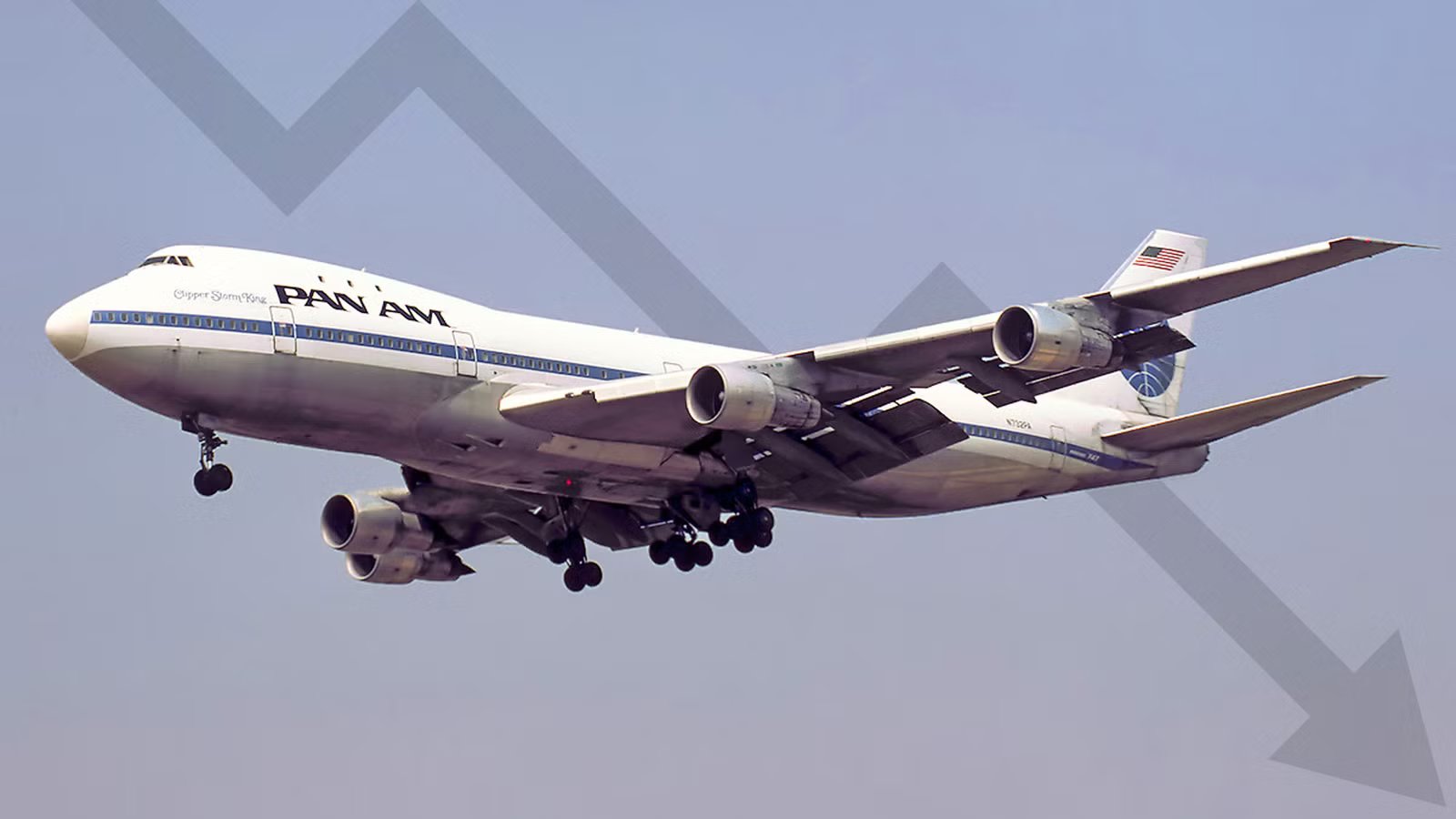
Six Boeing aircraft, the Boeing 247, 707, 747, 737, 777, and 787, collectively reshaped commercial aviation. Ranging from the ten-seater Boeing 247 to the massive Boeing 747 and Boeing 777, these aircraft improved operating economics and drastically shrunk the globe thanks to ranges exceeding 7,000 nautical miles (13,000 km). The design leaps that each aircraft represented during their time period helped lower ticket prices, opened up new routes, and continue to influence the fleets of major global airlines.
Looking at the technical data and history of each aircraft, each plane introduced a measurable shift in commercial aviation. The Boeing 247 represented Boeing’s first commercial aircraft and featured many firsts for its time, while the Boeing 747 was the world’s first jumbo jet, and the 787 introduced new manufacturing techniques for the 21st century. Here’s a look at the six aircraft in the order they were introduced and the impacts they had on commercial aviation.
6
Boeing 247
Boeing’s First Commercial Aircraft

The Boeing 247, introduced in 1933, was  Boeing‘s first commercial aircraft and set the stage for over 90 years of commercial aircraft manufacturing at the American manufacturer. At the time, which was only 30 years after the Wright brothers’ first flight, most aircraft still featured fabric-covered structures and fixed landing gear. The Boeing 247 upended this traditional design with all-metal construction, retractable landing gear, and a fully cantilevered wing (meaning it has no supports other than the connection to the fuselage at the root of the wing). These innovations, all of which were first introduced on the Boeing 247, significantly improved the aircraft’s aerodynamic efficiency and reliability.
In a typical layout, the Boeing 247 could carry ten passengers with a three-person crew. Impressively, the Boeing 247 was 50% faster than its competitors, with a cruise speed of 189 miles per hour (304 km/h) and a range of 647 nautical miles (1,199 km). Initially operated by United Airlines, the aircraft helped significantly reduce transcontinental travel time. In fact, the aircraft’s inaugural service from San Francisco to New York City broke records, setting the fastest transcontinental time of just 19.5 hours, eight hours faster than the Ford Trimotor or Curtiss Condor.
While only 75 aircraft were produced, the Boeing 247’s influence was enormous. Features like the 247’s enclosed, streamlined cabins and updated flight instrumentation systems became standard for aircraft built in the years following. The aircraft marked Boeing’s entry into commercial aviation, an industry where Boeing remains as one of the two largest aircraft manufacturers globally.
5
Boeing 707
The first commercial Boeing jet engine aircraft

Up until World War II, all aircraft featured propeller-based power systems. However, the arrival of the Boeing 707 in 1958 ushered in the jet age in commercial aviation. With a cruising speed near Mach 0.8 (610 mph or 980 km/h) and seating for 140 to 189 passengers, the 707 dramatically reduced travel times compared to piston aircraft like the DC-6 and DC-7 and could carry significantly more passengers as well. Its introduction in the post-war era, when demand for travel was booming, helped airlines meet the increased demand and made long-distance travel far more practical for both business and leisure travelers.
Airlines like Pan American World Airways and Trans World Airlines quickly adopted the Boeing 707, becoming two of the largest operators of the type. By 1978, the end of the 707’s 22-year production run, Boeing had built and delivered 865 Boeing 707 aircraft. In fact, the 707 continues to fly today in various military roles, including as the KC-135 Stratotanker for refueling missions and the E-3 Sentry for surveillance.

The Evolution Of Boeing Commercial Jets: From The 707 To The 777X
The American planemaker has come a long way since the 707 first flew more than 67 years ago.
4
Boeing 737
A narrowbody workhorse with a 60-year history

Where the Boeing 707 redefined commercial jet travel, the Boeing 737 easily became Boeing’s most successful aircraft type. First introduced in 1967, the Boeing 737 was a narrowbody aircraft that originally sat roughly 85 to 130 passengers. Today, over a dozen variants of the 737 have been produced, starting with the Boeing 737-100 and going all the way up to the largest Boeing 737 MAX 10, which is on track to receive FAA certification in the coming years.
Since its introduction, over 12,000 737 aircraft have been built, making it the most popular aircraft family ever produced, second only to the Airbus A320 platform. What made the 737 so revolutionary at the time was its flexibility. Designed for short- to medium-haul routes, the 737 featured reliable engines, enough seating capacity to meet demand on most routes, and performance that made it an aircraft capable of operating into smaller airports. Over time, successive generations of the 737, like the Classic, Next Generation, and most recently the MAX, introduced improved avionics, updated engines, and growing seating capacities.
In fact, airlines like  Southwest Airlines and Ryanair built their entire business models around the 737. It opened up the ability to operate more frequent point-to-point services rather than solely hub-and-spoke networks. Looking to the future, Boeing still has two 737 variants awaiting entry into commercial service, the Boeing 737 MAX 7 and 737 MAX 10. While these aircraft have been heavily delayed, they are expected to be certified by the end of this year or in 2027, with the first commercial flights shortly after.
3
Boeing 747
The world’s first jumbo jet

Perhaps Boeing’s most iconic aircraft ever built, the Boeing 747 redefined commercial air travel in the 1960s. With a massive main deck and its signature “hump” shaped upper deck, early variants like the Boeing 747-100 could carry over 350 passengers, more than double the capacity of the largest airlines available previously. Its widebody design and upper deck created an entirely new class of aircraft, the jumbo jet, and significantly lowered per-passenger costs for airlines.
The 747 was developed because of Pan Am’s Juan Trippe’s request for an aircraft at least twice as large as the 707. Pan Am wanted a plane large enough to transport hundreds of passengers across the ocean, a key part of its business model at the time. In order to build the 747, Boeing first had to construct the world’s largest building by volume in Everett, Washington. Here, Boeing would install the final assembly line for the 747, rolling out over 1,500 aircraft over 65 years.
Airlines like Pan Am,  British Airways, and dozens others used the 747 to expand international travel. The Boeing 747-400, the most popular 747 variant, had a range exceeding 7,000 nautical miles (13,000 km), allowing nonstop intercontinental routes that previously required multiple stops. This included routes like Detroit to Shanghai and Washington to Paris. Additionally, the 747 helped transform the passenger experience, with many aircraft equipped with onboard lounges and wider seats, and aisles all translating into more spacious cabins.
2
Boeing 777
The largest and most produced widebody twin-engine aircraft

Introduced in 1995, the Boeing 777 marked a turning point in widebody aircraft design. It was Boeing’s first commercial aircraft designed entirely on a computer, leveraging new software programs that offered increased precision and efficiency during development. The 777 was also the first Boeing aircraft to feature fly-by-wire controls as opposed to cable and pulley systems to control flight controls, as was standard on other aircraft. These advances, along with fully glass cockpits and advanced avionics, improved safety and reduced pilot workload.
One of the hallmarks of the 777 is its impressive engine power. Thanks to the two massive General Electric GE90s, Pratt & Whitney PW4000s, or Rolls-Royce Trent 800 engines, the 777 has a maximum takeoff weight of over half a million pounds (250 tons) and thrust ratings reaching almost 100,000 pounds. The aircraft’s powerful twin-engine configuration also allowed it to operate under ETOPS certification, enabling airlines to fly long oceanic routes that were previously dominated by more expensive three or four-engine aircraft. This dramatically reduced operating costs for airlines while maintaining or even expanding long-range capability.
Variants like the Boeing 777-200ER and Boeing777-300ER allowed airlines to carry between 300 and almost 500 passengers over distances exceeding 7,000 nautical miles (13,000 km), far enough to operate routes like New York to Dubai. The 777-300ER in particular became one of the most successful widebody aircraft ever produced, helping replace older quadjets like the Boeing 747 and Airbus A340, as well as revolutionizing cargo operations. Today, the 777 family continues to fly strong, with new variants part of the 777X family, the largest twin-engine aircraft ever built, expected to enter service by the end of the decade.

10 Things You (Probably) Didn’t Know About The Boeing 747
The Boeing 747 is one of the world’s most iconic passenger jets, with endless trivia to know of it.
1
Boeing 787
A composite airframe for the 21st century

As the most recent aircraft on this list, the Boeing 787 Dreamliner quickly became the most fuel efficient widebody aircraft on the market when it first entered commercial service with All Nippon Airways in 2011. The Dreamliner’s efficiency comes largely from its extensive use of lightweight composite materials, which make up approximately 50% of its structure. This includes key components like the wings and the main sections of the fuselage. Using composites allows the 787 to reduce its weight and thus decrease its fuel burn, passing on monetary savings to airlines as well as offering environmental benefits compared to legacy widebody aircraft.
From an operational standpoint, the 787’s impressive range of up to 7,565 NM (14,010 km) for the Boeing 787-9, the middle largest of the three 787 variants, allows airlines to open new long-haul routes with improved operating economics. This largely comes from the 787’s reduced fuel consumption of around 20%, aided by the lightweight materials previously addressed and by new-generation engines like the General Electric GEnx and Rolls-Royce Trent 1000. Passenger seating capacity is also optimized for anything from long-and-thin routes to higher density services between major cities. The smallest 787-8 has a typical two-class seating capacity of 248 passengers, the 787-9 seats around 296 passengers, and the largest 787-10 can fit up to 336 travelers. This puts the 787 between smaller widebody aircraft like the Boeing 767 and the largest twin-engine aircraft currently available, like the Boeing 777 or Airbus A350.
With the 787 turning 15 years old in 2026, the impact the aircraft has already had is clear. Airlines like Qantas are currently using the 787 to operate some of the world’s longest routes, including from Auckland to New York, a flight stretching 18 hours. Additionally, the 787 is redefining premium travel in the United States, with  American Airlines already flying its newly configured 787-9P aircraft with brand-new business class suites and
  United Airlines unveiling its first elevated interior this week.