dailynewsnblog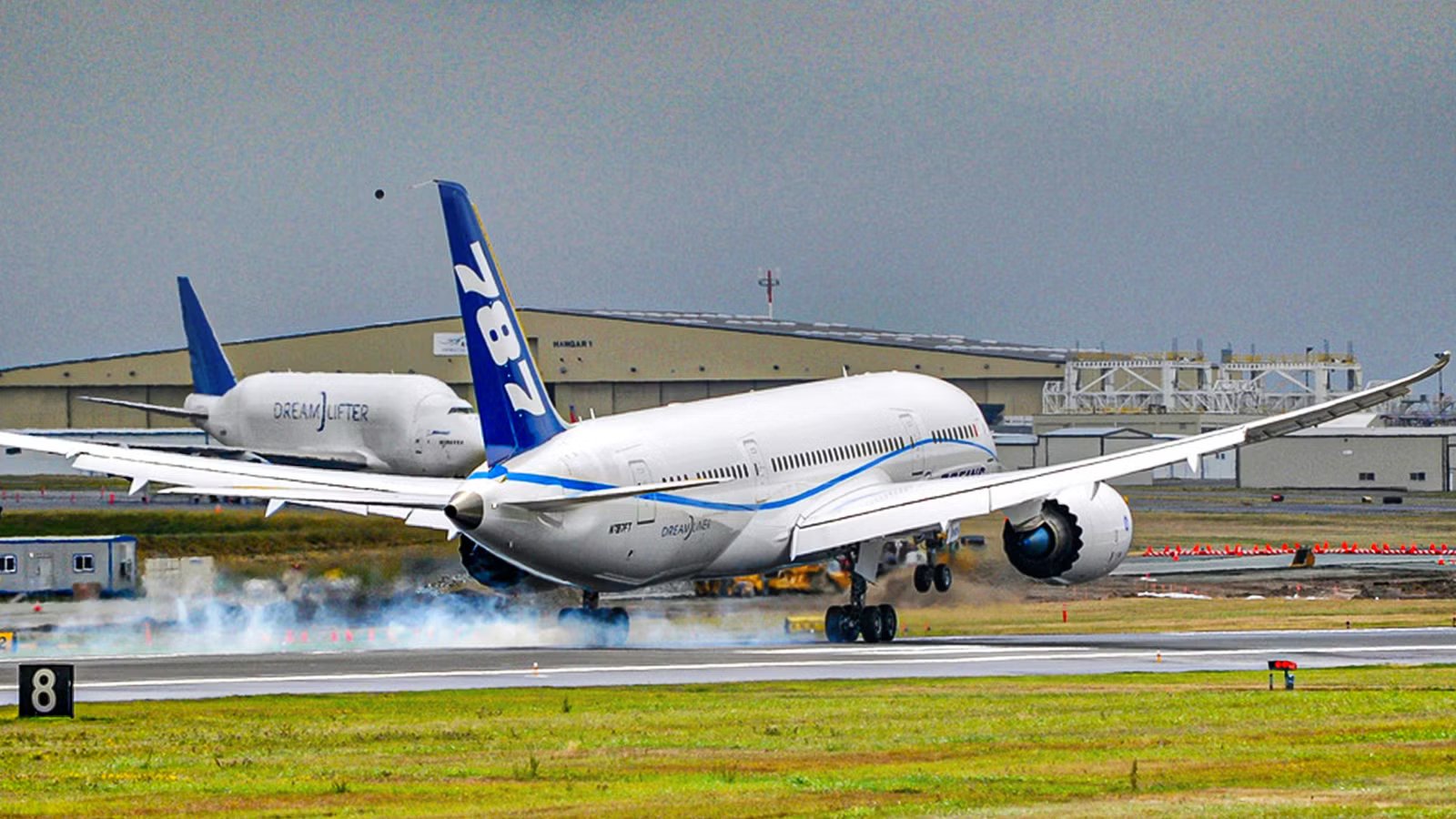
The  Boeing 787 has earned an extremely strong reputation not just among commercial passengers but with pilots as well. While some travelers usually notice the larger windows, quieter cabin, and smoother overall long-haul experience, pilots tend to appreciate a different set of strengths. The Dreamliner combines strong operating performance, impressive range, and cockpit comfort in a way that makes it especially well-suited to modern long-haul travel. Its design allows airlines to operate thinner nonstop routes that older widebodies could not serve as efficiently, and that same capability gives crews an aircraft that is flexible, capable, and easier to work with across a wide variety of mission types.
Just as importantly, the Boeing 787 is often described as a more comfortable plane to operate over very long sectors. Pilots have highlighted the fresher cabin air, lower effective cabin altitude, and improved humidity, all of which can reduce fatigue on flights that may stretch well past the length of a typical workday. They also point to the plane’s high-altitude performance, which can help crews avoid turbulence and secure more efficient routings. Once you add in a thoughtfully designed flight deck and dedicated crew rest facilities, the result is an aircraft that many pilots see as one of the most enjoyable and practical widebodies in service today.
Often Staying Above The Worst Of The Weather

One of the primary reasons pilots like the 787 is that the dynamic aircraft is not only capable of flying through rough air, but it can also fly cleanly and comfortably above most forms of lower-level turbulence. This allows it to simply avoid a large amount of turbulence without much additional fuel consumption. This does not mean that the Dreamliner is immune to turbulence (and no airline is), but it does make for a smoother ride. What pilots value especially is the aircraft’s impressive combination of altitude capability, wing design, and ride-control technology, which help it spend more time in much smoother air.
In practice, 787 pilots have noted that, while other aircraft may be bumping along in the mid-30,000-foot (roughly 10,700-meter) range, the Dreamliner can often continue climbing to a level where the ride will considerably improve for passengers. That really matters on longer oceanic sectors, especially where a few thousand feet (several hundred meters) can be the difference between a very tiring night of flying and a relatively relaxed journey. The wing itself is also a very major part of the story.
The wing’s overall flexibility is not just visually dramatic on landing, but it is rather central to how the aircraft performs efficiently at higher altitudes. Boeing also states that the Dreamliner utilizes state-of-the-art smoother-ride technology and advanced aerodynamics to reduce the bumps felt in flight by automatically detecting and countering turbulence of all kinds. For pilots, that tends to mean less time negotiating around bad ride reports, less discomfort on the flight deck, and fewer interruptions to the overall flow of the trip. In simple terms, the aircraft does not eliminate turbulence, but it does give flight crews more tools to avoid it and cope with it well when they cannot.
It Is Significantly Less Fatiguing To Fly

Another major reason pilots like the 787 is that it is a less draining aircraft to spend a large amount of time inside. On ultra-long-haul flights, that will matter enormously. Pilots are not just operating the aircraft for a few minutes at takeoff and landing, but rather living in that environment for entire duty days that can stretch deep into the body’s low-energy hours. The Dreamliner was designed with that reality in mind.
Boeing says that the aircraft can maintain a cabin altitude of 6,000 feet (1,829 meters) or roughly 2,000 feet (610 meters) lower than conventional aircraft, all while supporting their higher humidity and improved air quality. Those sound like passenger features, but they are just as relevant to those flying the aircraft as well. Pilots who have flown the 787 often highlight that they arrive feeling less dehydrated and less fatigued than they do on older long-haul aircraft.
The lower effective cabin altitude helps reduce some of the fatigue and jet lag symptoms associated with long flights, while the moister cabin air is more comfortable for many hours. The aircraft’s composite structure is what ultimately makes this possible, because it tolerates higher pressurization than traditional aluminum fuselages. For pilots, that translates into a cockpit environment that feels considerably less harsh over time. On fourteen, sixteen, or seventeen-hour sectors, that is not a luxury but a genuine operational advantage, as a crew that feels fresher is a crew better able to stay sharp.

Is It True That The Boeing 787 Dreamliner Has The Ability To Predict Turbulence?
The 787 deals with turbulence better than any aircraft.
A Flight Deck Designed Around The Crew
Electronic cockpit displays

Pilots have also historically been big fans of the 787 because the manufacturer clearly treated the flight deck as a workplace that people would occupy for extremely long periods, not just a control station. This might sound somewhat obvious, but it really does make a difference in day-to-day flying. The Dreamliner’s cockpit combines comfort, visibility, and information in a way that many crews find intuitive and non-draining. Boeing says the 787 has five 15-inch (38.1-centimeter) displays, providing more than twice the display space of the 777, along with dual heads-up displays, electronic flight bags, electronic checklists, and strong situational-awareness tools.
This ultimately means that pilots can access more information in clearer formats without constantly working around cluttered presentations. The physical environment matters too. Pilots have praised the adjustability of the seat, including recline, height, lumbar support, and armrests, which is important when different crew members with different body types may be swapping in and out of the exact same cockpit. These kinds of small details stand out on long night flights.
Warm air vents around the shoulders, a heated floor plate, and a generally more considered cockpit layout are all pieces that matter. These are not headline-grabbing features for passengers, but for pilots, they directly shape how sustainable a twelve-hour duty period really feels. The Dreamliner also preserves useful commonality with the 777, which reduces transition burden and gives airlines greater crew-planning flexibility.
Combining Both Impressive Range & Operational Flexibility
Over 7,500 nautical mile range

Pilots tend to like airplanes that can feel capable, and the 787 has that reputation in spades. One of its biggest attractions is that it combines long range with mid-size economics, which gives airlines and crews access to missions that would have been awkward, inefficient, or impossible for older aircraft. Boeing lists the 787-9’s range at 7,565 nautical miles (14,010 km), and it says that the 787 family has helped open 523 new nonstop routes, reaching more than 520 destinations across 85-plus countries.
Those numbers really matter because they can help explain why the aircraft is so widely valued from an operational standpoint, as it can do true long-haul work without always needing the size or infrastructure demands of much larger aircraft types. From the perspective of a pilot, that performance makes the aircraft much more interesting and useful. The Dreamliner was built for a point-to-point world rather than just the traditional hub-to-hub model, so that it can serve thinner long-haul routes and operate efficiently where a bigger four-engine aircraft might have been uneconomic.
Pilots appreciate that because it ultimately means that the aircraft has impressive, genuine versatility, according to The Points Guy. It can fly marquee sectors, secondary long-haul routes, and airport pairs that older widebodies would not be able to justify. Boeing has also said that the 787’s advanced aerodynamics, more efficient engines, and composite-heavy structure help deliver lower fuel use, reduce maintenance costs, and enable greater route flexibility.

Why The Boeing 787-9 Dreamliner Has Much Longer Range Than The 787-10
The higher-capacity jet has some impressive capabilities.
It Shares A Common Type Rating With The Boeing 777
Easier for pilots and airlines

Another key reason why pilots like the 787 is that, for many crews, it does not feel like learning an entirely new world. Instead, it feels like a modern Boeing widebody that still speaks a relatively familiar language. That matters primarily because pilots tend to value aircraft that are not just capable but also intuitive. The Federal Aviation Administration has argued that the 777 and the 787 qualify for a common pilot type rating because they share common design features, similarities in-flight deck design, and similar flight-handling characteristics.
In practical terms, that means that a pilot already licensed on the 777 can move onto the 787 through slightly different training procedures rather than a completely unrelated aircraft. This kind of commonality is relatively easy to overlook from the outside, but pilots will notice it immediately. Procedures can feel more similar, scan patterns transfer naturally, and the logic of the aircraft is easier to trust from day one.
Boeing also says that flight deck commonality reduces transition time between Boeing aircraft, while operational commonality lets pilots apply hours flown on Boeing twin-aisle jetliners toward maintaining qualification on other models. As for pilots, that makes the 787 attractive not just because it is advanced, but also because it can fit seamlessly into most long-haul fleets. It offers new technologies and game-changing capabilities while still being relatively simple to fly.