dailynewsnblog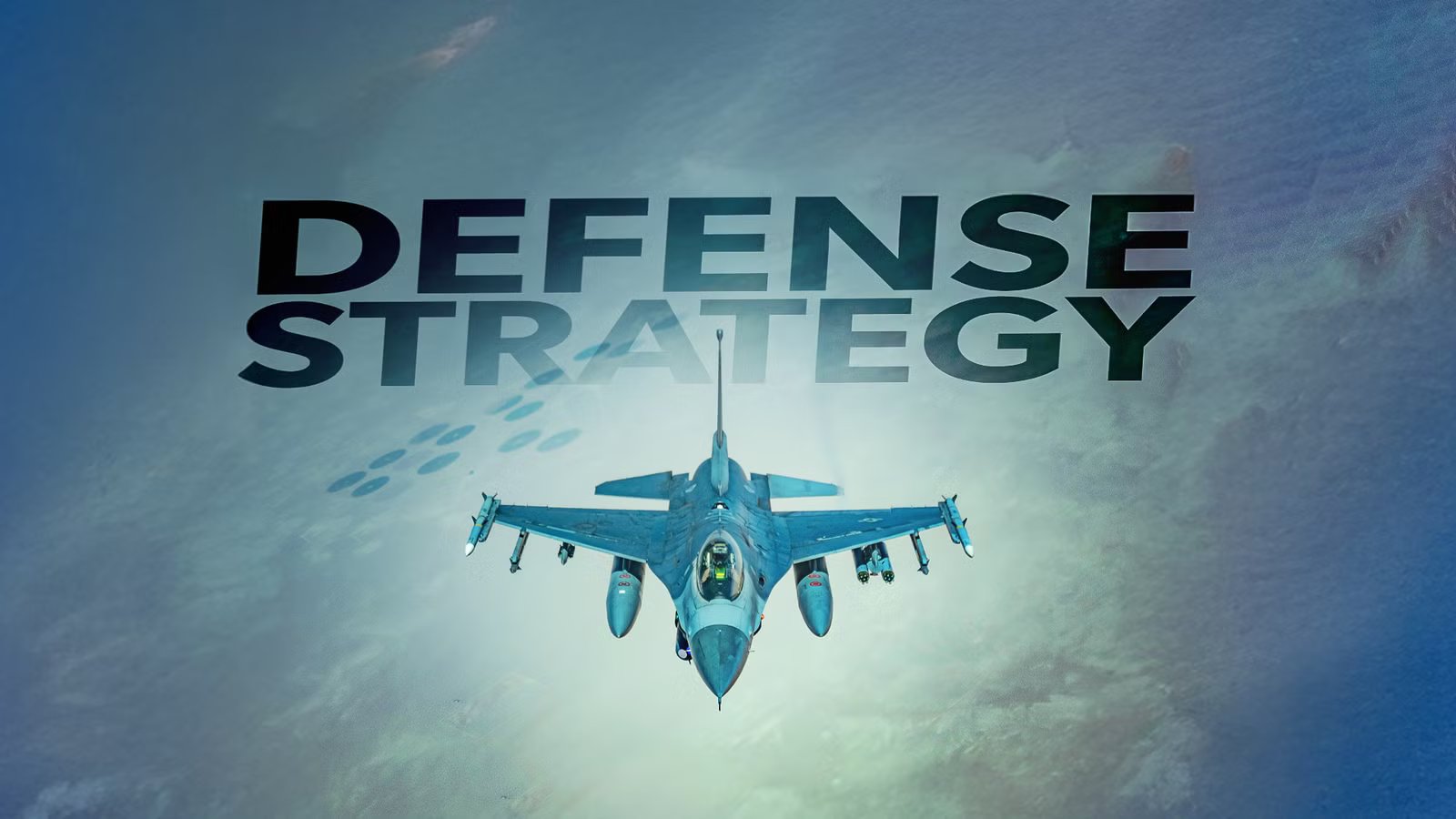
Most countries call their militaries defense forces, and they frame offensive actions against other nations as defense. Basically, every country, throughout modern history, that invades another will say it is acting in self-defense. US military aircraft are unique in the world for the scale to which they deploy overseas, often to help defend allies such as those in Europe or East Asia. The US likes to describe this as forward defense. However, for this article, the actual defense of the US homeland and its airspace will be emphasized.
Perhaps some of the most famous examples of US military aircraft actively defending the US homeland by intercepting Russian, and sometimes Chinese, bomber patrols have been around Alaska. The US also has aircraft ready to scramble across the country, like when it scrambled F-16s during the September 11 attacks. Here are some key aircraft used in the defense of the US homeland.
F-15 Eagle
Around 334 aircraft in inventory

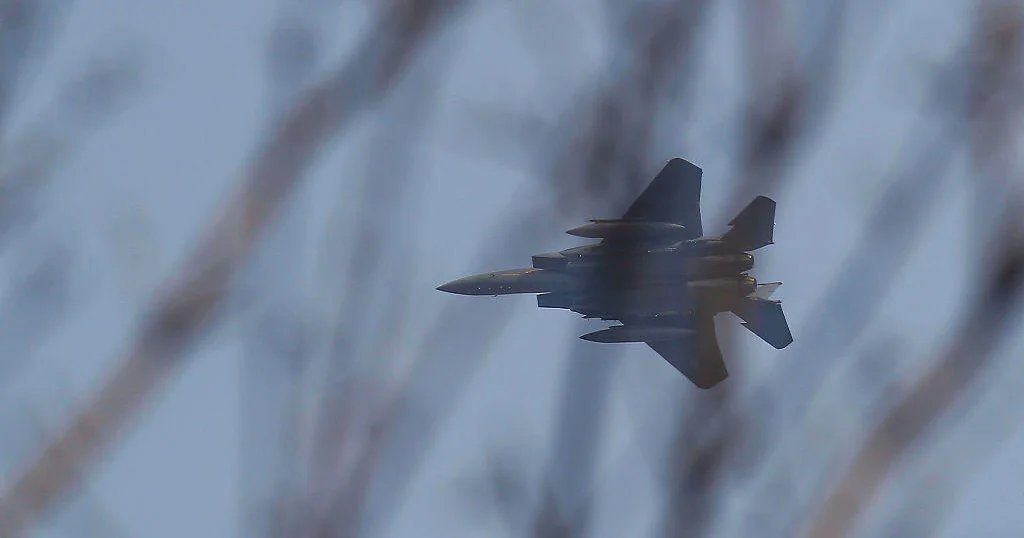
The United States is currently divesting its fleet of aging F-15C/D Eagles, which were first introduced in the 1970s, and the fleet has shrunk to around 108 examples. It has around 218 more modern F-15E Strike Eagles in service, and these are some of the most powerful fighter jets in the USAF’s arsenal. It is also planning to purchase several dozen very modern F-15EX fighter jets to replace its remaining F-15C/Ds.
F-15s often fly patrol and interdiction missions within the United States. In particular, the F-15 is well-suited for interceptions in the US’s air defense identification zone (ADIZ) around Alaska. The most immediate role for these F-15EXs is to replace the F-15C/Ds in homeland defense, which is why they are to be heavily operated by Air National Guard units. Their missions include air sovereignty and intercepts (e.g., NORAD patrols) and quick reaction alert (QRA).
The first operator of the F-15EX was the Oregon Air National Guard, which is explicitly tasked with homeland defense and air interdiction. Stealth is not a major requirement for patrol and interdiction missions, as the goal is often to be seen. On these missions, fighter jets often fly right up alongside enemy aircraft of interest. That said, they will also be used abroad as missile trucks, for air superiority, and other missions alongside the F-35.
F-22 Raptor
Around 183 aircraft in inventory

The project that would give rise to the F-22 Raptor first started during the late Cold War. The US Air Force wanted an air dominance platform and one that would offer a silver bullet and bring an unfair fight to the Soviet Su-27 and MiG-29 fighter jets. The Air Force had intended to purchase 750 F-22s and replace the F-15, although it only purchased 187 examples, meaning it was only partially able to replace the F-15. The Air Force was forced to purchase over 100 F-15EXs to compensate for the Raptor program’s cancellation.
Today, Joint Base Elmendorf–Richardson in Alaska is one of the primary bases for the F-22 Raptors. They are heavily used in the interception role thanks to their long range, high speed, strong radar, sensor fusion, and ability to operate in harsh Arctic conditions. Being stealthy is not a major concern for these missions. Recent intercepts of Russian bombers like the Tupolev Tu-95 ‘Bear’ are often done with the Raptor.
The F-22 is set to be replaced by the sixth-generation F-47 that the US Air Force is rushing to develop and bring into service. It is unclear if the F-47 will take over the F-22’s Alaska intercept role or not. Separately, going forward, the future does not look rosy for Russian strategic bombers with their fleets having suffered heavy attrition in Ukraine (including Operational Spiderweb), and perhaps more importantly, the conflict is using up their flight hours. Russia is not in a good position to replace these aircraft with only the old Tu-160 in production in anemic numbers. It is possible that in the future, there will be fewer Russian intercepts and more Chinese.

Why Can’t An F-22 Raptor Land On An Aircraft Carrier?
Discover why the world’s first fifth-generation fighter will never be deployed from a carrier.
KC-135 Stratotanker
More than 370 aircraft in inventory

When operating in the vast distances of the Arctic, KC-135 Stratotankers become critical. These tankers can refuel fighter jets, giving them the range they need to carry out their patrols and intercept missions. Separately, Russia’s tanker fleet is composed of an estimated fleet of perhaps fewer than 20 Ilyushin Il-78 tankers based on the Il-76 strategic airlifter. These are mostly tasked with supporting Russia’s bomber patrols, with few, if any, to spare for combat fighter jet missions. This is why Russian fighter jets have a much shorter range in the real world than US fighter jets, although they attempt to compensate with large internal fuel volumes.
The KC-135 remains the backbone of the US Air Force tanker fleet with more than 370 examples in service. That is more tankers than all the world’s other dedicated tankers combined, at least if the turboprop KC-130s are excluded. The KC-135 shares a common history with the now-retired Boeing 707 airliner and is being partially replaced by the Boeing KC-46, based on the Boeing 767.
The KC-46 Pegasus is also used to support interdiction and patrol missions, and this is growing as they enter service in greater numbers. The KC-46 has a much longer range, more fuel off-loading capacity, updated electronics, and improved self-defense systems. This enables the KC-46 to operate at strategic ranges, like helping fighter jets cross oceans, and it can get closer to contested airspace. The KC-135 is better used in permissive skies and at closer ranges to its base.
E-3 Sentry
Around 15 aircraft in inventory

The E-3 Sentry is the ‘eyes in the skies and quarterback’ of the US’s NORAD operations. In Alaska, it provides airborne radar coverage over hundreds of miles beyond the ground radar horizon. The US also relies on ground-based radar networks and space-based sensors, although the E-3 remains critical. It is especially useful over Arctic approaches, remote ocean areas, and low-altitude targets that ground radars can miss. It acts as an airborne command post that directs intercepting fighter jets to their targets and more.
However, the aircraft is aging. Aging is not so much undercutting its usefulness in missions, but rather the aircraft airframes are becoming increasingly difficult to maintain and unreliable. Of the 15 remaining in service, around 11 appear to be flying. Additionally, its increasing vulnerability is also not so important in patrol missions. But what is important is that the US is phasing them out as they become more difficult and expensive to maintain and operate. The US Air Force is now down to around 15 E-3 Sentry examples remaining in operation. The question of its replacement is controversial.
The US had urgently tasked Boeing with developing a variant of the E-7 Wedgetail (originally designed for Australia) for the US Air Force. It had plans to purchase around 22 of these Wedgetails. But then in 2025, the Air Force stated it was canceling the program, citing cost overruns, delays, and vulnerability. It said it would purchase a limited number of less-capable naval E-2D Hawkeyes as an interim measure as it moved capabilities into space. However, in March 2026, the Defense Post reported the US Air Force had awarded Boeing a $2.33 billion contract to continue E-7 Wedgetail work, seemingly revitalizing the program.

Which Country Has The Most Superior Fighter Jets In The World?
The best overall fighter jet is arguably the F-35, while the F-22 is the best at its specialized role.
F-16 Fighting Falcon
Around 762 aircraft in inventory

The F-16 Fighting Falcon is the most common fighter jet in service around the world today. It was originally designed as a lightweight fighter, but later upgrades have led to it becoming a medium-weight fighter. It is comparatively cheap and straightforward to operate, making them extremely attractive to smaller air forces with constrained budgets. The F-16 remains the most common fighter jet in US Air Force service, providing some needed mass, and is overwhelmingly used by the Air National Guard.
The Fighting Falcon is a major backbone of NORAD’s Quick Reaction Alert system, with aircraft sitting on alert status at bases across the US, armed, fueled, and ready to go. Pilots are on standby to launch within minutes. They intercept unknown aircraft, respond to hijackings, and more. For these roles, the US Air Force does not need to use its highest-end aircraft, like F-35s. During the September 11 attacks, F-16s were the first to scramble. The FAA made the first call to the Northeast Air Defense Sector (NEADS) at 08:37.
About nine minutes later, at 08:46, the order for the first jets to scramble was issued, with the first F-16s in the air at 08:53. Unfortunately, this was too late. The first hijacked airliner hit the North Tower of the World Trade Center at 08:47. The jets were also scrambled without munitions due to the urgency. The US Air Force learned lessons from that fateful day, and today F-16s are favored for homeland use thanks to their fast scramble, high acceleration, good low-altitude handling, relatively low operating cost, and large existing fleet, allowing the US to sustain 24/7 alert coverage across the nation.