dailynewsnblog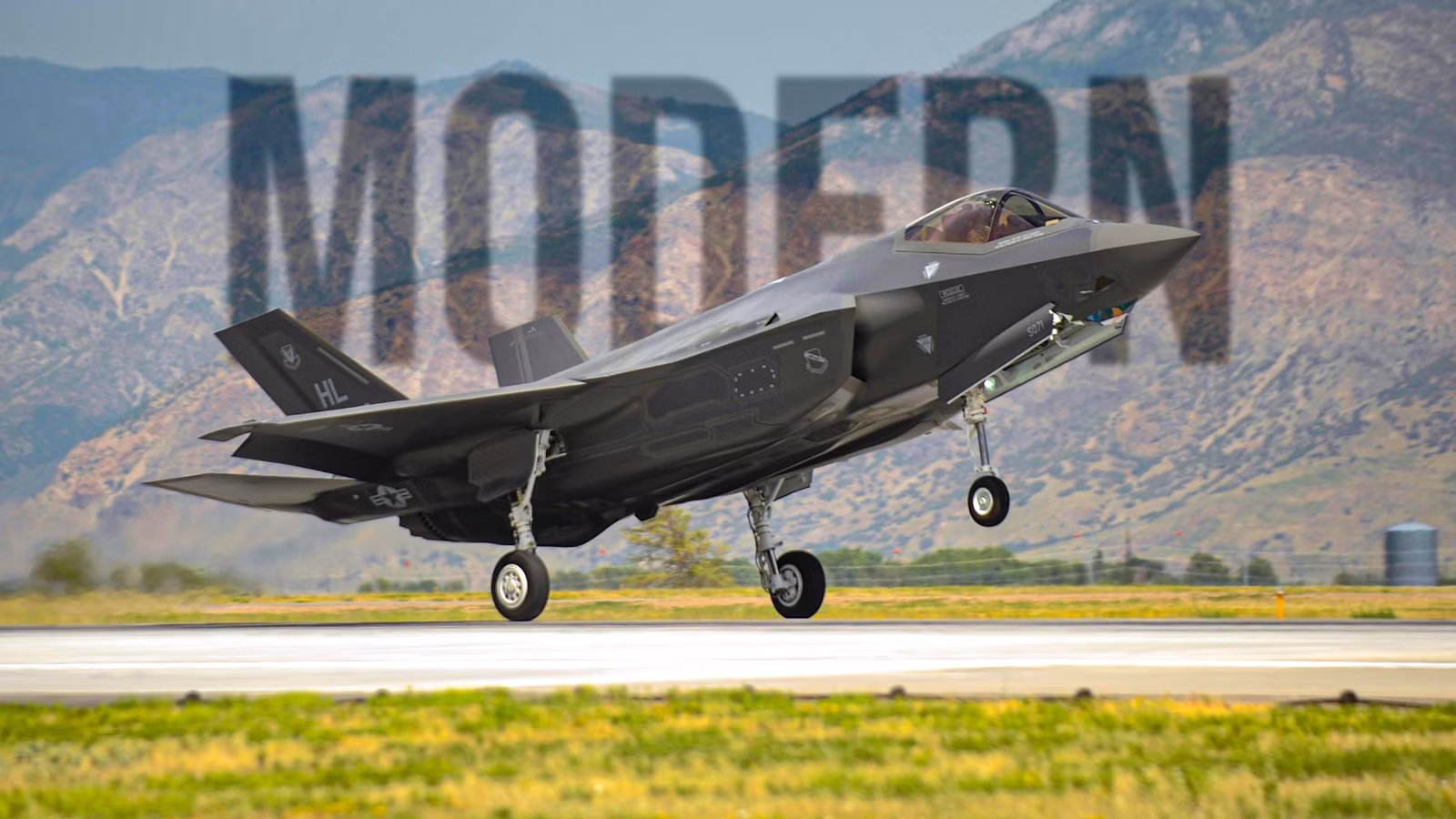
In the year 2026, the dogfight is long dead, and the focus of air warfare has moved on both at the strategic and tactical levels to emphasize networking, stealth, automation, and beyond visual range engagement. There’s no better example of this than the Lockheed Martin F-35 Lightning II, which is technically inferior to many of its predecessors both in terms of performance, weapons, and even stealth.
Even more to this end, air forces around the world are increasingly removing the pilot from the cockpit and relying on unmanned aerial vehicles, or drones. Although most of these automated combat aircraft are now small-scale and simple, the race to achieve the first true ‘loyal wingman’ fully autonomous fighter jet is well underway.
The doctrinal tenets of the 21st century of war in air are defined by low observability technology, digital automation, and sophisticated ‘flying supercomputers’ simultaneously juxtaposed against inexpensive, attritable unmanned platforms. The fleet of the Air Force of the future is composed of a combination of ‘exquisite’ 5th and 6th generation airframes made to act as battlefield ‘quarterbacks’ and coordinate strikes of low-cost drones.
Kratos XQ-58A Valkyrie
The loyal wingman drone

Since the invasion of Ukraine in 2022 by Russian forces, small drones have become a hallmark of 21st-century combat. These small drones are primarily man-portable and used to attack infantry or structures, and are not able to target aircraft. Similarly, the Iranian Shahed drone, which has shown how effective low-cost, one-way, or suicide drones can be against a technologically superior force, is not capable of attacking airborne threats.
This is where the Loyal Wingman UAV will change the nature of aerial combat. These larger drones are much more expensive than the others seen in asymmetric overall warfare. Yet they are far less expensive than a manned fighter jet of similar capability. These aircraft will be controlled by 5th-generation fighter jets to not only perform close air support, surgical strikes, and air-to-air combat but also act as cannon fodder to absorb hits from enemy weapons that would have otherwise destroyed the prohibitively expensive, ‘exquisite’ manned platforms.
Russia and China have been repeatedly spotlighted for the progress that they are making on their own versions, but the United States is expected to cross the finish line and begin mass production well ahead of the other great powers. Kratos and Northrop Grumman were officially selected on January 8, 2026, by the US Marines to move beyond experiments, according to Kavout. The pair will develop the first official Collaborative Combat Aircraft for the USMC.
The Valkyrie’s defining characteristic is its low cost, at roughly $3 million to $10 million per unit. By comparison, the least expensive 5th-gen fighter in the world costs around $80 million, and some 4.5-gen fighters are even more expensive, like the French Dassault Rafale at roughly $130 million. It launches from a rocket-assisted rail and recovers via parachute. This allows it to operate from remote, austere sites without needing airbases or aircraft carriers. By fielding these in swarms, the US can overwhelm enemy air defenses.
Northrop Grumman B-21 Raider
Invisible striker with global reach

The world’s first 6th-generation stealth bomber is already in the final stages of testing. The aircraft is now in the phase known as low-rate initial production, with the first examples expected to be confirmed for active service this year. The Raider will succeed the iconic B-2 Spirit not only as the next flying wing to join the US Air Force but as the next evolution of stealth bomber technology.
The B-2 is notoriously the most expensive airframe ever procured, with an estimated cost of over $2 billion per plane owing to a complex political and procurement quagmire that it fell into at the end of the Cold War and the dissolution of the Soviet Union. Building on three decades of operational experience, B-21 is not only intended to be far less expensive to procure but to operate over its lifetime.
Advanced stealth technology and superior digital systems, combined with more rugged and resilient engineering throughout the entire airplane, promise to see it succeed and conduct dispersed operations for more austere fields that the B-2 could never achieve. Much like the latest stealth fighters, the B-21 is expected to function as much as a data node over the front line as it is an actual strike platform.
The Raider will have far superior all-aspects stealth than the Spirit, yet it will have a smaller payload, which is precisely because the fleet will be larger and intended to be deployed to more forward bases than the B-2 was able to. When the B-21 sorties into action, it will have its own payload of ordnance, but more importantly, it will be capable of coordinating swarms of drones by relaying sensor data over the tactical network. It is also expected to be optionally manned to allow it to operate with no pilots aboard for certain missions.
Boeing F-15EX Eagle II
The 4.5-Gen missile truck

The latest and greatest iteration of the world’s most successful combat fighter jet may lack stealth technology, but it makes up for that with pure performance and sheer payload. The Eagle’s combat record speaks to its capability with more than 100 aerial victories and not a single loss to enemy action. The jet’s impressive pedigree has kept it relevant even though 5th-gen fighters have the upper hand in a dogfight.
This disadvantage in air-to-air combat against a technologically superior foe has far from relegated the Eagle to the Boneyard. Instead, its lower operational cost and greater capability in conventional mission sets have cemented its position in the high-low fighter fleet composition of the Air Force of the future. Serving alongside drones and more exquisite stealth platforms, the F-15EX fills a crucial role that supports both the higher and lower ends of the platform spectrum.
It is still the fastest jet in the USAF and one of the highest-performance fighters in the world, on top of having an enormous maximum payload. The F-15EX is rolling off the line with some of the best avionics and radar available anywhere in the world, and legacy F-15E models, as well as some other variants, are being upgraded with similar capability. This is positioning the Eagle as the gold standard for 4.5-gen fighters as air warfare evolves.
In a pure air combat loadout, the F-15EX can carry as many as 22 AMRAAM long-range air-to-air missiles. Teamed with a stealth platform that can designate targets without detection by the enemy, the F-15EX can shoot beyond visual range using only data link for targeting solutions and take out enemy fighters from far outside engagement range.

Why The Pentagon Is Worried About International Stealth Fighter Development
The new 5th-generation arms race.
Chengdu J-20 Mighty Dragon
The stealth hunter-killer

Unlike the armed forces of the United States and its allies, the Chinese Air Force has a narrower mission scope for its stealth fighters. The People’s Liberation Army Air Force is only concerned with territorial defense and projecting power across the South China Sea into the Pacific Theater. The J-20 has been optimized for this mission set as a long-range, stealth hunter-killer platform.
The Mighty Dragon is considered technically inferior to both the F-22 and F-35 in numerous aspects; however, with recent upgrades to its engines and radar, that gap is closing. Notably, the J-20 is significantly larger than its peers because of greater internal fuel storage and larger internal weapons bays. It was designed this way in order to perform long patrols within an optimal stealth profile to penetrate air defenses and destroy high-value targets like aerial tankers or AWACS.
The jet is estimated to have an inferior stealth profile to the Lockheed Martin F-22 Raptor but is likely superior to the F-35 Joint Strike Fighter that it is more likely to encounter in a real world scenario. Although inferior to the F-22 in speed and maneuverability, it is once again expected to be a closer, better match to the F-35 in these areas. Its BVR weapons employment has also improved with new radar, to make it a greater threat to the F-35 in an air-to-air battle.
The J-20 is also noteworthy for being the first 5th-gen fighter with a two-seat variant. This is believed to go beyond simply training and make it a more capable platform to manage loyal wingman-type drones that China is developing. The Chengdu Aerospace Company has also been steadily improving production output along with technical upgrades, and more than 300 are believed to be operational, giving China the largest fleet of stealth aircraft outside of America.

5 Critical Performance Metrics That Distinguish The F-22 Raptor From Modern Stealth Rivals
Breaking down how the Raptor reigns supreme.
Lockheed Martin F-35 Lightning II
The digital quarterback

The F-35 represented a paradigm shift in how victory in air warfare is achieved through a combination of stealth and information dominance instead of the kinematic superiority that legacy fighters like the F-15 best exemplify. The JSF is inferior in many regards to other fighters, both in performance and even in stealthiness. That compromise was made in order to achieve mass-scale production of a stealth fighter that can network the battlefield and act as a force multiplier for every unit in the air, land, and sea.
More than 1,300 have been made, and at least 3,000 are slated for total production based on the current orders of the US and 19 other partner nations. The F-35 may not be the champion of dogfighting but it doesn’t need to because it can either destroy an enemy before it’s even detected or evade every attempt that an adversary makes to target it. While its own onboard sensors and stealth profile may be imperfect, combined with the power of networking with a B-21, stealth drones, and AWACS or other units, gives it an unprecedented tactical advantage.
The F-35 is one of the single best radars in the sky, as well as a very powerful electronic warfare package and a unique ‘God’s eye view’ combination of other sensors. All of this is delivered to pilots through a helmet-mounted display, which even empowers them to toggle to night vision or look through the floor of the airplane using augmented reality.
The F-35 is technically and tactically superior to almost every enemy it could encounter, and when that isn’t enough, data link empowers it to have the support it needs to overcome virtually any scenario. Just as importantly, the enormous multinational program has driven down the cost to make it even cheaper to acquire than some 4.5-gen fighters and by far the most affordable stealth platform ever made. The total program will be the most expensive defense project in history, with an estimated lifetime cost of over $2 trillion, but that price includes the revolution in shared defense for not only America but all of its allies around the globe.