dailynewsnblog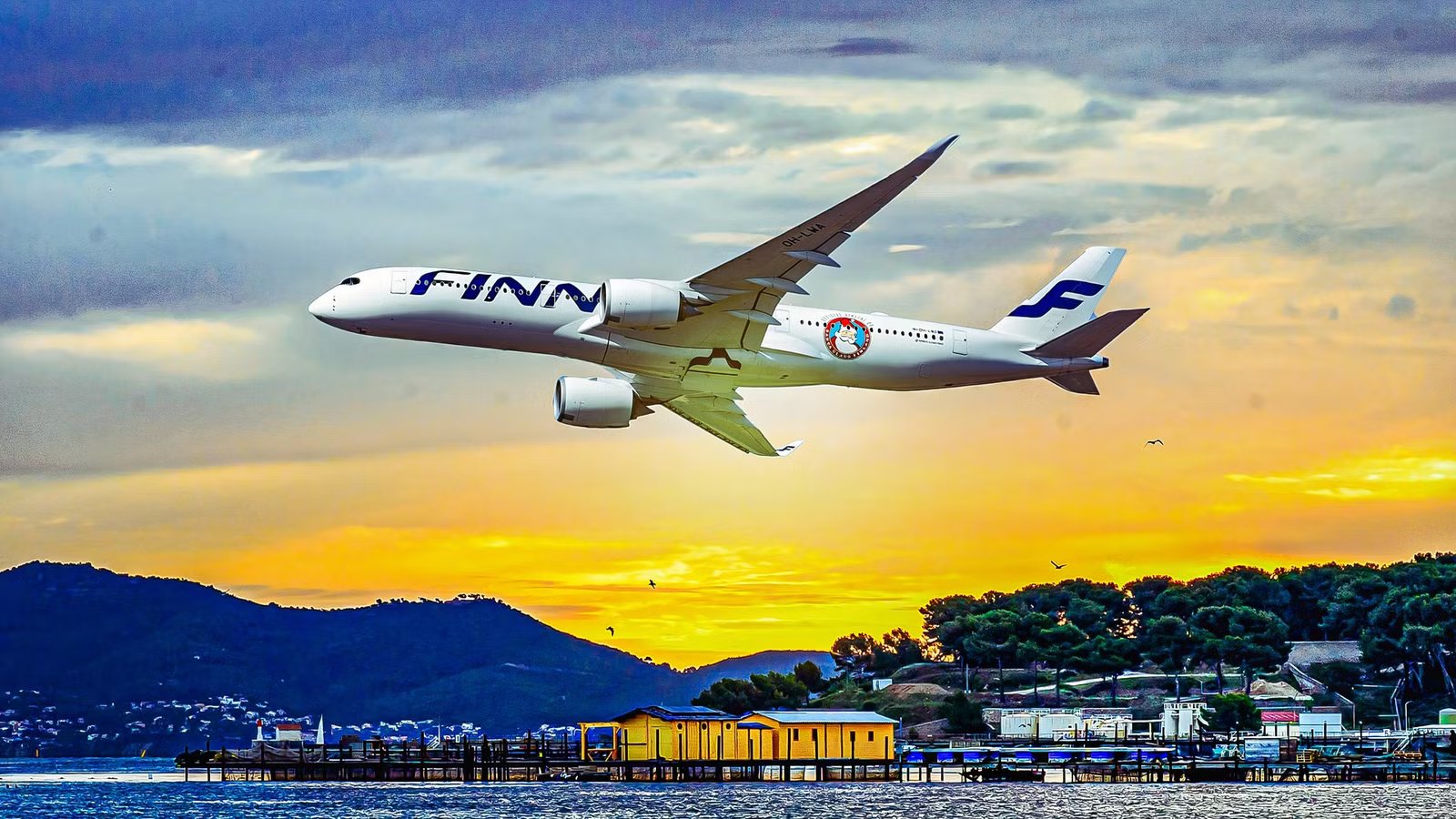
On a typical day last year, 14,000 people flew between Europe and Australia. Naturally, most passengers connected to another flight en route, particularly with Emirates, Qatar Airways, Singapore Airlines, and Cathay Pacific. On the Australian side, Qantas operated on a nonstop and one-stop basis. From Europe, two carriers had flights, both stopping en route.
Things will be quite different in 2026. Three European airlines will operate: British Airways, Finnair, and Turkish Airlines. Due to Istanbul Airport being on the European side of the Bosphoros, Turkish Airlines counts as European. A trio of carriers last operated in 2012, when BA coexisted with Air Austral (considered French) and Virgin Atlantic. Air Austral had a one-stop, same-plane, same-flight-number service from Paris Orly to Sydney via Réunion, which is a French department in the Indian Ocean.
Finnair Starts Australia Flights This Year

In December, Finland’s flag carrier revealed it’d fly to Australia. In an extraordinary development, it will take off from Helsinki to Melbourne via Bangkok, with fifth freedom traffic rights between the capitals of Thailand and the state of Victoria.
It would be reasonable to assume that this never-before-served market would be flown three times a week. After all, that’s a perfectly usual initial frequency for brand-new long-haul markets. But not so. Finnair will operate daily on its flagship equipment, the Airbus A350-900, with Cirium Diio data showing that both the 278-seat and 321-seat configurations will be used.
The historic first flight will lift off from Europe on October 25, with the very long route starting in time for the all-important summer Down Under and Christmas, both helping with demand and fares. It’ll be needed, as the demand between Helsinki and Melbourne is minimal.
Of course, it’ll target passengers connecting from multiple cities in the Baltics and Scandinavia, in particular. It’ll also capture some passengers who connect elsewhere in Australia (or to New Zealand) with partner Qantas. But notably, it is, to a degree, about extending its Bangkok flights to Melbourne. It’ll serve the Thai capital three times daily next winter, and accessing the large Melbourne market must have been enticing.
|
Leg |
Schedule In Local Times (First Week Of November)* |
|---|---|
|
Helsinki to Bangkok |
12:10 am-4:30 pm |
|
Bangkok to Melbourne |
6:15 pm-7:15 am+1 |
|
Melbourne to Bangkok |
3:35 pm-8:45 pm |
|
Bangkok to Helsinki |
10:30 pm-6:05 am+1 |
|
* Shown in Simple Flying’s new time format |
Turkish Airlines’ Debut Took Place Nearly 2 Years Ago

It is undeniable. Turkish Airlines has big plans Down Under, and forthcoming nonstop flights will make all the difference. For now, it has two routes, both of which operate on a sub-daily basis and stop in Southeast Asia in both directions. As many passengers connect in Istanbul, they have a two-stop service to reach Australia, which is not especially competitive. That’s true for Finnair’s offering, too.
Turkish Airlines’ Australian debut took place nearly two years ago, in March 2024. Its first route was from Istanbul to Melbourne via Singapore, with fifth freedom traffic rights available. It continues to run three times a week on the 329-seat A350-900. Booking data suggests that Athens was the most popular transit market.
Its second route was from Istanbul to Sydney via Kuala Lumpur, which started in November 2024. Fifth freedom rights do not exist, which means it can carry more passengers from New South Wales to Istanbul and beyond. Flights operate five times a week on the same equipment. Skopje was the top connecting market.

Up To 19-Hour Nonstop Flights: Singapore Airlines’ 10 New Ultra-Long Routes In 2026
Half of the ultra-long-haul flights involve the US, with the rest being to Europe. Discover them all.
Then There’s The Old-Timer

Although arguably less interesting than the other entries, BA continues to fly daily between London Heathrow and Sydney via Singapore, with fifth freedom traffic rights. It is hard to imagine that fellow oneworld member Finnair will serve Australia with the same frequency as BA, but—because of its higher-capacity aircraft—with more seats for sale.
In the northern winter (southern summer), BA will use the 254-seat 777-300ER. The very long route will switch to the 216-seat 787-9 in the northern summer (southern winter). Downgauging equpment helps to achieve higher loads and yields in the off-season. Upgauging aircraft in the peak season helps to achieve higher revenue. BA did not use the A380 to Sydney.