dailynewsnblog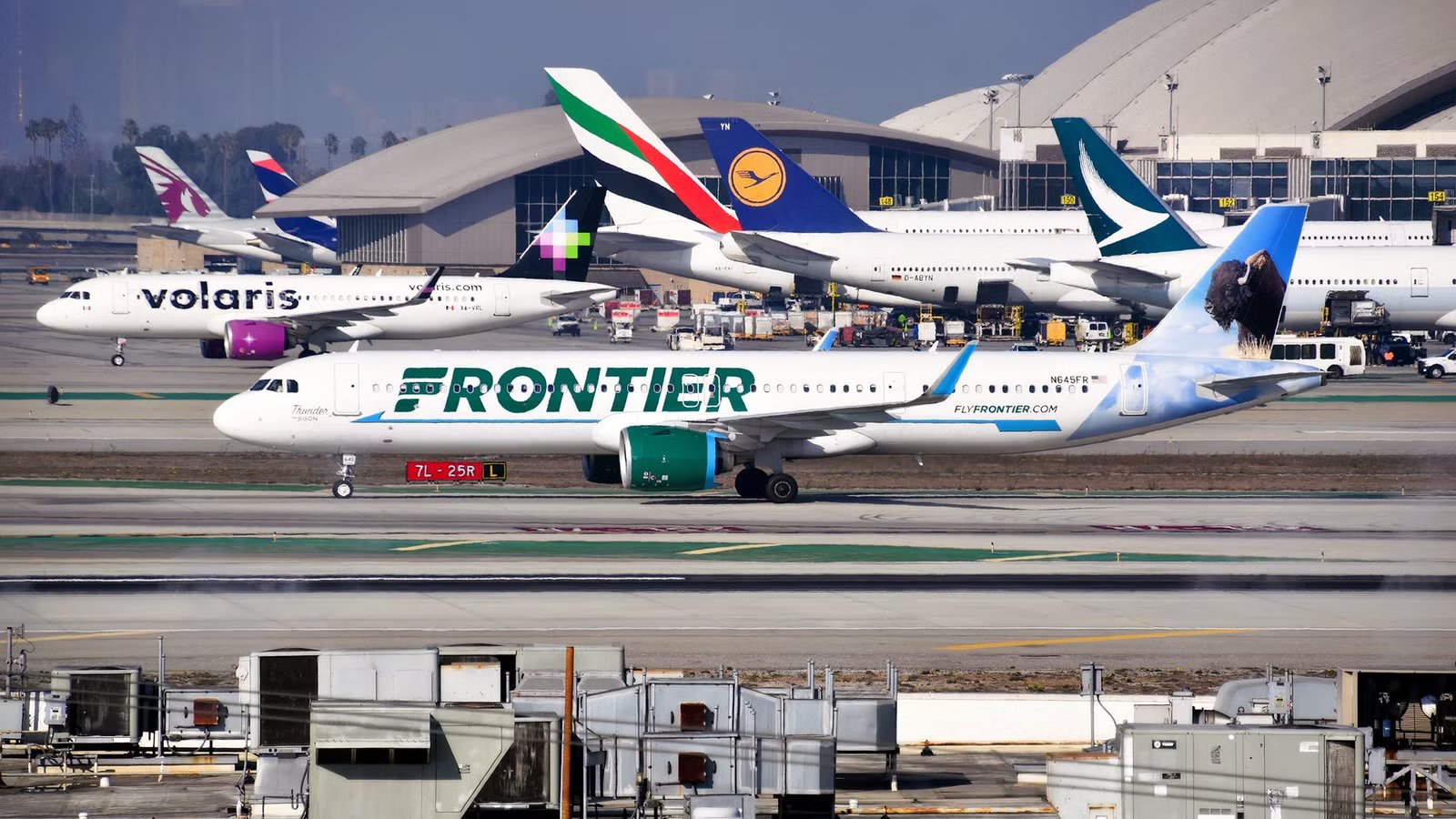
Ultra-low-cost carrier Frontier Airlines is praising its crew for avoiding a collision with two ground vehicles on an active taxiway at  Los Angeles International Airport (LAX). The incident occurred late Wednesday night while an Atlanta-bound redeye flight was taxiing to the runway.
In an air traffic control (ATC) recording, the pilots can be heard alerting controllers that “two trucks just cut us off,” and they had to “slam on the brakes not to hit them.” Following the deadly Air Canada flight 8646 crash last month, the near-miss adds to the growing concerns over airport ground vehicles operating without transponders.
Frontier Flight Nearly Collides With LAX Airport Vehicles

A Reddit post on Thursday uncovered the incident, featuring a Flightradar24 video of Frontier flight 3216’s taxi path accompanied by ATC audio. The aircraft, an Airbus A321neo registered as N609FR, pushed back from gate 229 at 11:16 pm, according to flight data. The flight, delayed by over an hour, was scheduled to depart at 10:00 pm.
Following pushback, the plane was facing south on taxiway L. Once taxiing on its own power, data shows the aircraft turning left onto taxiway K1 before turning right onto taxiway K (Kilo), which runs parallel to taxiway L. The pilots reportedly encountered the ground vehicles right before turning left onto taxiway B (Bravo). The ATC recording recounts the pilots contacting the LAX ground frequency.
Pilot: “Hey, ground, you see this?”
LAX Ground: “No.”
Pilot: “We just had two trucks just cut us off. We had to slam on the brakes not to hit them.”
LAX Ground: “And who’s asking that? Is that Frontier?”
Pilot: “Yeah, that’s Frontier.”
ATC Couldn’t See The Near-Miss Unfold

The incident occurred in an “ATC non-visibility area,” according to the airport diagram provided by the Federal Aviation Administration (FAA). It is one of the airport’s three areas not visible to ATC, as it lies in the center of the airfield and is sandwiched between terminal buildings. An LAX Ground controller can then be heard contacting airport police (City Ops) on the recording saying, “behind that building.” With the Frontier pilots still on the frequency, the controller then explains the near miss to City Ops, and confirms it happened near the intersection of taxiways “Kilo and Bravo at the service route.”
The controller then asked the pilots whether they could still see where the trucks were and in which direction they were going. The pilot responded, saying “they were going eastbound,” and “one turned off,” while the other kept going. The pilots were also unable to determine which company the vehicles belonged to or were operated by.
LAX Ground: “Do you have any markings, company names, or anything like that on them?”
Pilot: “Uh, it happened so fast, both of us were just like ‘Holy sh*t,’ and we just slammed on the brakes. I might have to call the flight attendants to make sure everybody’s alright in the back. It was real close, the closest I’ve ever seen.”
The ground controller asked the pilots if they could still see at least one of the trucks. Once the pilot confirmed, the controller notified City Ops that one of the vehicles could be “entering Charlie 10.” The city officer responded, “Roger, I’ll head over there.”
The flight continued its taxi without incident and subsequently took off.

What Caused This Rare Same-Side Parallel Landing At LAX?
Three jets touched down within seconds – an emergency combined with tight timing forced rare same-side landings at LAX.
Should All Ground Vehicles Have Transponders?

A Frontier representative told Simple Flying Thursday afternoon that the carrier is aware of the incident and thanked the crew for their “vigilance and professionalism.” The Reddit post has since sparked numerous comments about the incident. One commenter explained how it appeared that “one truck got caught,” but the other might have “got away.” However, other people on the thread said it was inevitable that both would be caught because the tarmac is flooded with cameras.
Another person said they’ve “seen ground vehicles acting like idiots multiple times” and are surprised that “this doesn’t happen more often.” They also referenced last month’s tragic Air Canada collision, saying the driver “probably didn’t do his due diligence in visually checking the runway was clear.”
Although the crash is still under investigation and the cause has not been determined, preliminary findings indicate that the fire truck was not equipped with a transponder, which would have allowed pilots and ATC to see its movements on radar. It is unclear whether the two trucks at LAX had transponders; however, the incident adds to the growing concern.
“All vehicles need transponders on them,” one Reddit user said.
Another commented, “shows that if they aren’t gonna hire more ATC we need ground vehicle transponders yesterday.”