dailynewsnblog
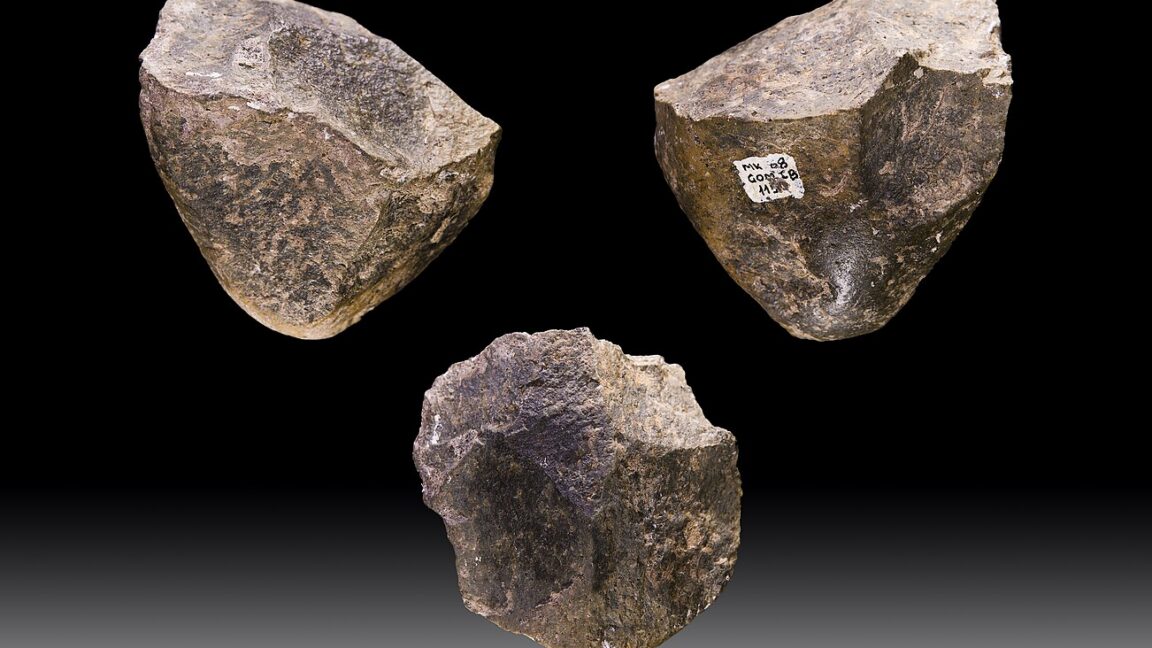
“This site reveals an extraordinary story of cultural continuity,” said Braun in a recent press release.
When the going gets tough, the tough make tools
Nomorotukunan’s layers of stone tools span the transition from the Pliocene to the Pleistocene, during which Earth’s climate turned gradually cooler and drier after a 2 to 3 million-year warm spell. Pollen and other microscopic traces of plants in the sediment at Nomorotukunan tell the tale: the lakeshore marsh gradually dried up, giving way to arid grassland dotted with shrubs. On a shorter timescale, hominins at Nomorotukunan faced wildfires (based on microcharcoal in the sediments), droughts, and rivers drying up or changing course.
“As vegetation shifted, the toolmaking remained steady,” said National University of Kenya archaeologist Rahab N. Kinyanjui in a recent press release. “This is resilience.”
Making sharp stone tools may have helped generations of hominins survive their changing, drying world. In the warm, humid Pliocene, finding food would have been relatively easy, but as conditions got tougher, hominins probably had to scavenge or dig for their meals. At least one animal bone at Nomorotukunan bears cut marks where long-ago hominins carved up the carcass for meat—something our lineage isn’t really equipped to do with its bare hands and teeth. Tools also would have enabled early hominins to dig up and cut tubers or roots.
It’s fair to assume that sharpened wood sticks probably also played a role in that particular work, but wood doesn’t tend to last as long as stone in the archaeological record, so we can’t say for sure. What is certain are the stone tools and cut bones, which hint at what Utrecht University archaeologist Dan Rolier, a coauthor of the paper, calls “one of our oldest habits: using technology to steady ourselves against change.”
A tale as old as time
Nomorotukunan may hint that Oldowan technology is even older than the earliest tools archaeologists have unearthed so far. The oldest tools unearthed from the deepest layer at Nomorotukunan are the work of skilled flint-knappers who understood where to strike a stone, and at exactly which angle, to flake off the right shape. They also clearly knew how to select the right stones for the job (fine-grained chalcedony for the win, in this case). In other words, these tools weren’t the work of a bunch of hominins who were just figuring out, for the first time, how to bang the rocks together.