dailynewsnblog
Welcome to Economic Insights, a twice-weekly newsletter focusing on major projects and the Canadian economy at large.
Stories we are following:
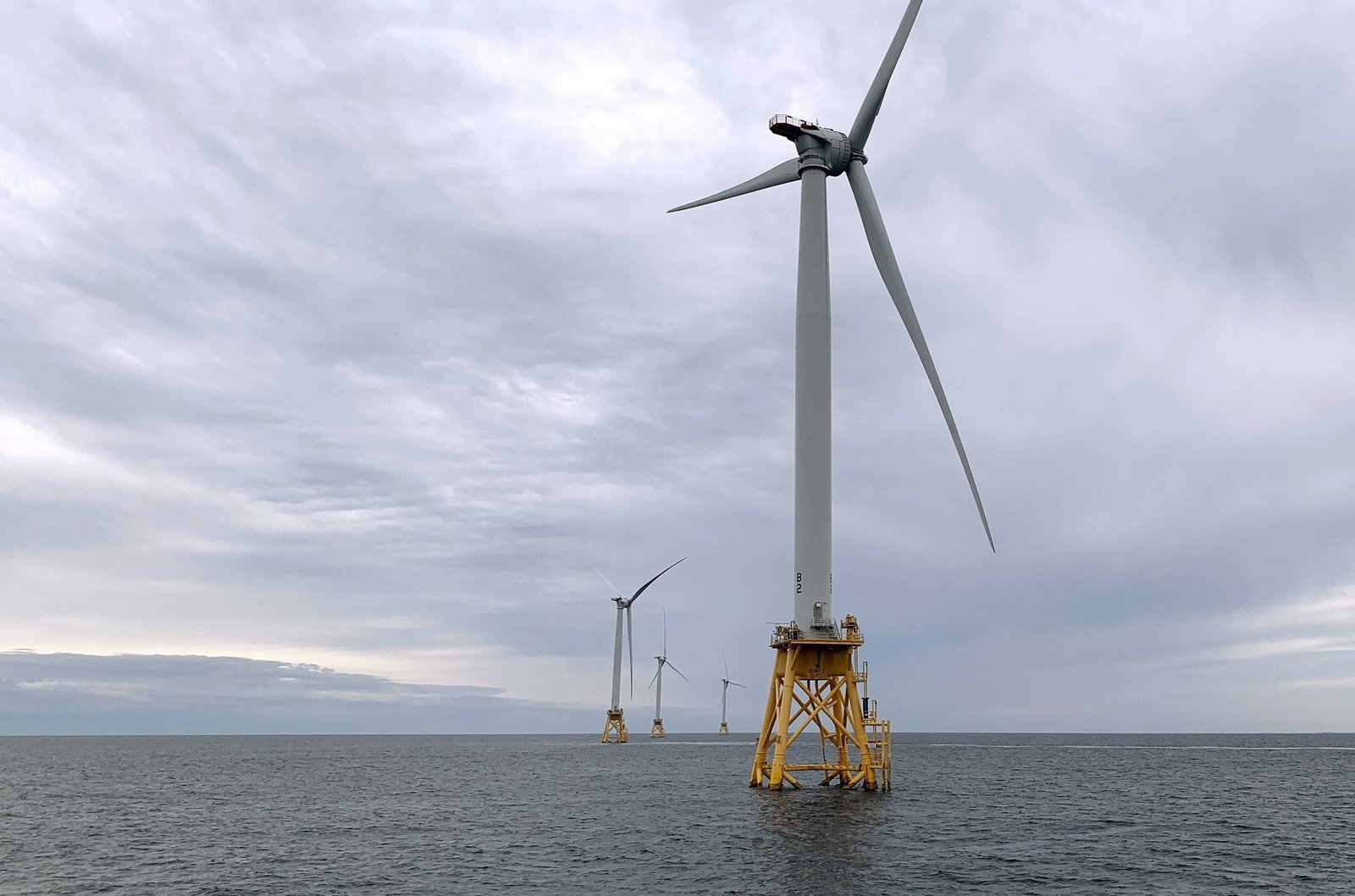
- The massive WIND WEST offshore project in NOVA SCOTIA could generate up to 66 GW of power, but new research suggests its true scale depends on securing firm demand from key markets, including QUEBEC and NEW ENGLAND.
- A key milestone for the ALBERTA-OTTAWA pipeline deal is looming, with an April 1 deadline to reach an agreement on industrial carbon pricing that could make or break long-term investment certainty.

An ‘abundant’ resource
Atlantic Canada’s offshore wind potential is staggering, perhaps one of the best in the world, according to a new report by STANTEC for NET ZERO ATLANTIC. But there are challenges standing in the way of that power being fully unlocked.
-
Export or bust: Scenario modelling shows that, if wind power is only used for local provincial needs, development might be capped at just 2.5 GW. However, if export and hydrogen markets are secured, that capacity would jump to 16.5 GW.
-
Projected number: NOVA SCOTIA often touts that its WIND WEST project has over more than 66 GW potential.
- Why the difference? The province’s energy director, DAVID MILLER, tells iPolitics the modelling scenarios used did not capture recent changes in energy demand.
“If we took away the constraints on the study and redid the modelling, we would see significantly increased volumes to Quebec and New England,” he said.
-
The $60B bill: The first phase WIND WEST aims for a 5 GW build out and carries a $60-billion price tag, with more than a third of that cost dedicated solely to transmission.
-
Regional interest: While Nova Scotia Premier TIM HOUSTON recently signed an MOU with MASSACHUSETTS to explore powering the New England grid, no firm long-term contracts have been signed yet. It’s a similar story on the QUEBEC side.
-
Federal view: Minister TIM HODGSON told iPolitics he wasn’t aware of the report, but that the project is a “huge resource,” and the federal MAJOR PROJECTS OFFICE continues to treat it as a transformative strategy.

Deadline looming, cracks showing
The clock is ticking for Prime Minister MARK CARNEY and Alberta Premier DANIELLE SMITH to finalize an agreement on industrial carbon pricing. With six weeks left until the April 1 deadline, negotiations are entering a high-stakes phase that will determine if Alberta can realistically hit a $130-per-tonne carbon price by 2030.
-
The price gap: Carbon credits currently trade around $35. To reach $130, some massive government intervention will be needed. That could mean buying up excess credits, setting expiry dates, changing demand and supply policies to drain the current 47-million-credit surplus in the TIER BANK.
-
Skin in the game: Carbon contracts for difference are a major sticking point in these negotiations. They would act as an insurance policy, putting the ALBERTA or OTTAWA on the hook financially if future policy changes make carbon-reduction investments unprofitable.
-
Divergence: While Natural Resources Minister TIM HODGSON suggests a deal could still be reached post-deadline, Alberta’s Utilities Minister NATHAN NEUDORF notes that some viewpoints remain “incredibly far apart.”
-
Investor Warning: The Pembina Institute warns that “investors can’t make decisions” in this current environment of uncertainty, and the oil and gas sector expects tangible progress—even if a full agreement isn’t inked by April.
$248,600: The federal investment into a new “market sounding” study to assess the long-term viability of the PORT OF CHURCHILL as a year-round Arctic gateway.
$170/MWh: The projected cost of electricity from WIND WEST if it secures low-interest loans and federal tax credits, on par with other power sources including nuclear and hydro.
1 per cent: The projected real GDP growth for the Canadian economy in 2026 as businesses navigate a year defined by trade uncertainty.Major projects watch
— One Project, One Review: The IMPACT ASSESSMENT AGENCY OF CANADA has released a draft cooperation agreement with NOVA SCOTIA, marking the sixth province to enter into such an agreement with the federal government.
— Nickel turnaround: The CANADA GROWTH FUND has committed $85M to VALE BASE METALS’ Thompson mine in MANITOBA. The deal, expected to close late this year, aims to secure the future of one of Canada’s largest underground nickel operations.
—Arctic gateway: OTTAWA and MANITOBA have launched a study to gauge industry interest in the PORT OF CHURCHILL PLUS project. The vision includes a modernized Class 1 railway, an all-weather road, and a potential “energy corridor” to turn the town into a strategic northern trade hub.
—Not a problem: Cabin Radio reports that a senior figure with the CANADA INFRASTRUCTURE BANK said “money shouldn’t be the issue” if a strong business case is made for an ARCTIC CORRIDOR, giving industry minister CAITLIN CLEVELAND hope the NORTHWEST TERRITORIES will land some financing.Headlines
The Kicker
iPolitics will be at the Prospectors and Developers Association of Canada (PDAC) convention on March 2nd and 3rd.
Book a chat with reporter Aya Dufour.
Thanks for reading. Economic Insights will be back in your inbox next week.