dailynewsnblog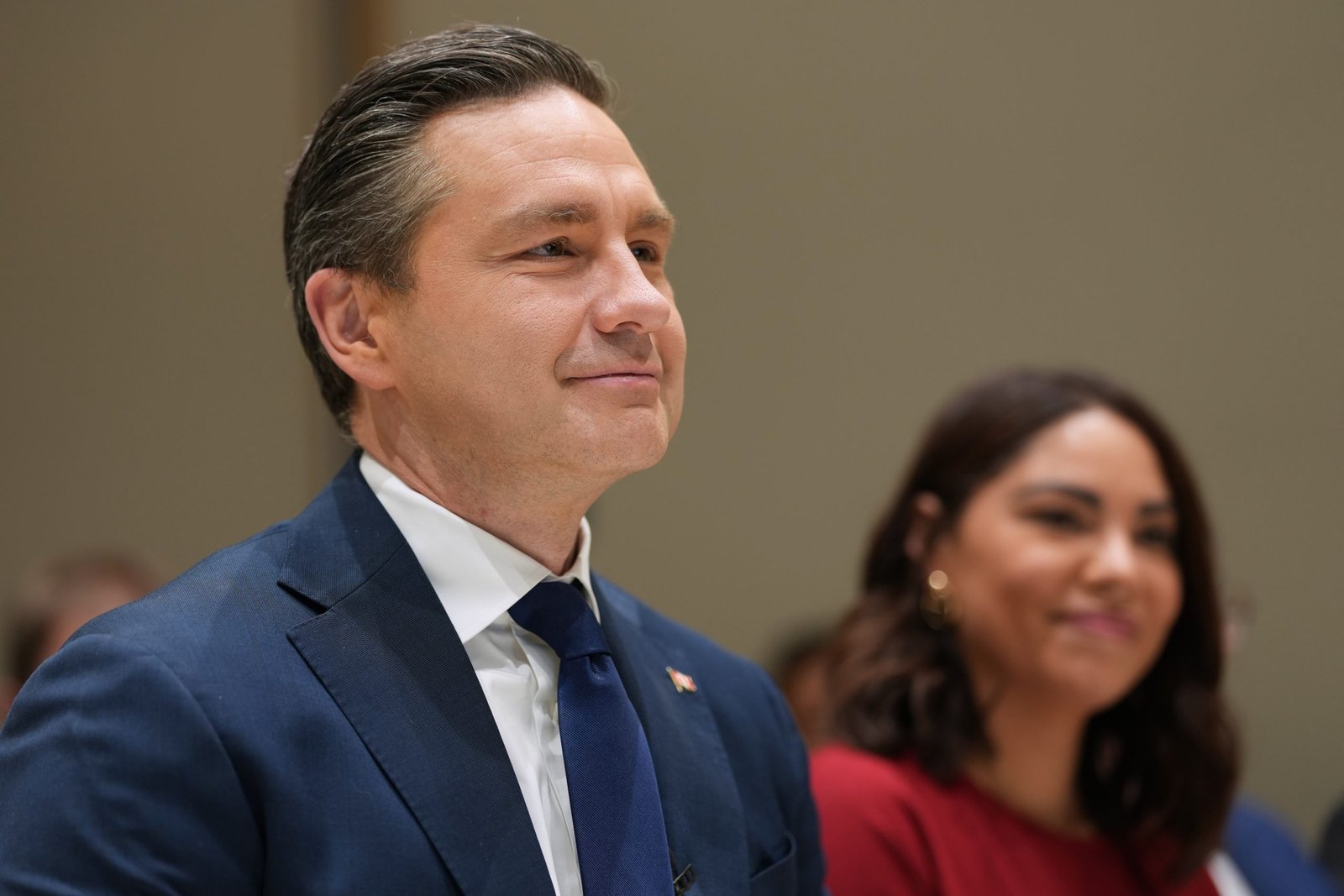
Good evening, readers.
We start the newsletter today following Conservative Leader Pierre Poilievre’s European tour.
Poilievre on Wednesday pitched Canada to a German audience as a reliable energy supplier in a period of global uncertainty.
Poilievre was in Berlin as part of a trip to Europe that has seen him meet in recent days with business leaders and conservative counterparts in the United Kingdom. His Wednesday evening speech was given to the Konrad Adenauer Foundation, which is associated with the governing Christian Democratic Union.
Citing an Iranian drone attack on a Qatari liquefied natural gas facility on Monday, Poilievre said the current instability in the Middle East has driven energy prices sharply higher in Europe.
He said that’s the kind of hit Germany could avoid by shifting its LNG sourcing to Canada.
The Conservative leader blamed former prime minister Justin Trudeau for not making the business case for Canadian LNG when Berlin was in the market years ago, pushing Germany to rely instead on countries like Russia and Qatar.
“Free nations should not have to rely on less stable suppliers when a trusted ally sits on abundant reserves. Canada can be your supplier. We will earn that role,” he said.
Canada does not have any LNG export terminals on the East Coast.
CP has more.

The Ring of Fire deposit in northwestern Ontario was a prime candidate for government efforts to accelerate project permitting.
It appeared on federal potential “nation-building” projects and was at the heart of Ontario Premier Doug Ford’s special economic zones legislation.
But the main developer in the region, Wyloo Metals, is opting out for now, choosing instead to focus on its relationship with Webequie, Marten Falls, and neighboring communities.
“At one point the federal government, through the Major Projects Office, was looking at perhaps putting the roads into that kind of department,” said Keren Yun, Wyloo Metals’ director of communications.
“But the feedback from First Nations was: We’ve been doing this work for seven years, we’re willing to do this, no need to designate [the project].”
Wyloo Metals is currently completing a feasibility study for the proposed Eagle’s Nest mine, and intends to continue doing advanced exploration work after that.
Meanwhile, Webequie and Marten Falls First Nations are pushing ahead with building the road network that will connect the deposit to the provincial highway system.
Wyloo Metals has said it could launch into production some 18 months after the road network is built.
Aya Dufour has the scoop.

Prime Minister Mark Carney took his middle-powers speech from the World Economic Forum earlier this year to an audience in Australia on Wednesday, where he also discussed the difficulties of negotiating with U.S. President Donald Trump.
Hitting many of the same points he did in his headline-making speech in Davos, Switzerland in January, Carney told the Lowy Institute think tank in Sydney that Canada and Australia share the advantages of legitimacy and trust.
“Australia and Canada can’t compel like the great powers, but we can convene, we can set the agenda, shape the rules and organize and build capacity through coalitions that deliver results at speed and global scale,” Carney said in a speech at the Lowy Institute think tank in Sydney.
Carney pointed out that Europe, Australia, Canada, Japan and South Korea have a combined GDP larger than that of the United States.
“Middle powers have more power than many realize,” he said.
While Carney did not mention Trump in his Davos speech, it was widely understood that the president’s unpredictable and destabilizing trade policies drove much of the sentiment within it.
During a question-and-answer period at the Lowy Institute event, the prime minister was asked about his “game plan” for managing Trump.
CP got this one.
In other headlines
Internationally
Elsewhere, Spain has denied the White House’s claim that Madrid is now cooperating militarily with Washington amid the war with Iran, despite President Donald Trump’s threat to use trade to punish the Spanish authorities for their stance.
White House spokesperson Karoline Leavitt suggested on Wednesday that the Spanish position of refusing to allow the country’s military bases in the war against Iran has changed.
“With respect to Spain, I think they heard the president’s message yesterday loud and clear, and it’s my understanding, over the past several hours, they’ve agreed to cooperate with the US military,” Leavitt told reporters.
The Spanish government was quick to dismiss the assertion, with Foreign Minister Jose Manuel Albares saying that he denies the White House’s claim “categorically”.
“Not a single comma has changed, and I have no idea whatsoever what they might be referring to,” Albares told Hora25 radio programme.
On Tuesday, Trump had lambasted Spain over its opposition to the war as “terrible”.
“We’re going to cut off all trade with Spain. We don’t want anything to do with Spain,” the US president said.
Find out more from Al Jazeera.
Meanwhile, the Trump administration’s decision to cut off foreign oil to Cuba is devastating its tourism industry, a key source of income for a government being pushed to the edge.
By the second week of Debbie Sutherland’s vacation to Cuba last month, there were ominous signs of trouble.
Gasoline was being rationed, excursions were canceled and all of the stores in a nearby mall were closed.
Ms. Sutherland’s hotel in Cayo Las Brujas, a part of a small chain of islands just north of central Cuba, reserved a block of rooms for stranded employees. That section of the hotel was completely dark: Only tourists got electricity.
Cuba has relied on tourism, and on sun-starved Canadian visitors above all others, as a key pillar of its collapsing economy.
“The Cuban people love Canadians,” said Ms. Sutherland, 64, a behavioral therapist from Ontario. “They would say, ‘You know, we would die without Canada.’”
But President Trump’s travel restrictions and move to to block all foreign oil from Cuba has brought the industry — already weakened after the Covid-19 pandemic — to its knees and intensified an economic meltdown threatening the government’s survival.
Like many other travelers, Ms. Sutherland’s vacation was cut short last month as the country’s crippling energy crisis began paralyzing tourism.
With the government saying it was running out of jet fuel and with power outages worsening, Russian and Canadian airlines suspended flights to Cuba, a move that jeopardizes the livelihoods of hundreds of thousands of people.
The Kicker
In another sure sign the seasons are turning, the Rideau Canal Skateway is closing at 10 p.m. on Wednesday. The skating rink was opened for 56 days, since Dec. 31.
If you didn’t get a chance to skate on the canal this year – there’s always the next. This newsletter writer is simply too excited to bid farewell to the cold.