dailynewsnblog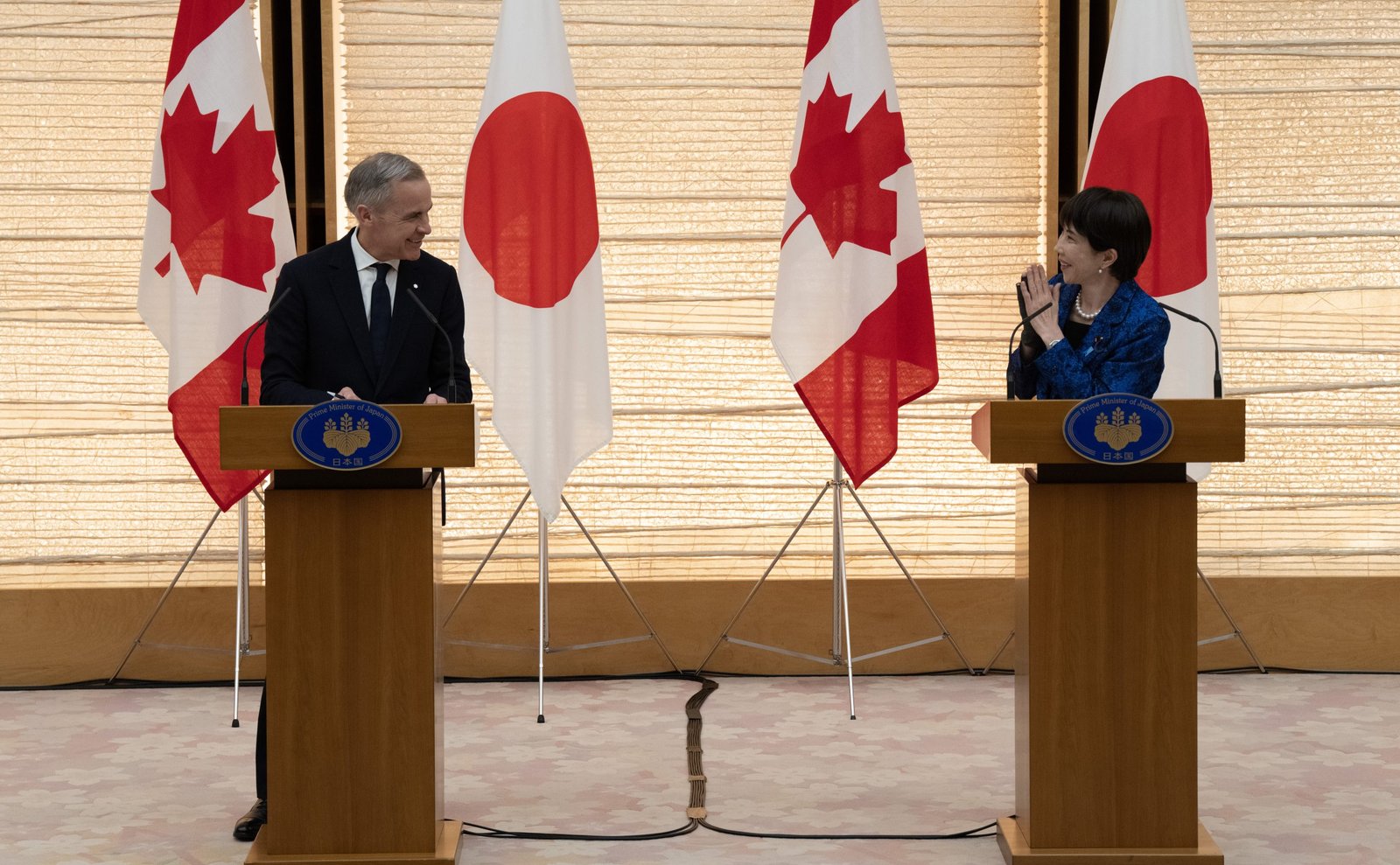
Good evening, readers.
We start the newsletter off today with an update on Prime Minister Mark Carney’s diplomatic visit to Japan.
Canada and Japan have signed a new strategic partnership agreement that aims to boost co-operation on defence, energy, trade and technology.
Carney met with Prime Minister Sanae Takaichi in Tokyo on Friday, outlining a long list of areas where the two countries plan to deepen collaboration, from cyber policy to Arctic security and addressing climate change.
“We have much in common, and we’re enriched by each other’s cultures, perspectives and histories,” Carney said during a joint media event where both leaders made statements but took no questions.
“This is a strong foundation on which we can build something even better, more prosperous, more ambitious.”
Carney, who earned a smile and a clap from Takaichi by making some remarks in Japanese, touted the two countries’ close economic and security partnerships, including $40 billion in two-way trade and joint efforts to patrol the Pacific.
“We do much, but we’re ready to do much more,” he said.
The Canadian Press has more.

Up next, CUSMA review.
Canada-U.S. Trade Minister Dominic LeBlanc sat down with President Donald Trump’s trade czar in Washington on Friday as Ottawa continued preparations for a review of the critical continental trade pact.
Before the meeting with United States Trade Representative Jamieson Greer, LeBlanc’s spokesman said they expected discussions to include the upcoming mandatory review of the Canada-U.S.-Mexico Agreement on trade, known as CUSMA, as well as other bilateral concerns.
The meeting is being seen as a sign of a thaw in Canada-U.S. relations after Trump froze negotiations with Canada last year because he was angered by an Ontario-sponsored ad quoting former president Ronald Reagan criticizing tariffs.
While no formal negotiations have been taking place, LeBlanc and Greer have continued to communicate by phone. Greer told Fox Business last month that Canadians maintain barriers that make it difficult to hold bilateral trade talks.
“They refuse to sell U.S. wine and spirits on their shelves,” Greer told Fox Business. “There are a variety of issues they have not addressed and aren’t addressing and this makes it a big challenge and an obstacle for starting real negotiations with them.”
LeBlanc’s meeting with Greer comes at an important time for North American trade talks. The continental trade pact is up for review this year but Trump has cast doubt over CUSMA’s future. He has called the trade deal his first administration negotiated “irrelevant” and has said it may have served its purpose.
CP’s also got this one.

The Liberals are moving forward with a motion to speed up the passage of their continuously delayed anti-hate bill, signalling the government may have run out of patience for further negotiations with the Conservatives.A motion placed on the House notice paper this week would set a timeline for the justice committee to complete its review of Bill C-9.If passed, it would require the committee to resume clause-by-clause consideration at its next meeting. Votes would be called on all amendments and the meeting cannot end until the bill passes review.
Internationally
Meanwhile, the U.S. job market turned weaker last month, dashing hopes for an economic rebound. A report from the Labor Department on Friday shows employers cut 92,000 jobs in February, when economists had expected the U.S. would continue adding jobs, albeit at a sluggish pace. The unemployment rate inched up to 4.4%.
Job gains for December and January were also revised downward, with December now showing a net loss 17,000 jobs.
February’s job losses were widespread, with factories, construction companies and the federal government all shedding workers. Even health care, which has been a source of strength in the job market, lost 28,000 jobs in February — partly as a result of a nurses strike.
Policymakers had hoped the job market was stabilizing after anemic hiring in 2025. But February’s job loss suggests continued weakness. That could alter the Federal Reserve’s calculus, as it weighs further cuts in interest rates.
Find out more from NPR.
Elsewhere, over the past two decades, China has quietly eclipsed the United States as the dominant trading partner in parts of Latin America.
But since taking office for a second term, United States President Donald Trump has pushed to reverse Beijing’s advance.
That includes through aggressive manoeuvres directed at China’s allies in the region.
Already, the Trump administration has stripped officials in Costa Rica, Panama and Chile of their US visas, reportedly due to their ties to China.
It has also threatened to take back the Panama Canal over allegations that Chinese operatives are running the waterway. And after invading Venezuela and abducting President Nicolas Maduro, the US forced the country to halt oil exports to China.
But on Saturday, Trump is taking a different approach, welcoming Latin American leaders to his Mar-a-Lago estate for an event dubbed the “Shield of the Americas” summit.
How he plans to persuade leaders to distance themselves from one of the region’s largest economic partners remains unclear.
Al Jazeera has more.
In Other International Headlines
The Kicker
Happy Friday! If you’re looking for a team sport to watch this weekend, the World Baseball Classic kicked off this Wednesday.
Team Canada will be stepping up the plate to play against Colombia on Saturday at 11 a.m.
This newsletter writer don’t understand the finer points of baseball, but with Team Canada competing in the World Baseball Classic, it’s uncomplicated enough to know who to cheer for…