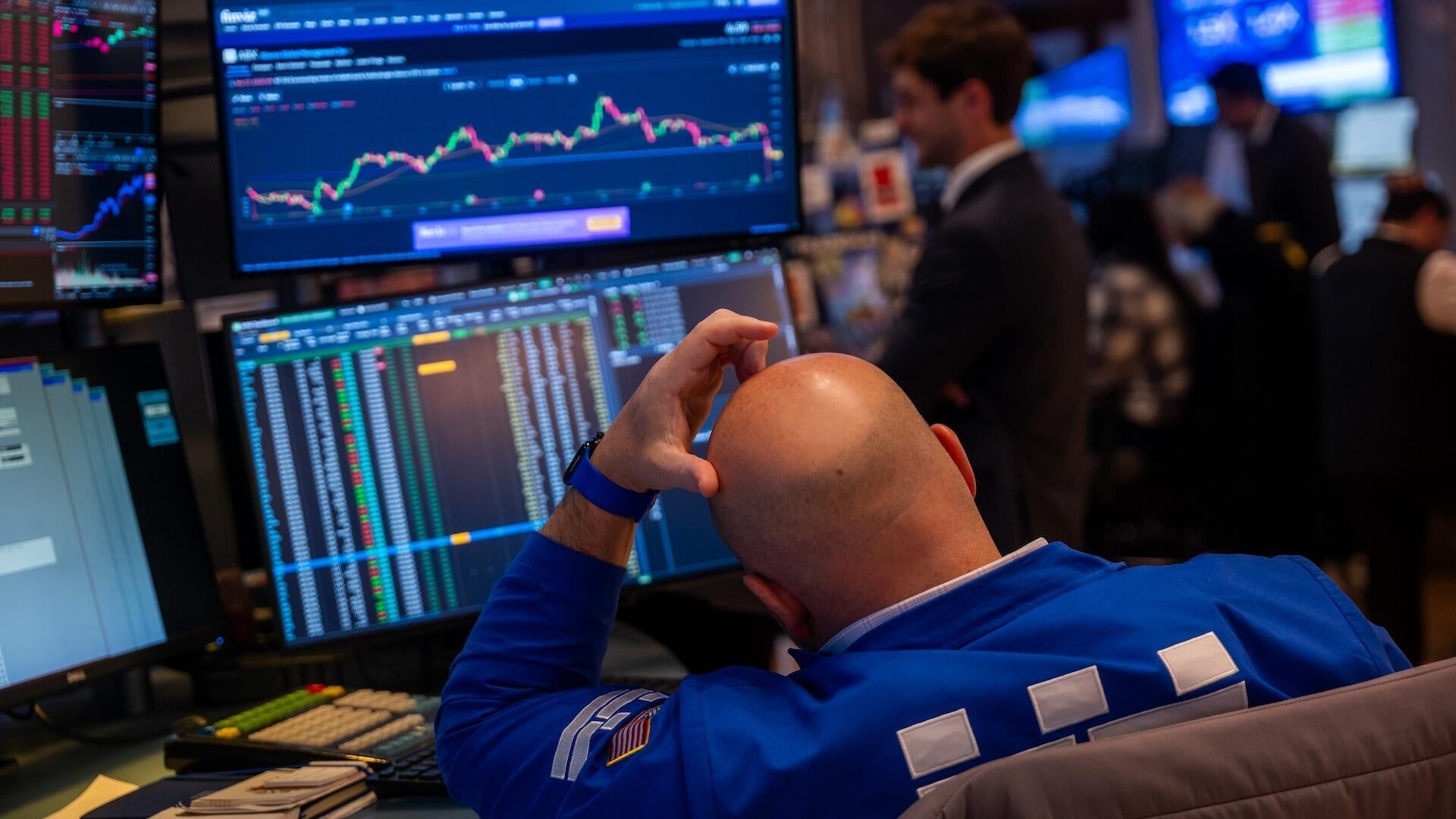
Financial markets across the United States faced a sudden downturn as stock futures tumbled, wiping out the bullish streak that had characterized the early part of the week. The Nasdaq 100, a bellwether for the technology sector, is on pace to relinquish its earlier gains, marking a distinct shift from the rally that had previously dominated trading floors. This movement reflects a rapid cooling of enthusiasm that had been fueled by the high-profile presence and strategic announcements associated with Nvidia, the semiconductor giant that has become the central pillar of the artificial intelligence boom.
The immediate operational context of this decline is rooted in profit-taking and a reassessment of risk. Investors who had piled into tech stocks on the back of Nvidia's momentum appear to be pausing to evaluate whether current valuations still reflect sustainable growth or if they have outpaced fundamental earnings. The geographical scope of this impact is global, as U.S. tech performance directly influences market sentiment in Asia and Europe, where local indices often mirror the direction of their American counterparts.
While no single corporate announcement triggered the drop in isolation, the collective reaction underscores the market's sensitivity to leadership narratives. The 'stunning return' of Nvidia's CEO, Jensen Huang, had previously acted as a catalyst for optimism, reinforcing the perception of Nvidia's irreplaceable role in the AI infrastructure race. However, the subsequent fade in this rally suggests that traders are now demanding more concrete evidence of earnings growth to justify the premium prices attached to these leading tech firms.
In-Depth Analysis & Key Details
To understand the current volatility, one must examine the structural forces that have elevated Nvidia to the status of a market anchor. For several years, the semiconductor industry has been in a transition from consumer electronics to data center infrastructure, a shift accelerated by the generative AI revolution. Nvidia's dominance in graphics processing units (GPUs) has created a near-monopoly in the hardware required for training large language models. This structural advantage has allowed the company to command high margins and market capitalization, making it a primary driver of the S&P 500 and Nasdaq indices. The recent market action is not merely a reaction to a single day's news but a correction within a broader narrative of AI-driven growth.
Competing perspectives within the financial community highlight a tension between long-term structural growth and short-term valuation concerns. Industry analysts observe that while the demand for AI computing power remains robust, the pace of revenue growth for Nvidia and its peers may not sustain the exponential price increases seen in the previous months. Regulatory debates and geopolitical tensions surrounding semiconductor exports further complicate the landscape, adding layers of uncertainty that investors are now factoring into their risk models. The market is essentially debating whether the AI boom is a durable economic shift or a speculative bubble that is beginning to deflate.
Expert domain context suggests that this pullback is a healthy mechanism for market calibration. Historically, periods of intense concentration in a few mega-cap tech stocks have been followed by rotations into other sectors, such as value stocks or small caps. The current fade in the Nvidia rally may signal the beginning of such a rotation, where capital flows out of overextended tech assets and into more defensive or undervalued areas of the market. This dynamic is critical for understanding the broader health of the U.S. economy and the resilience of the stock market against external shocks.
"The market is no longer buying the narrative; it is demanding the numbers, and the gap between AI hype and realized earnings is where the next volatility will be born."
Why This Matters & What Lies Ahead
For everyday investors and consumers, the volatility in tech stocks has direct implications for retirement portfolios and wealth accumulation. The Nasdaq 100 is a major component of many index funds and exchange-traded funds (ETFs) that form the backbone of 401(k) plans and individual investment accounts. A sustained decline in these indices can erode household wealth and affect consumer confidence, potentially leading to reduced spending in other sectors of the economy. Furthermore, the performance of tech giants influences the overall sentiment of the financial markets, which in turn affects interest rates, currency values, and global trade dynamics.
Looking ahead, several key milestones will determine whether this retreat is a temporary correction or the start of a longer downturn. Investors should monitor upcoming earnings reports from major tech companies, particularly Nvidia and its competitors, to gauge the sustainability of AI-driven revenue. Additionally, Federal Reserve statements on inflation and interest rates will play a crucial role in shaping market direction, as higher rates tend to pressure high-growth stocks with distant cash flows. Regulatory developments regarding AI safety and semiconductor export controls will also be critical factors to watch, as these can alter the competitive landscape and growth prospects for the industry.
Source: Reported by CBS News · Analyzed & Synthesized by DNB Newsroom