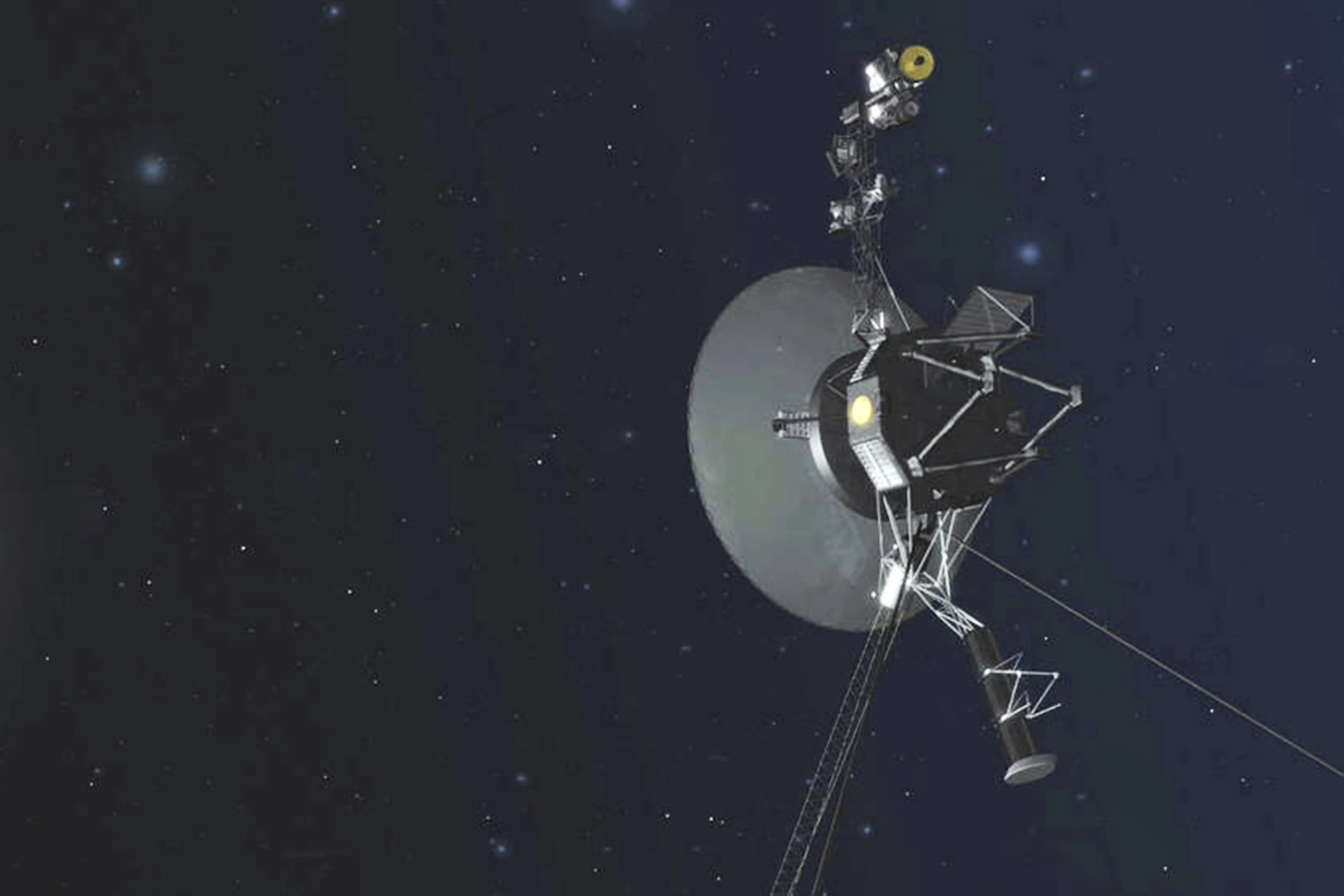
NASA’s Voyager 1 spacecraft is approaching a historic spatial milestone, expected to cross the 16 billion mile mark from Earth this week. As the probe continues its outbound trajectory through the interstellar medium, it solidifies its position as the most distant object constructed by humanity. The achievement is a testament to the mission’s enduring success, having been launched in 1977 as part of a dual-probe mission designed to study the outer planets.
The operational context of this milestone is defined by the immense scale of the distance involved. At 16 billion miles, Voyager 1 is so far from the Sun that sunlight takes approximately 22 hours to reach the probe. The spacecraft is currently navigating the interstellar medium, a region of space beyond the heliosphere where the Sun’s influence wanes. This environment presents unique challenges for signal transmission, requiring NASA’s Deep Space Network to capture faint radio signals that have traveled for days to reach Earth.
NASA officials have emphasized the continued health and functionality of the Voyager 1 systems, noting that the probe’s instruments remain operational despite the extreme conditions. The mission team has expressed pride in the spacecraft’s longevity, which has far exceeded its original design life. Stakeholders in the scientific community view this milestone as a validation of the engineering principles employed in the early 1970s, which have proven robust enough to withstand decades of cosmic radiation and the vacuum of space.
In-Depth Analysis & Key Details
The historical significance of Voyager 1 is rooted in the ambitious goals of the 1970s space program, which sought to explore the outer solar system and beyond. The mission was originally designed to last only a few years, but the robustness of its design and the success of its scientific objectives have allowed it to continue operating for nearly five decades. This longevity has provided scientists with an unprecedented opportunity to study the interstellar medium, a region of space that has been largely unexplored by human technology.
From a regulatory and institutional perspective, the continued operation of Voyager 1 highlights the importance of long-term funding and support for deep-space exploration. The mission requires ongoing maintenance of ground-based infrastructure, including the Deep Space Network, which is essential for receiving data from the probe. Industry analysts observe that the success of Voyager 1 has influenced the design and planning of subsequent deep-space missions, emphasizing the need for redundancy and durability in spacecraft systems.
Technical intricacies of the mission include the management of power consumption and data transmission. Voyager 1 is powered by a radioisotope thermoelectric generator, which converts heat from the decay of plutonium-238 into electricity. As the plutonium decays, the power output gradually decreases, requiring careful management of the spacecraft’s systems to extend its operational life. The probe’s telemetry system is designed to transmit data at a very low rate, ensuring that even faint signals can be detected by Earth-based receivers.
"The Voyager 1 mission exemplifies the enduring power of human ingenuity, proving that the tools we build today can continue to explore the unknown for generations."
Why This Matters & What Lies Ahead
The achievement of Voyager 1 has significant implications for public perception of space exploration and the potential for future missions. By demonstrating the feasibility of long-duration deep-space travel, the mission inspires new generations of scientists and engineers to pursue careers in aerospace and related fields. The data collected by Voyager 1 contributes to our understanding of the interstellar medium, which is crucial for planning future missions to other stars and for understanding the broader context of our place in the universe.
Upcoming milestones to watch include the continued operation of Voyager 1 and its sister probe, Voyager 2, which is also traveling through the interstellar medium. NASA is expected to announce new scientific findings from the data collected by these probes, which may provide insights into the nature of interstellar dust, magnetic fields, and cosmic rays. Additionally, the mission team is working to extend the operational life of the probes as long as possible, ensuring that they continue to provide valuable data for years to come.
Source: Reported by NPR · Analyzed & Synthesized by DNB Newsroom