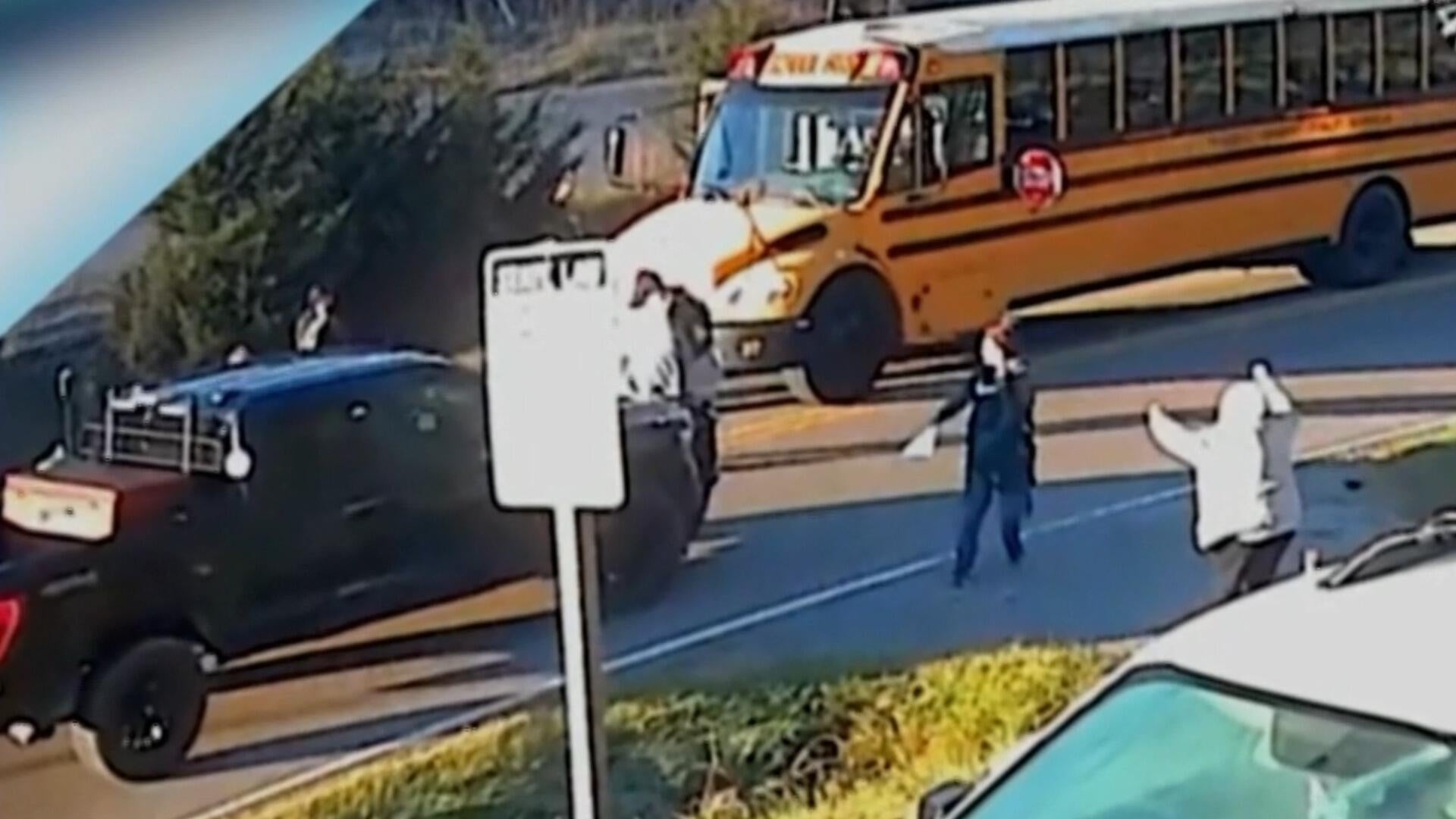
A disturbing close call between pedestrians and a motor vehicle has shaken a Virginia community after a speeding pickup truck narrowly missed two students attempting to cross the street to board their school bus. The incident, which took place last week, was captured on camera, offering unambiguous evidence of the danger posed by reckless driving in areas frequented by children. The footage has since circulated widely, drawing attention to the precarious balance between vehicular traffic and pedestrian safety in suburban and urban school zones.
The geographic context of the event places the incident in a high-visibility area where student movement is expected to be predictable and protected. Despite the presence of a bus stop, which typically signals to drivers the need for heightened caution, the pickup truck driver failed to yield or reduce speed, resulting in a near-collision that left the children and their family in a state of shock. The immediacy of the threat was underscored by the speed of the vehicle, which, according to the mother of the students, was excessive for the location and the time of day.
In response to the incident, the mother of the two children has come forward to share her account, stating that she is still struggling to sleep due to the trauma of the event. Her public statement serves not only as a personal testament to the fear inflicted by such negligence but also as a catalyst for broader community discussions regarding driver responsibility. Local authorities and school officials are likely to review the footage to determine if any traffic violations were committed, while the family seeks assurance that similar incidents can be prevented through better enforcement and infrastructure.
In-Depth Analysis & Key Details
The incident underscores a persistent and structural issue in American transportation: the frequent disconnect between driver behavior and the safety needs of vulnerable road users, particularly children. School zones are legally designated as areas requiring reduced speeds and increased vigilance, yet enforcement remains inconsistent across many jurisdictions. The presence of a school bus stop is a universal signal for drivers to exercise extreme care, but the recurrence of such close calls suggests that visual cues alone are insufficient without the backing of rigorous police patrols and automated speed monitoring systems. This event is not an isolated anomaly but part of a broader pattern of traffic safety failures that have prompted advocacy groups to push for more robust legislative and infrastructural reforms.
From a regulatory perspective, the incident highlights the limitations of current traffic laws in deterring reckless driving. While penalties for speeding and failure to yield exist, they are often perceived as insufficient deterrents by safety advocates who argue for harsher consequences, including mandatory driver re-education or higher fines. The economic and social costs of traffic accidents, particularly those involving minors, extend far beyond immediate medical expenses, encompassing long-term psychological trauma for victims and their families. Industry analysts observe that the increasing prevalence of high-speed vehicles in residential and school areas exacerbates this risk, necessitating a reevaluation of how communities manage traffic flow and pedestrian priority.
The technical intricacies of road safety also come into play, with the design of crosswalks, visibility barriers, and speed humps playing a crucial role in preventing such incidents. The fact that the event was captured on camera adds a layer of accountability, as video evidence is increasingly used in both legal proceedings and public advocacy campaigns. This transparency forces a direct confrontation with the reality of driver negligence, moving the conversation from abstract statistics to tangible, human consequences. The incident serves as a stark reminder that safety is not merely a matter of infrastructure but also of cultural attitudes toward driving and respect for shared road space.
"The proximity of that truck to these children is not just a near miss; it is a glaring indictment of the failure to prioritize human life over vehicular speed in our most vulnerable public spaces."
Why This Matters & What Lies Ahead
For everyday citizens, this incident serves as a visceral reminder of the risks inherent in the daily commute for students and the shared responsibility of drivers to ensure their safety. It impacts families directly, as the emotional toll of such close calls can lead to long-term anxiety and a diminished sense of security in public spaces. Furthermore, it has the potential to influence public policy, as high-profile incidents often accelerate the push for stricter traffic laws, increased funding for road safety infrastructure, and more aggressive enforcement strategies by local law enforcement. The financial implications for the community may include increased insurance costs and potential legal liabilities, while the social impact fosters a collective demand for accountability and change.
In the coming weeks, stakeholders should monitor local government responses, including potential reviews of traffic patterns at the specific bus stop and the implementation of additional safety measures such as speed cameras or increased police presence. Legal proceedings may also emerge if the driver is identified and charged with traffic violations, which could set a precedent for how such cases are handled in the jurisdiction. Advocacy groups are likely to use this incident as a case study in campaigns for broader road safety reforms, potentially influencing legislative agendas at the state level. The outcome of these efforts will be critical in determining whether this close call leads to meaningful change or remains a tragic footnote in the ongoing struggle for safer roads.
Source: Reported by CBS News · Analyzed & Synthesized by DNB Newsroom