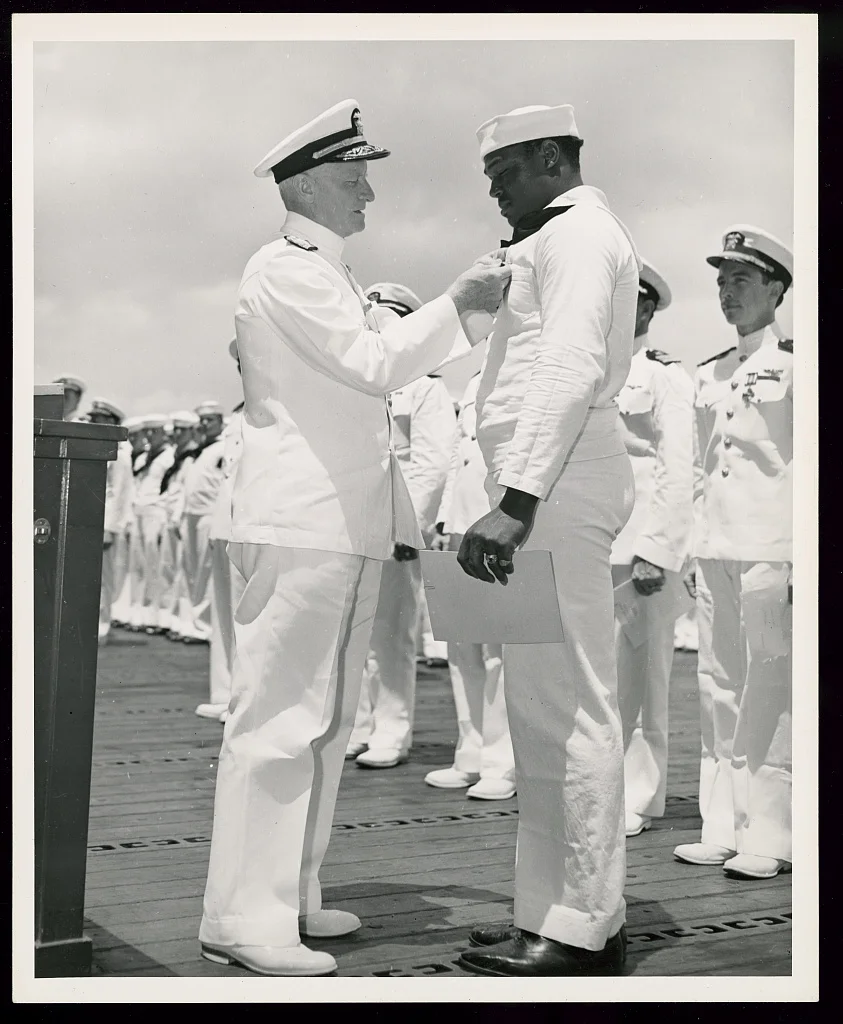
The U.S. Navy announced that the keel of its forthcoming Ford‑class supercarrier will be laid next week, officially christening the vessel USS Doris Miller. The naming honors Seaman First Class Doris "Dorie" Miller, whose improvised defense of the USS West Virginia during the December 7, 1941 attack earned him the Navy Cross and a place in military lore.
Construction will commence at Newport News Shipbuilding in Virginia, the same yard that has produced every U.S. carrier since World War II. Navy officials highlighted the symbolic weight of the decision, noting that Miller’s actions embody the courage and ingenuity the service seeks to instill in future generations of sailors.
Rear Admiral John B. Nowell, commander of Naval Sea Systems Command, praised the legacy, stating that naming a capital‑ship after an enlisted hero underscores the Navy’s commitment to recognizing merit wherever it arises. Veteran groups and civil‑rights organizations issued statements of support, while some congressional members pledged to monitor the project’s funding and timeline.
In-Depth Analysis & Key Details
Miller’s story emerged from a chaotic morning when Japanese aircraft bombarded Pearl Harbor. With the USS West Virginia ablaze, Miller, originally a mess attendant, seized an M1917 .30‑caliber machine gun and opened fire on enemy planes, later assisting wounded crew members. His actions challenged prevailing racial norms of the era, eventually leading to his posthumous promotion and the first African‑American to receive the Navy Cross.
The decision to name a carrier after Miller reflects a broader shift within the Department of Defense toward inclusive commemoration. Recent reviews have resulted in renamings of bases, ships, and awards to better represent the diversity of the armed forces. Economically, the carrier program remains a cornerstone of the defense industrial base, with each vessel costing upwards of $13 billion, influencing employment at shipyards and ancillary suppliers.
Naval analysts observe that the USS Doris Miller will incorporate the latest electromagnetic catapult system and advanced radar suites, positioning it at the forefront of maritime deterrence. While the project promises enhanced strike capability, it also raises questions about budget sustainability amid competing priorities such as hypersonic weapons and cyber defense.
"Naming a capital ship after an enlisted sailor who defied expectations at Pearl Harbor sends a powerful message: valor knows no rank, and the Navy’s future will be built on that principle."
Why This Matters & What Lies Ahead
For everyday Americans, the carrier’s construction translates into thousands of jobs at Newport News and across the supply chain, reinforcing communities that depend on defense contracts. Moreover, the ship’s advanced systems will shape the Navy’s ability to respond to emerging threats in the Indo‑Pacific, directly affecting regional stability and trade routes.
Legislators will scrutinize the program’s funding during upcoming defense appropriations hearings, where the Navy is expected to justify cost overruns and schedule risks. Watch for testimony from Navy leadership and oversight committees in early 2027, which will determine whether the USS Doris Miller stays on track for its projected 2037 commissioning date.
Source: Reported by NPR · Analyzed & Synthesized by DNB Newsroom