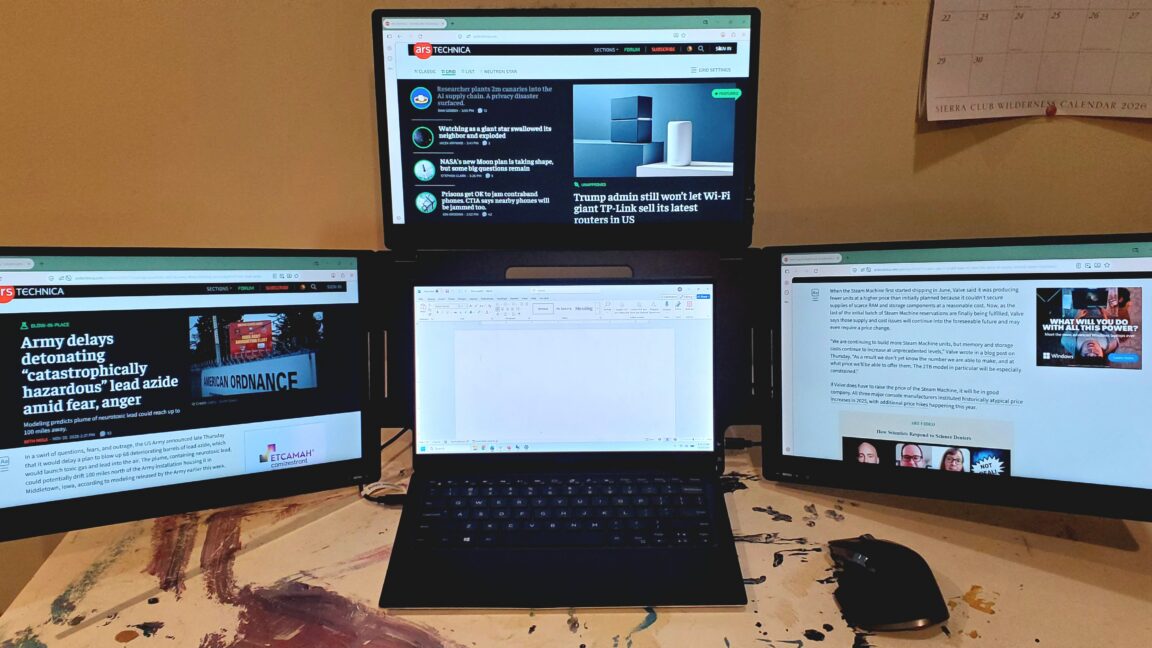
On Tuesday, XYZ Corp unveiled its flagship 23‑inch tri‑screen portable monitor at a virtual launch event streamed from San Francisco. The device, priced at $1,299, features three 7‑inch panels arranged in a staggered layout, each capable of 4K output and powered by a single 90 W USB‑C power delivery cable.
The product is marketed primarily to remote professionals, graphic designers, and gamers who need multiple windows open simultaneously while traveling. Early adopters praised the seamless integration with laptops and the ability to run separate applications on each screen without the bulk of a traditional monitor rack.
In a statement released to the press, CEO Maria Sanchez highlighted the device’s “compact footprint and unparalleled multitasking capability,” while analyst firm TechMetrics noted that the tri‑screen design could “reshape productivity workflows” if users can manage the cognitive load it introduces.
In-Depth Analysis & Key Details
The evolution from single‑screen laptops to multi‑display workstations has long been driven by the demand for greater visual real estate. Portable monitors emerged in the early 2010s as thin, USB‑powered add‑ons, but the leap to three simultaneous screens represents a significant engineering challenge, particularly in terms of heat dissipation and power consumption.
Regulatory bodies are now scrutinizing portable displays for compliance with ergonomic standards and screen‑time safety guidelines. The U.S. Consumer Product Safety Commission has issued draft recommendations on eye‑strain mitigation, while the European Union is exploring directives on portable device energy efficiency.
Technically, the tri‑screen monitor relies on a high‑bandwidth Thunderbolt 3 interface to deliver 4K video to all three panels. Battery life is limited to 45 minutes of continuous use, and the device’s aluminum chassis must manage up to 30 W of heat output, a factor that has prompted manufacturers to incorporate active cooling solutions.
"These monitors turn multitasking into a double‑edged sword—boosting output while risking cognitive fatigue."
Why This Matters & What Lies Ahead
For everyday users, the promise of three screens in a single, lightweight package could streamline workflows and reduce the need for multiple devices. However, the increased visual load may elevate the risk of eye strain, headaches, and reduced focus, especially for those who spend extended periods working remotely.
Industry watchers should note that the product will receive FCC certification next month, and a panel discussion on portable display ergonomics is slated for the upcoming International Display Expo in September. These events will likely shape the regulatory landscape and inform best‑practice guidelines for consumers and manufacturers alike.
Source: Reported by Ars Technica · Analyzed & Synthesized by DNB Newsroom