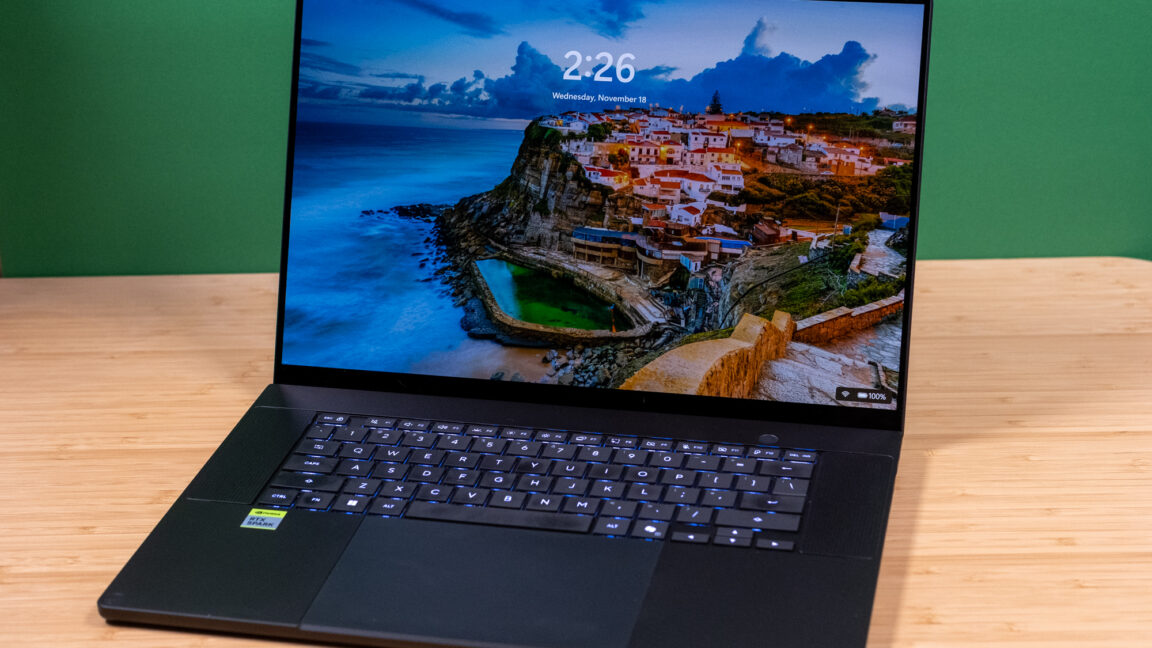
Asus has officially entered the competitive arena of AI-optimized mobile workstations with the release of the ProArt P16, a device that commands a premium price point reaching up to $7,000. Unlike conventional laptops that rely heavily on cloud-based services for artificial intelligence tasks, the ProArt P16 is architected to handle a substantial workload of local AI agents directly on the device. This strategic pivot addresses the growing demand among professional users for hardware that can execute complex AI operations without the latency and security concerns associated with off-device processing.
The operational context of this launch places the ProArt P16 squarely in the professional creator segment, targeting individuals who require high-fidelity performance for video editing, 3D rendering, and software development. By enabling the simultaneous execution of multiple local AI agents, the laptop offers a streamlined workflow that maintains data integrity within the user's local environment. This approach is particularly relevant in industries where intellectual property protection is paramount, as it eliminates the need to transmit proprietary data to external servers for AI-assisted processing.
Industry observers note that the high price tag reflects the specialized nature of the hardware, which likely includes advanced neural processing units and high-capacity memory configurations necessary to support local inference. While the $7,000 price point limits immediate mass-market adoption, the device serves as a clear indicator of where the industry is heading. Stakeholders in the technology sector view this launch as a validation of the local AI paradigm, suggesting that future hardware standards will increasingly prioritize on-device AI capabilities over traditional metrics like raw CPU speed.
In-Depth Analysis & Key Details
The introduction of the Asus ProArt P16 is part of a broader historical shift in computing architecture, where the focus has moved from centralized cloud computing to edge and local processing. For years, the dominance of cloud services meant that hardware manufacturers did not need to optimize for local AI tasks, as the heavy lifting was performed by massive data centers. However, the rise of generative AI has exposed the limitations of this model, including latency issues, bandwidth costs, and significant privacy concerns. The ProArt P16 represents a concrete step toward decentralizing AI capabilities, allowing users to maintain control over their data and workflows.
Competing perspectives on local AI highlight a tension between convenience and security. Cloud-based AI offers scalability and access to the most powerful models, but it requires users to upload their data, which can be a dealbreaker for sensitive professional work. Local AI, as demonstrated by the ProArt P16, offers privacy and lower latency but requires significant upfront hardware investment. The $7,000 price tag underscores the current cost barrier for high-performance local AI, though industry analysts observe that these costs are likely to decrease as the technology matures and becomes more standardized across the industry.
From a technical standpoint, running multiple local AI agents requires a delicate balance of computation, memory bandwidth, and thermal management. The ProArt P16 is designed to handle this complexity, suggesting that Asus has implemented specialized hardware components to ensure stable performance under load. This technical intricacy is a key differentiator in the current market, where many laptops claim AI capabilities but lack the sustained performance required for professional applications. The device's ability to run a 'gaggle' of agents indicates a level of optimization that goes beyond simple marketing claims, providing a tangible benefit for users who rely on AI for their daily work.
"The ProArt P16 is not just a laptop; it is a statement that the future of professional AI workflows will be defined by local control and privacy, not cloud dependency."
Why This Matters & What Lies Ahead
For everyday readers and professional creators, the Asus ProArt P16 represents a new standard for what a mobile workstation can achieve in the age of AI. The ability to run local AI agents means that users can leverage AI tools for tasks like image generation, code assistance, and data analysis without worrying about their data being sent to third-party servers. This has direct implications for privacy and security, particularly for industries such as healthcare, finance, and legal, where data protection is a legal and ethical imperative. Additionally, the reduced latency associated with local processing can lead to more responsive and efficient workflows, potentially increasing productivity for professionals who rely on AI tools.
Looking ahead, the launch of the ProArt P16 sets the stage for a new wave of hardware innovation focused on local AI capabilities. Consumers and businesses should watch for similar offerings from other manufacturers, which could drive down prices and make local AI more accessible. Regulatory bodies may also take note of the growing trend toward local AI, as it raises questions about data sovereignty and the role of cloud providers in the AI ecosystem. Upcoming milestones to monitor include the release of competing models, updates to operating systems that better support local AI agents, and any new regulations regarding AI data handling that may emerge in response to this shift in technology.
Source: Reported by Ars Technica · Analyzed & Synthesized by DNB Newsroom


