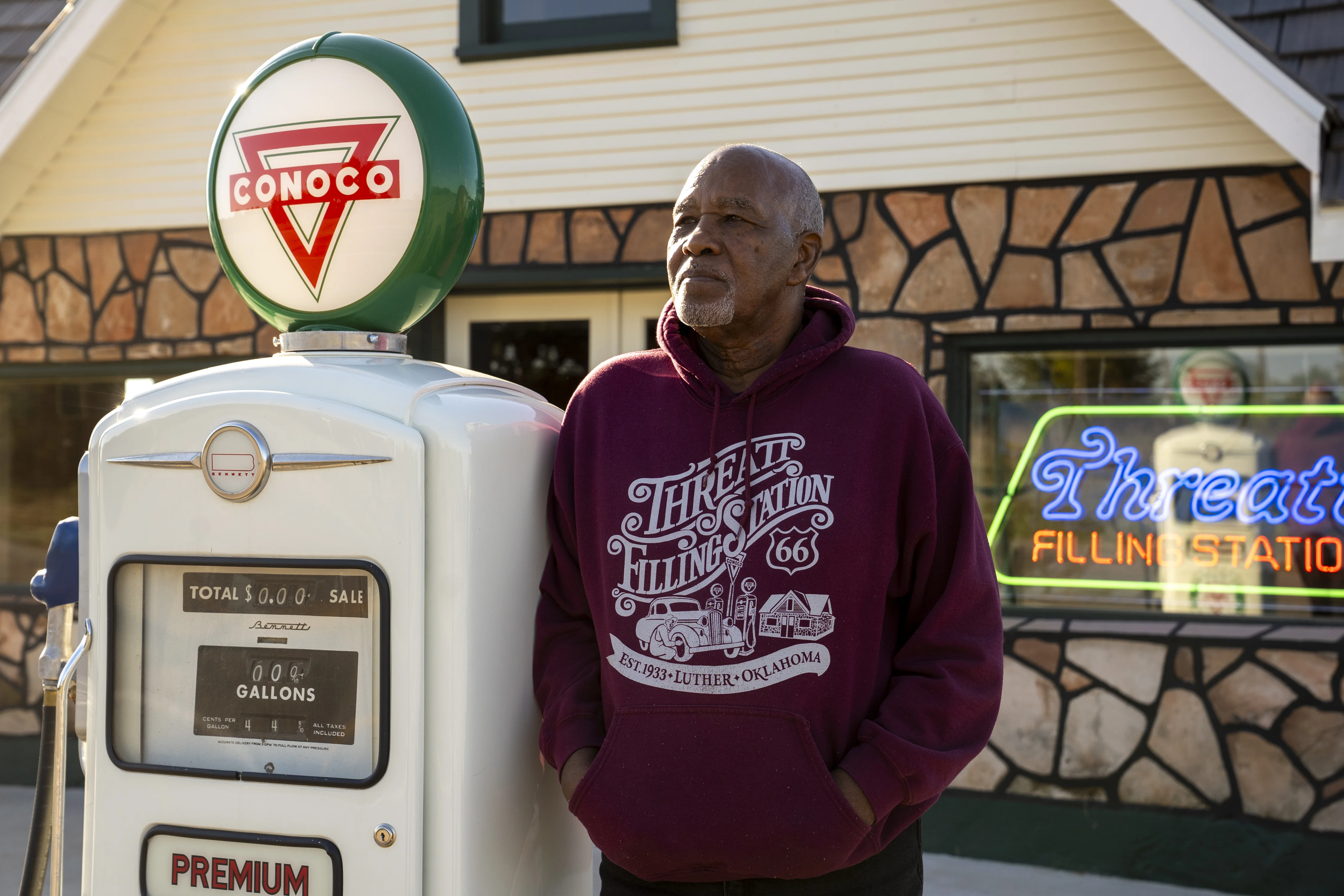
The Threatt Filling Station, established by the Threatt family in the small Oklahoma town of Luther, opened its doors in the early 1950s as the first Black‑owned gas station on the historic Route 66.
Situated along the main artery that connected Chicago to Los Angeles, the station offered fuel, basic amenities, and a safe respite for Black travelers at a time when segregation barred them from many public facilities. The pumps, a modest 1950s design, were staffed by the Threatt family, who ensured that weary motorists could refuel and rest in a welcoming environment.
Local historians and civil‑rights advocates have since highlighted the station’s significance. A spokesperson for the Oklahoma Historical Society noted that the Threatt Filling Station “represents a quiet but powerful act of resistance against the segregationist policies that defined the era.”
In-Depth Analysis & Key Details
The station’s emergence must be understood against the backdrop of the Jim Crow South, where Black families depended on the Green Book to locate safe lodging, dining, and restroom facilities. By offering a fuel stop, the Threatt family addressed a critical gap in the infrastructure that had long excluded Black motorists.
Regulatory debates of the period centered on the federal highway system’s role in perpetuating segregation. While the Department of Transportation promoted interstate commerce, state and local authorities often enforced discriminatory practices. The Threatt station’s existence challenged these norms and demonstrated how private enterprise could push back against institutional barriers.
Civil‑rights scholars note that small, community‑based initiatives like the Threatt Filling Station were instrumental in building the momentum that eventually led to landmark legislation such as the Civil Rights Act of 1964. The station’s legacy continues to inform contemporary discussions about equitable access to transportation services and the preservation of civil‑rights heritage sites.
"A single pump on a dusty highway can ignite a movement."
Why This Matters & What Lies Ahead
For everyday readers, the story of the Threatt Filling Station reminds us that progress often begins with ordinary acts of defiance. It highlights how inclusive infrastructure can transform lives and underscores the ongoing need to recognize and protect sites that symbolize resilience.
State officials have announced plans to designate the station as a heritage landmark, and a commemorative plaque is slated for installation in 2025. A panel discussion on civil‑rights history will be held at the Oklahoma State Capitol in March, offering a platform to examine the broader implications of such pioneering enterprises.
Source: Reported by NPR · Analyzed & Synthesized by DNB Newsroom