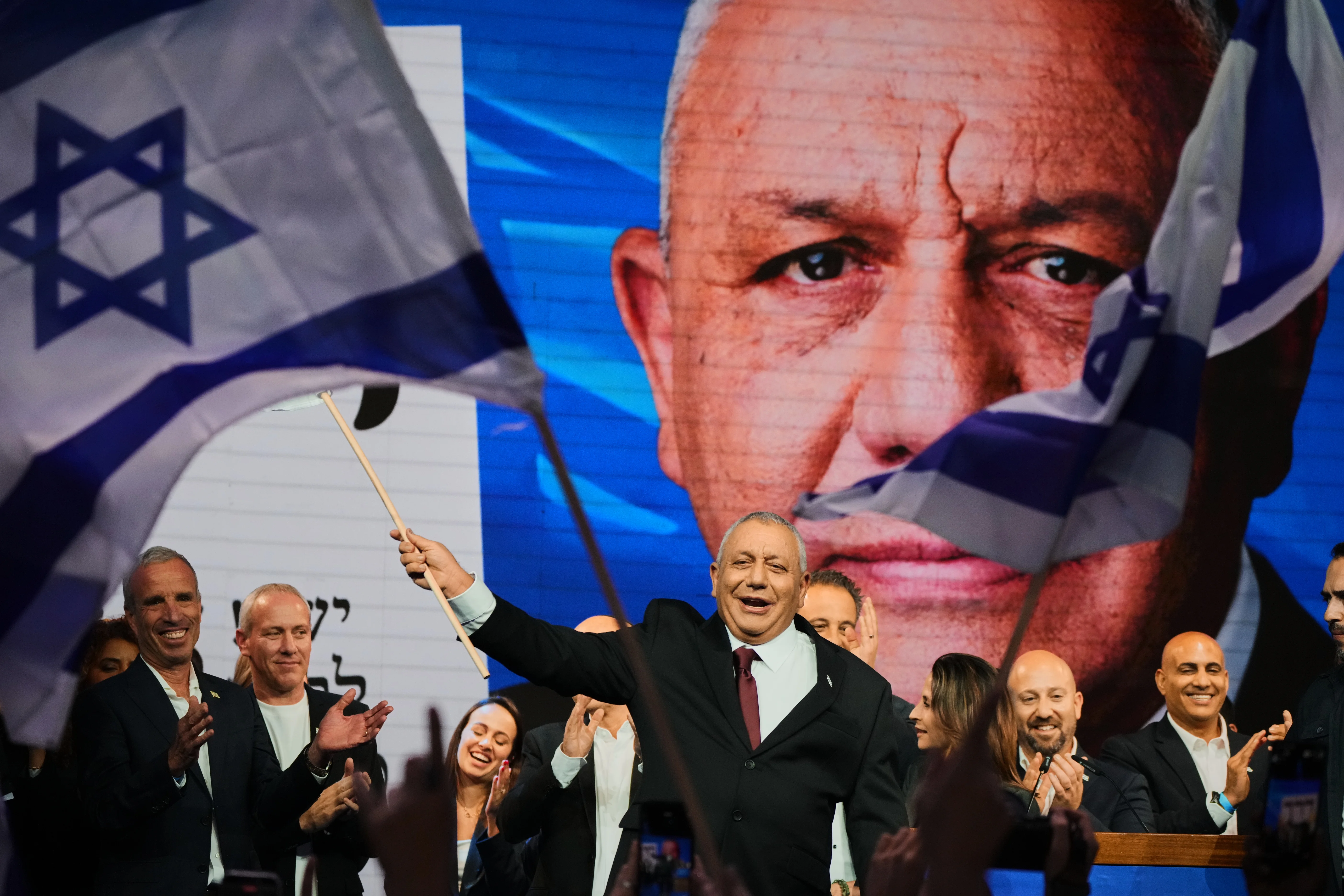
President Isaac Herzog announced on Tuesday that he had asked Gadi Eisenkot, the former commander of the Israel Defense Forces and the leading opposition candidate, to negotiate a governing coalition after the latest parliamentary vote failed to deliver a decisive majority for any bloc. Eisenkot, whose centrist Yesh Atid‑aligned list captured roughly 11 percent of the national vote, now faces the arduous task of bridging deep ideological divides among parties ranging from the ultra‑orthodox Shas to the nationalist Likud faction still loyal to Benjamin Netanyahu.
The invitation comes amid a protracted stalemate in Jerusalem, where Netanyahu's Likud party and its right‑wing allies fell short of the 61 seats needed to command confidence. With the Knesset set to reconvene on May 15, Eisenkot must secure agreements on key ministries, budget priorities and security policy within a narrow window before the president must either endorse a new candidate or call for fresh elections.
In his televised remarks, President Herzog emphasized the urgency of forming a stable government, noting that “the security of our citizens and the resilience of our democratic institutions depend on swift, constructive dialogue among all parties.” Opposition leaders from both the left and right praised the president’s decision as an opportunity to break the deadlock, while Netanyahu’s camp warned that any coalition excluding Likud could face legitimacy challenges.
In-Depth Analysis & Key Details
Israel’s political landscape has been shaped by a series of fragmented elections since 2019, each producing short‑lived administrations and repeated calls for fresh polls. The current impasse reflects deeper structural tensions between a security‑focused right wing, a secular‑centrist bloc, and an increasingly vocal Arab minority seeking greater representation. Historically, coalition‑building in Israel has required concessions on defense spending, settlement policy, and the status of the judiciary, all of which are now back on the negotiating table.
Eisenkot’s mandate arrives at a time when regional dynamics—particularly Iran’s nuclear ambitions and the evolving normalization agreements with Arab states—are pressuring Israeli leaders to present a united front. Economically, the country is grappling with rising inflation and a housing shortage, issues that coalition partners will need to address to maintain public support. The prospective alliance must also navigate the contentious judicial reform proposals championed by Netanyahu, which have sparked nationwide protests and raised concerns among international allies.
Experts from the Institute for National Security Studies argue that Eisenkot’s military background could lend credibility to security discussions, but warn that his lack of a strong parliamentary base may limit his leverage over entrenched party leaders. Meanwhile, European diplomatic circles are monitoring the development closely, fearing that prolonged instability could affect trade agreements and joint research initiatives tied to the European Union’s Horizon Europe program.
"The real test now is whether Eisenkot can translate battlefield command into political consensus, stitching together a coalition that can both safeguard Israel’s security and respond to mounting domestic demands."
Why This Matters & What Lies Ahead
For ordinary Israelis, the formation of a new government will directly influence public services, tax policy, and the cost of living, especially as the coalition negotiates the budget for health care and education. A stable administration is also critical for maintaining investor confidence, which underpins the country’s high‑tech sector and its role as a regional economic hub.
The coming weeks will be marked by intense behind‑the‑scenes negotiations, with the Knesset slated to vote on a confidence motion by early June. International observers will watch for any concessions on the controversial judicial reforms, while the United States is expected to brief its diplomatic team on the emerging coalition’s stance toward the Gaza ceasefire and the broader Middle‑East peace process. The outcome will shape not only Israel’s internal politics but also its strategic posture in a volatile region.
Source: Reported by NPR · Analyzed & Synthesized by DNB Newsroom