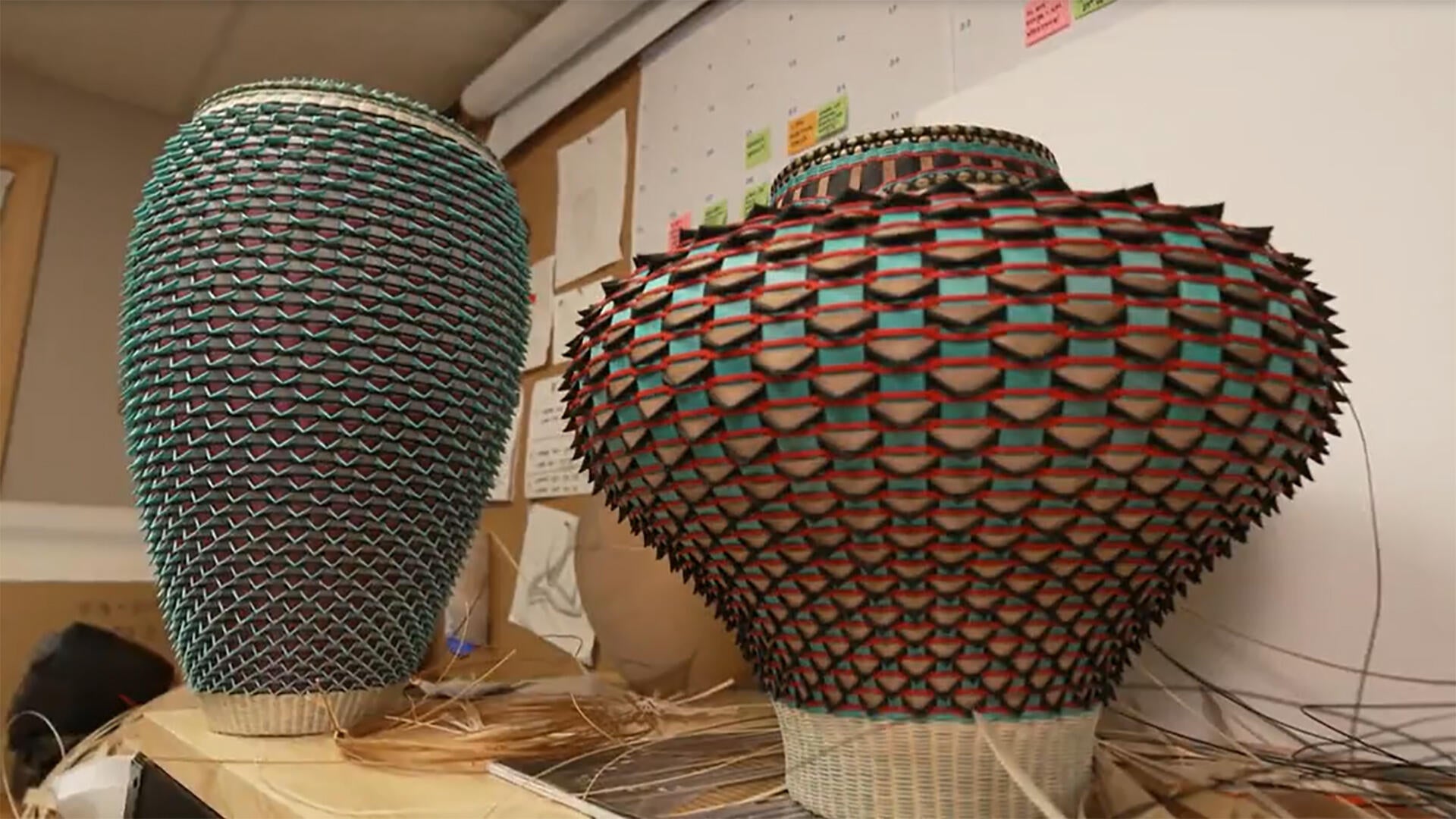
In a significant affirmation of indigenous artistic excellence, Jeremy Frey, a prominent member of the Passamaquoddy tribe, has been named a recipient of the MacArthur Fellowship. Often referred to as the 'genius grant,' this prestigious award provides unrestricted funding to individuals who have shown exceptional creativity and commitment to their work. Frey’s selection underscores his reputation as one of the country’s leading basket weavers, a title earned through decades of dedicated practice and the creation of works that are both technically demanding and aesthetically profound.
The geographic and cultural context of Frey’s work is deeply rooted in the forests of Maine, where the Passamaquoddy people have maintained a continuous relationship with the land for millennia. His process is described as intense and compulsive, a rigorous discipline that transforms raw natural materials into objects of remarkable intricacy. Correspondent Martha Teichner’s observation of Frey at work highlights the physical and mental focus required to execute the complex interlacing of wood strips, a technique that has been refined over generations within the tribe.
Frey’s approach to his craft is not merely a hobby but a central pillar of his identity and cultural expression. By utilizing wood from black ash trees, he connects his contemporary practice to the specific environmental conditions of the region. The recognition by the MacArthur Foundation serves to validate this practice on a national stage, bringing attention to the sophisticated technical skills and cultural depth inherent in Passamaquoddy basketry.
In-Depth Analysis & Key Details
The history of American basketry is inextricably linked to indigenous communities, yet for much of the twentieth century, these practices were often marginalized or categorized strictly as ethnographic artifacts rather than contemporary art. The awarding of a MacArthur Fellowship to Jeremy Frey represents a pivotal moment in this narrative, signaling a shift in how the broader art world and public institutions perceive and value indigenous craftsmanship. This recognition challenges the historical dichotomy that separates 'folk art' from 'fine art,' asserting that the technical mastery and creative vision displayed in Frey’s work meet the highest standards of contemporary artistic production.
From a cultural preservation standpoint, Frey’s work serves as a living archive of Passamaquoddy knowledge. The use of specific materials, such as black ash, requires an intimate understanding of the forest ecosystem, including the seasonal cycles and biological characteristics of the trees. This ecological knowledge is not just a technical requirement but a cultural imperative, reflecting a worldview that sees humans as participants in, rather than masters of, the natural world. The 'compulsive' nature of Frey’s work, as noted by observers, suggests a deep internal drive that goes beyond commercial motivation, rooted in a desire to maintain and evolve a cultural tradition.
Industry analysts and cultural commentators observe that the rise of high-profile indigenous artists like Frey is contributing to a broader re-evaluation of American cultural heritage. This trend is part of a larger movement to decolonize art institutions and expand the canon to include voices that have been historically excluded. Frey’s recognition is likely to inspire greater interest in the work of other indigenous artisans, potentially leading to increased funding, museum exhibitions, and educational programs that focus on the living traditions of Native American communities.
"The award to Jeremy Frey marks a definitive turning point, asserting that indigenous craftsmanship is not a relic of the past but a vital, evolving force in contemporary American art."
Why This Matters & What Lies Ahead
For the general public, the recognition of Jeremy Frey offers a window into the rich and complex cultural heritage of the Passamaquoddy people. It challenges common misconceptions about indigenous cultures as static or historical, presenting them instead as dynamic and innovative. This visibility can foster greater respect and understanding for Native American communities, encouraging support for their cultural preservation efforts and economic development. For the art world, Frey’s work sets a new benchmark for excellence in craft, inspiring artists and collectors to engage more deeply with the technical and cultural dimensions of traditional practices.
Looking ahead, the impact of this recognition is expected to extend beyond the art world into educational and policy spheres. There is a growing interest in integrating indigenous knowledge systems into broader curricula, particularly in areas such as environmental science and sustainable resource management. The success of artists like Frey may also influence funding priorities for cultural institutions, leading to increased support for programs that document and promote indigenous arts. Stakeholders should monitor upcoming exhibitions and publications that feature Frey’s work, as well as broader initiatives aimed at supporting the sustainability of traditional crafts and the health of the black ash forests that sustain them.
Source: Reported by CBS News · Analyzed & Synthesized by DNB Newsroom