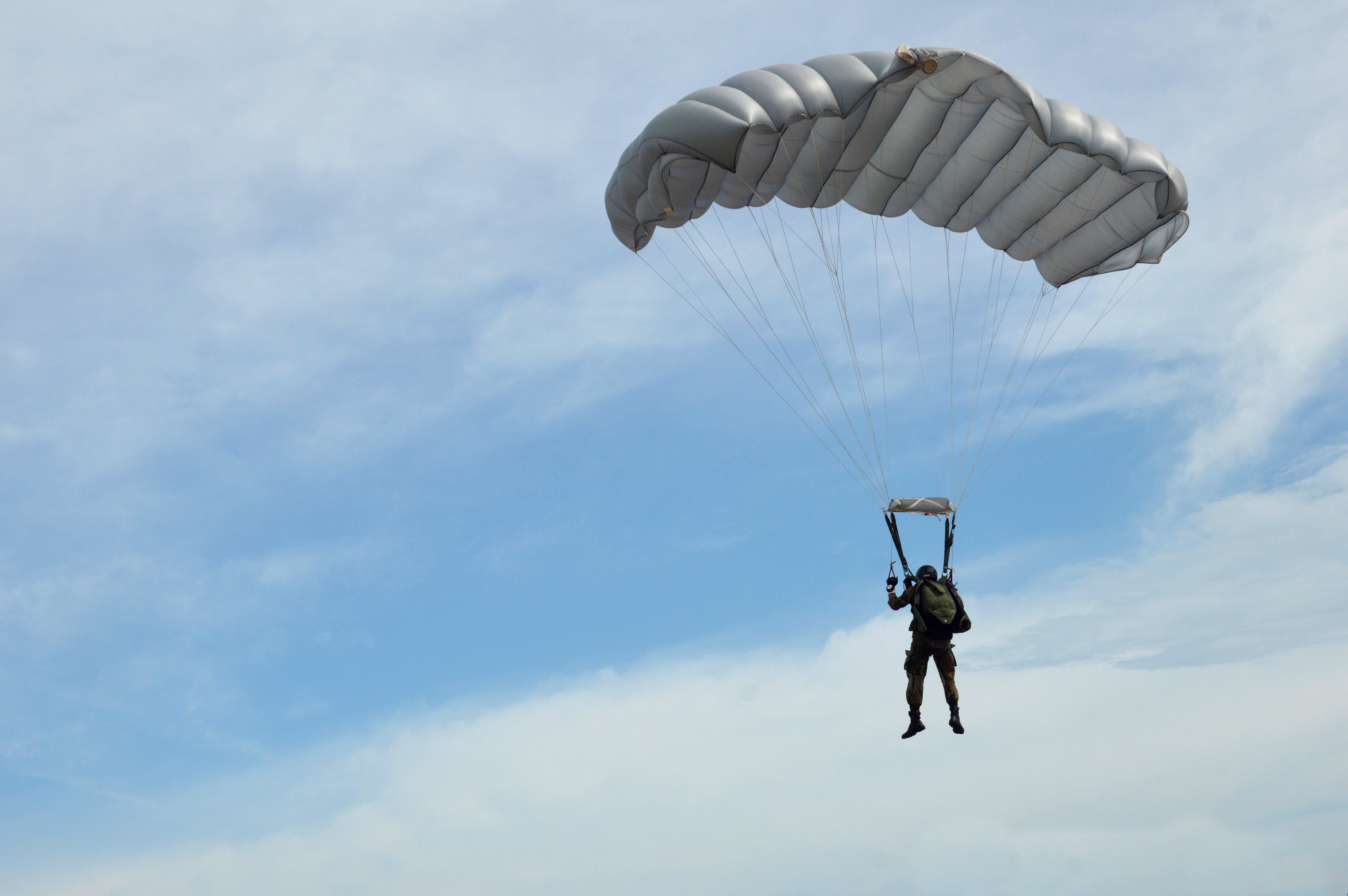
A tragic aviation incident unfolded in Southern California when two licensed skydivers were killed in a midair collision. According to statements released by Skydive Elsinore, the accident occurred when the two individuals' flight paths intersected at approximately 150 feet above the ground. At this altitude, the parachutes of both skydivers were likely already deployed or in the process of opening, a stage where maneuverability is significantly reduced compared to the freefall phase. The immediate impact of the collision resulted in fatal injuries for both participants, prompting emergency response teams to secure the landing zone and initiate a comprehensive scene investigation.
The geographical context of the incident is significant, as Skydive Elsinore is a well-established drop zone located near the city of El Centro, California, operating within a region that sees high volumes of recreational and instructional jumps. The drop zone is situated in an area that also accommodates other forms of aviation activity, including general aviation and occasional military transits, which adds a layer of complexity to airspace management. The collision at such a low altitude suggests a failure in the standard 'see and avoid' protocols that are fundamental to skydiving safety, where participants are required to maintain constant visual awareness of other jumpers and aircraft in their vicinity.
In the immediate aftermath, Skydive Elsinore issued a brief but somber statement confirming the loss of two lives and expressing their profound grief to the families and the broader skydiving community. The facility has suspended all jump operations as a precautionary measure and to facilitate the work of federal investigators. Local law enforcement and the California Highway Patrol were present at the scene, coordinating with federal agencies to preserve evidence and interview witnesses. The FAA has notified the NTSB, which will lead the investigation into the probable cause of the accident, focusing on trajectory reconstruction, communication logs, and operational procedures at the time of the incident.
In-Depth Analysis & Key Details
Midair collisions in skydiving are rare but catastrophic events that have historically prompted significant shifts in industry safety standards. The sport has evolved from a niche military training exercise to a global recreational industry with over 3 million participants annually in the United States alone. This growth has led to increased traffic density at popular drop zones, straining the traditional reliance on pilot discipline and visual scanning. The 150-foot mark is particularly dangerous because it represents the transition from freefall to canopy flight, a period where the vertical speed of the jumper changes drastically, and the horizontal drift of the parachute can alter the flight path unexpectedly, making last-second avoidance maneuvers nearly impossible for human reaction times.
Regulatory frameworks governing skydiving are a complex patchwork of FAA regulations and industry-specific guidelines set by the United States Parachute Association (USPA). While the FAA mandates basic training and licensing, the USPA enforces stricter operational standards, including limits on the number of jumps per hour and specific traffic patterns. Critics argue that these voluntary standards are insufficient to manage the increasing congestion at major drop zones, particularly during peak seasons. The economic pressure to maximize jump throughput can sometimes conflict with the need for reduced traffic density, creating a systemic tension between commercial viability and safety margins. This incident may reignite debates about whether mandatory electronic tracking systems or stricter airspace restrictions are necessary to prevent future tragedies.
From a technical standpoint, the investigation will likely focus on the specific flight dynamics of the two jumpers. Factors such as wind shear, canopy type, and the exact sequence of parachute deployment will be critical in reconstructing the collision. Experts in human factors engineering often point to the 'inattentional blindness' phenomenon, where focused attention on one aspect of the environment can lead to the failure to notice unexpected events. In a skydiving context, a jumper focused on their own altitude and landing point may fail to detect another jumper entering their airspace until it is too late. The data recovered from any available digital logging devices, if the jumpers were equipped with them, will be pivotal in understanding the timing and trajectory of the fatal intersection.
"At 150 feet, the margin for error vanishes; this tragedy is a stark reminder that in shared airspace, human vigilance is the only barrier between routine and catastrophe."
Why This Matters & What Lies Ahead
For the general public and participants in adventure sports, this incident serves as a sobering reminder of the inherent risks in recreational aviation and extreme sports. While skydiving is statistically safer than many other activities, the severity of midair collisions means that any safety failure can be fatal. This event may influence consumer confidence and insurance costs for the industry, potentially leading to higher premiums for drop zones and participants. It also highlights the broader issue of safety in uncontrolled airspace, where the burden of collision avoidance falls entirely on the individuals involved, without the benefit of air traffic control or radar monitoring. For families and friends of the victims, the immediate focus is on the legal and administrative processes that will follow, including the determination of liability and the provision of support services.
In the coming weeks, stakeholders should monitor the preliminary findings from the NTSB, which are typically released within the first few months of an investigation. These findings will determine whether new regulatory actions are warranted, such as revised traffic density limits or mandatory technology upgrades for drop zones. The FAA may also review its current oversight of recreational aviation activities, potentially leading to new guidelines or enforcement actions. For the skydiving community, this incident will likely catalyze a renewed focus on safety training, with an emphasis on spatial awareness and emergency response procedures. The outcome of this investigation will set a precedent for how the industry and regulators approach the management of risk in high-traffic recreational aviation environments.
Source: Reported by CBS News · Analyzed & Synthesized by DNB Newsroom