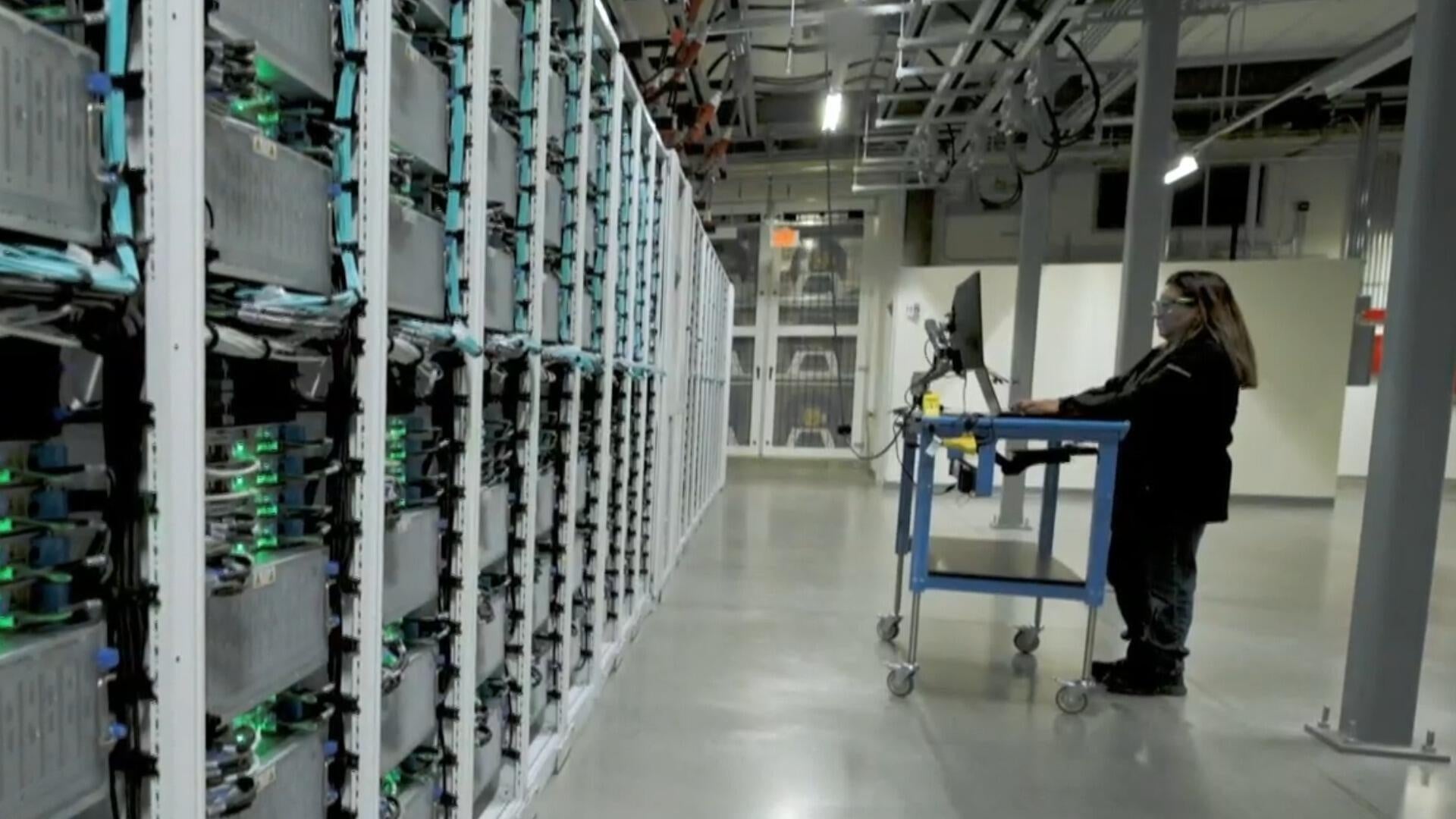
In early October, CBS News anchor Jo Ling Kent toured Microsoft’s Quincy data complex, a 1.2‑million‑square‑foot campus that was built when cloud computing was still a nascent concept. The visit coincided with the company’s announcement that the site will undergo a multi‑year upgrade to accommodate next‑generation artificial‑intelligence services, marking a rare public glimpse into a facility that powers everything from Office 365 to Azure AI.
The campus sits on the banks of the Columbia River, a location chosen for its abundant hydroelectric capacity and cool climate—both critical for cooling massive server racks. Over the past 20 years, the center has expanded from an initial 30‑megawatt footprint to a current demand that rivals the output of a small city, prompting collaborations with regional utilities to secure sustainable power sources.
Quincy’s mayor, speaking on the sidelines of Kent’s tour, highlighted the center’s fiscal impact, noting that property tax revenues have enabled the town to double its broadband coverage and launch a new vocational training program focused on data‑center operations. Microsoft’s spokesperson reiterated the company’s commitment to community partnership, emphasizing ongoing investments in local infrastructure and workforce development.
In-Depth Analysis & Key Details
When Microsoft first broke ground on the Quincy site, the United States was emerging from the dot‑com bust and cloud services were largely experimental. Federal incentives aimed at bolstering broadband access in rural areas, combined with Washington’s favorable tax climate, made the region an attractive testbed for large‑scale server farms. Over the ensuing two decades, the data center survived multiple industry cycles, adapting its hardware and cooling strategies to meet rising demand without triggering a wave of new construction.
Today, the facility sits at the intersection of competing policy narratives. Environmental groups have long scrutinized the energy intensity of data centers, yet the Quincy campus benefits from a longstanding power purchase agreement that sources over 80% of its electricity from hydroelectric dams, a model that regulators cite as a benchmark for sustainable scaling. Simultaneously, labor organizations argue that the high‑skill jobs created by such upgrades must be accompanied by robust training pathways to prevent wage polarization.
Industry analysts observe that retrofitting older sites for AI workloads is more cost‑effective than building greenfield campuses, especially when the existing infrastructure already aligns with emerging sustainability standards. This trend underscores a broader shift: legacy data centers are being re‑engineered to handle the massive parallel processing demands of generative AI, a move that could reshape regional employment patterns and influence future federal data‑privacy legislation.
"The Quincy campus shows that a data center built for the early cloud can be reborn as an AI engine, delivering both economic uplift and a roadmap for greener tech growth."
Why This Matters & What Lies Ahead
For residents of Quincy and surrounding counties, the data center’s evolution translates into concrete improvements—reliable high‑speed internet, modernized public utilities, and a pipeline of technical jobs that keep younger workers from migrating to larger metros. The infusion of tax revenue has also allowed the town to expand its emergency services and invest in climate‑resilient infrastructure, directly enhancing community safety and livability.
Looking ahead, the next phases of Microsoft’s upgrade plan will be subject to review by the Washington State Utilities and Transportation Commission, which will assess the balance between increased power draw and the state’s clean‑energy goals. Additionally, a scheduled hearing before the U.S. House Committee on Energy and Commerce in early 2027 will examine the broader implications of AI‑focused data‑center expansions on national security and workforce development, making Quincy a focal point for policy debates that could shape the future of American cloud infrastructure.
Source: Reported by CBS News · Analyzed & Synthesized by DNB Newsroom