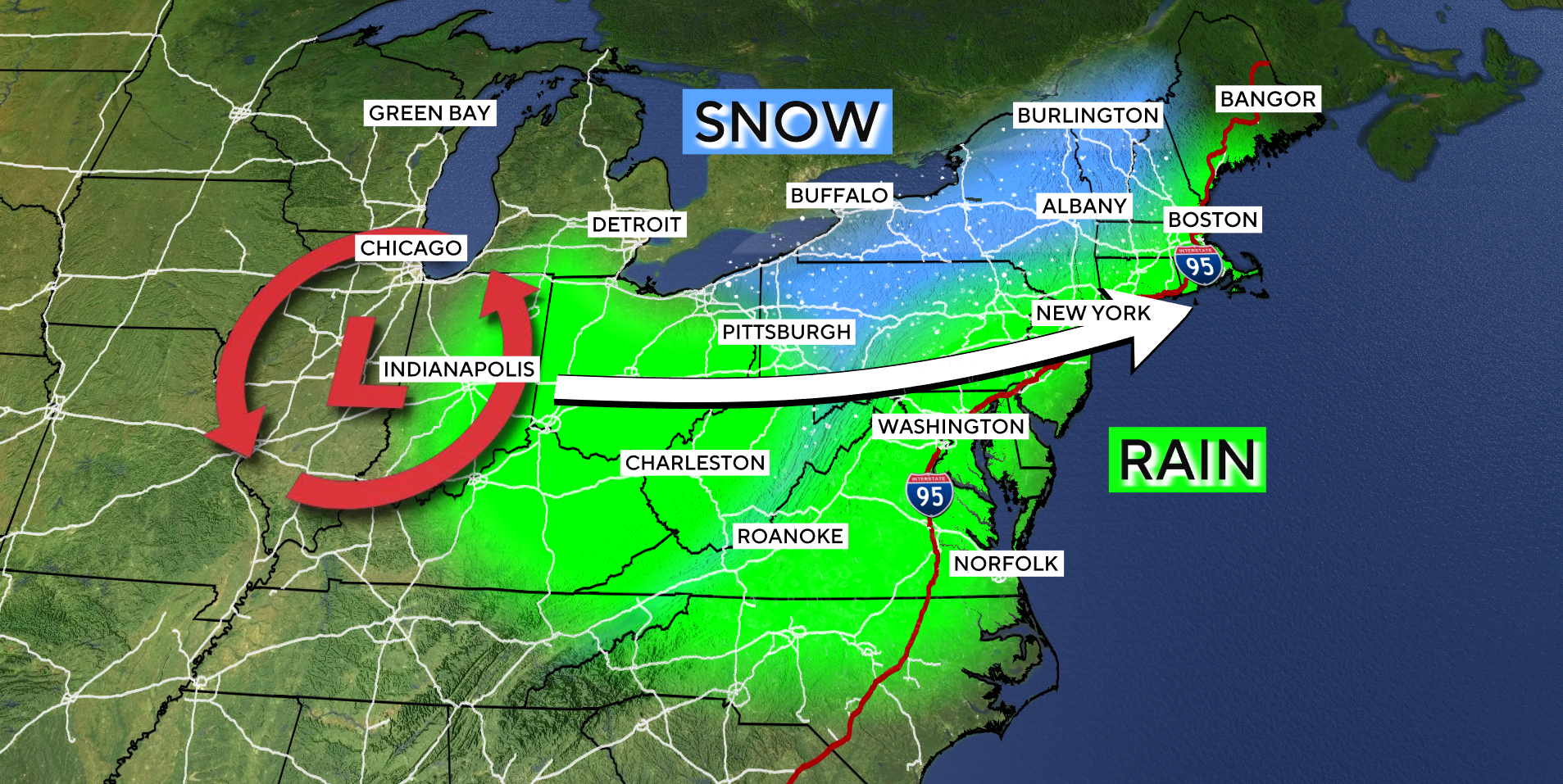
Meteorologists at the National Weather Service issued an advisory on Tuesday, indicating that a deepening trough of Arctic air will push the first measurable snow of the season into the Northeast later this week. The system, moving eastward from the Great Lakes, is expected to bring a band of precipitation that will affect metropolitan areas from Boston to Washington, D.C., with the heaviest accumulations forecast for the interior of New York State and western New England.
Temperatures are slated to plunge into the 20s Fahrenheit, well below seasonal normals, creating a classic wintry mix of sleet, freezing rain, and snow. State departments of transportation in New York, Connecticut, and Vermont have pre‑positioned plows and salt trucks, while the Federal Aviation Administration has issued cold‑weather briefings to major airports anticipating runway de‑icing needs.
In a press conference, the Northeast Regional Climate Center highlighted the rapid onset of the cold snap, noting that the temperature gradient between the Gulf of Mexico and the Canadian border is among the strongest observed this decade. Local officials urged residents to secure heating sources, stock emergency supplies, and heed travel advisories as the storm progresses.
In-Depth Analysis & Key Details
Historically, the first snowfall in the Northeast serves as a bellwether for the season's severity, with past early‑season storms correlating to longer, colder winters in the region. Climate researchers point to a pattern of amplified temperature swings linked to a weakened polar vortex, a phenomenon that has intensified the frequency of abrupt cold snaps across the eastern United States.
Regulatory bodies such as the Federal Energy Regulatory Commission monitor these events closely because sudden spikes in heating demand can strain natural‑gas pipelines and electricity grids. Analysts observe that utilities often face heightened operational costs during such periods, which can translate into higher consumer rates if supply constraints emerge.
Industry observers also note the ripple effect on supply chains: freight railroads and trucking firms must adjust schedules to accommodate slower travel speeds and potential track blockages, while retailers anticipate a surge in demand for winter apparel and home‑heating equipment. These dynamics underscore the interconnected nature of weather events and economic activity.
"An early, heavy snowstorm tests the resilience of infrastructure and highlights how a single cold front can cascade through energy, transportation, and public safety systems."
Why This Matters & What Lies Ahead
For everyday citizens, the impending snowfall threatens to disrupt daily commutes, increase heating expenses, and elevate the risk of power outages in older grid segments. Vulnerable populations—particularly the elderly and those living in poorly insulated housing—face heightened health risks, prompting community organizations to mobilize outreach and shelter resources.
Legislators in the affected states are poised to review emergency‑management funding and consider proposals to modernize grid infrastructure ahead of the next winter season. Upcoming hearings before the House Energy Subcommittee on June 12 will examine the adequacy of current winter‑readiness protocols, while the Federal Emergency Management Agency is expected to release updated guidance on snow‑related disaster declarations later this month.
Source: Reported by CBS News · Analyzed & Synthesized by DNB Newsroom