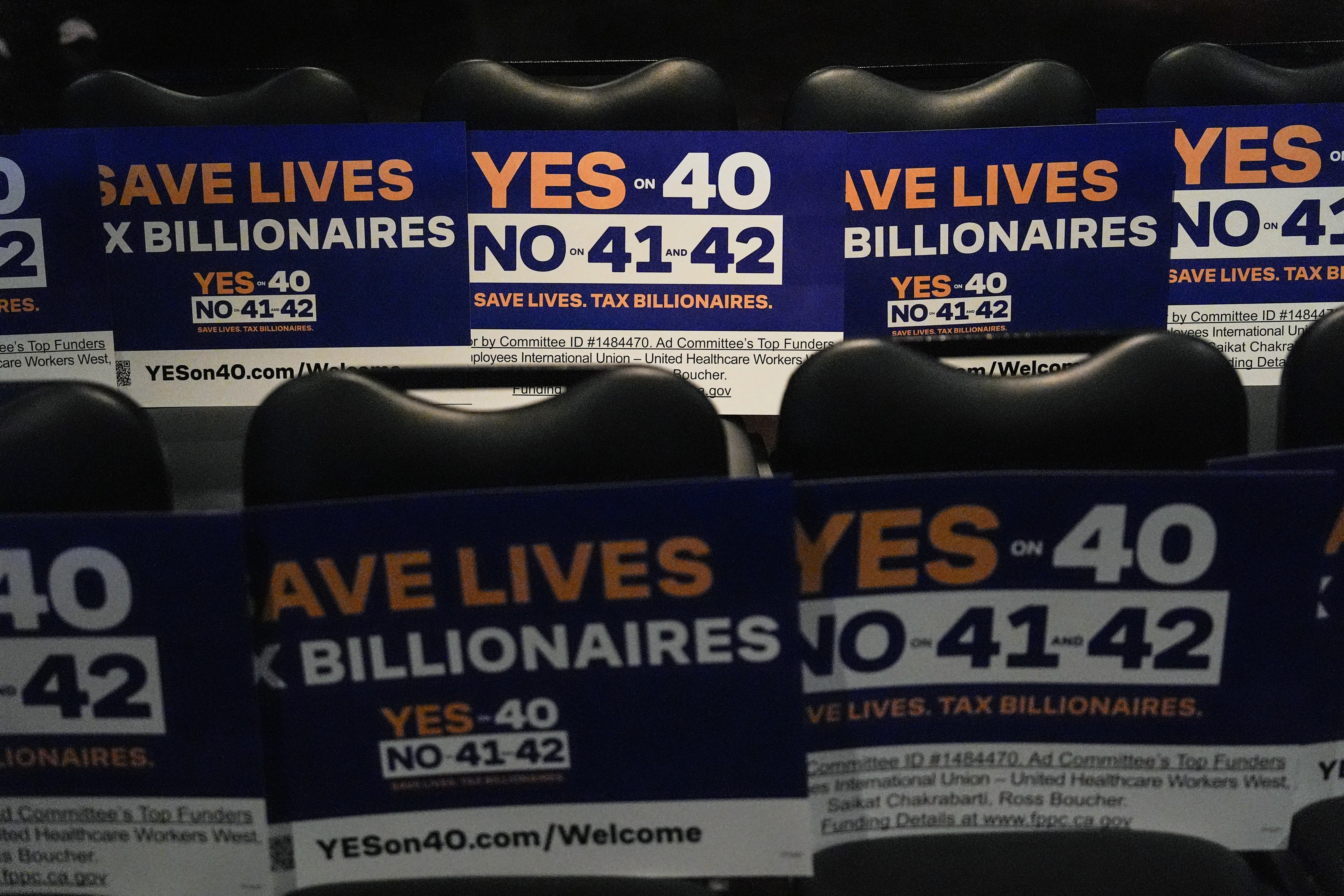
California’s electorate delivered a clear rebuff to a sweeping wealth‑tax proposal during the recent statewide ballot, ending a months‑long campaign by a group of Democratic legislators to impose a one‑time 5% levy on the net assets of the state’s ultra‑rich, including equity stakes in privately held firms.
The initiative, which would have targeted individuals with net worth exceeding $2 billion, sparked fierce debate across the state’s political spectrum. While progressive advocates framed the tax as a means to fund education, housing, and climate programs, a contingent of moderate Democrats warned that the measure could trigger asset flight and undermine California’s already fragile fiscal outlook.
State election officials confirmed the measure’s defeat, and Democratic leaders issued mixed statements: some praised the outcome as a victory for economic freedom, while others urged lawmakers to revisit progressive revenue ideas through more nuanced policy tools. Business groups and tax policy analysts also weighed in, noting the vote underscores voter caution toward sweeping fiscal experiments.
In-Depth Analysis & Key Details
The concept of a wealth tax is not new to California; earlier attempts in the 1990s and 2020s failed to secure legislative backing, reflecting the state’s historical tension between progressive taxation and a booming tech‑driven economy. Proponents argue that a one‑time levy could generate billions for public services, whereas opponents cite studies suggesting limited revenue gains and potential capital flight.
Within the Democratic Party, the proposal exposed a fault line between progressive members who view wealth taxation as essential to narrowing inequality, and centrist figures who prioritize retaining the state’s competitive edge for high‑tech and entertainment firms. Republican legislators uniformly opposed the measure, framing it as an overreach that would penalize success and discourage investment.
Policy analysts note that even if enacted, the tax’s one‑time nature would produce a finite revenue stream, complicating long‑term budgeting. Moreover, legal scholars point to constitutional challenges that could arise over the definition of “wealth” and the treatment of privately held corporate shares, suggesting any future effort would likely encounter judicial scrutiny.
"The vote makes clear that Californians are wary of sweeping fiscal experiments that could jeopardize the state’s economic engine, even when framed as a tool for equity."
Why This Matters & What Lies Ahead
The rejection of the billionaire levy preserves the status quo for the state’s wealthiest residents, meaning anticipated funding for schools, affordable housing, and climate resilience projects will need to be sourced elsewhere, potentially widening budget gaps and intensifying debates over tax reforms.
Looking ahead, lawmakers may revisit wealth‑tax concepts in a more incremental form, perhaps through annual surtaxes or targeted capital‑gains provisions. Stakeholders will watch upcoming legislative sessions, potential court challenges to related tax measures, and the 2026 gubernatorial race, where fiscal policy is likely to remain a pivotal campaign issue.
Source: Reported by NPR · Analyzed & Synthesized by DNB Newsroom