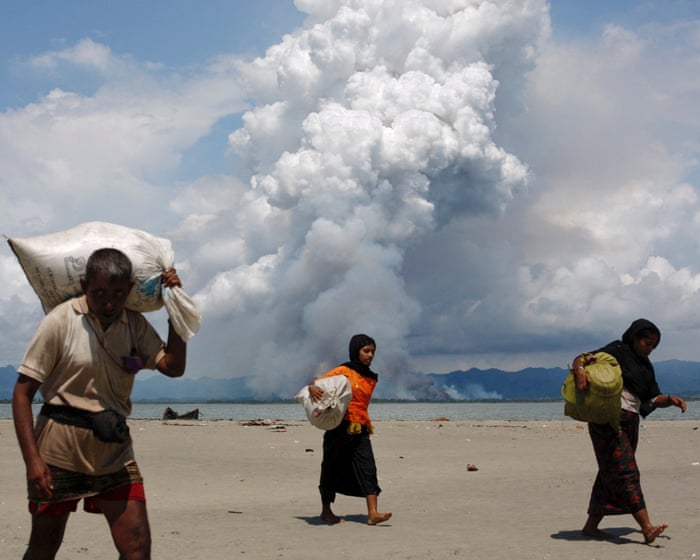
The diplomatic landscape surrounding the International Court of Justice (ICJ) has grown increasingly volatile as the United States signals a willingness to wield economic leverage against the court’s judiciary. Reports indicate that Washington is considering sanctions against individual judges, a move that would represent a stark departure from historical norms of diplomatic engagement with international judicial institutions. The threat is specifically linked to the pending Thursday ruling regarding Myanmar’s obligations under the Genocide Convention, a case that has drawn intense scrutiny from human rights organizations and geopolitical stakeholders alike.
The immediate context of this development is the high-stakes nature of the Myanmar case, which centers on allegations of state-sponsored violence against the Rohingya minority. The potential for a ruling against Myanmar has prompted a defensive posture from US-aligned political circles, who fear that a precedent-setting judgment could embolden similar legal challenges against other nations, including Israel, in the context of the ongoing conflict in Gaza. The geographical and institutional focus is squarely on The Hague, where the ICJ operates, but the political pressure is being applied from Washington, signaling a transatlantic friction over the role of international law in foreign policy execution.
While the US State Department has not issued a formal public decree detailing specific sanction mechanisms, leaked diplomatic communications and media reports suggest that the administration is preparing for a scenario where judicial independence is compromised by political retribution. This stance has been met with alarm by legal scholars and international law advocates, who argue that targeting judges personally undermines the very foundation of the rule of law. The involvement of Navi Pillay, a figure with significant moral authority due to her Nobel Prize and previous UN role, amplifies the symbolic weight of the threat and the potential global backlash it may provoke.
In-Depth Analysis & Key Details
Historically, the ICJ has operated under the assumption that its judgments, while legally binding on the parties involved, are enforced through diplomatic and political channels rather than direct executive retaliation against individual justices. The current US stance challenges this structural assumption, introducing a new variable where the threat of economic sanctions is used to influence judicial outcomes. This approach mirrors tactics seen in other geopolitical disputes but is unprecedented in its application to the core judiciary of the world’s principal judicial organ. The structural tension lies in the conflict between state sovereignty and the emerging consensus on universal human rights obligations, with the US positioning itself as a defender of sovereign interests against what it views as overreach by international bodies.
Competing perspectives on this issue are sharply divided. Proponents of the US stance argue that international courts must remain subordinate to the security interests of major powers and that judicial decisions can have unintended geopolitical consequences that threaten stability. Conversely, critics, including prominent legal institutions and human rights NGOs, contend that sanctioning judges is an act of judicial intimidation that erodes the credibility of the ICJ. The economic implications are also significant, as the threat of sanctions introduces uncertainty into international legal proceedings, potentially discouraging states from bringing or defending cases before the court, thereby weakening the global legal framework that underpins international trade and diplomacy.
Domain experts in international law note that the ICJ’s mandate is to settle legal disputes between states in accordance with international law. The introduction of extrajudicial pressure through sanctions threatens to politicize the court’s proceedings, turning it into a battleground for geopolitical rivalries rather than a neutral arbiter of law. This shift could have long-term consequences for the court’s ability to address other critical issues, such as climate change litigation or territorial disputes, where the independence of the judiciary is paramount. The technical intricacies of how sanctions would be implemented—whether through asset freezes, travel bans, or exclusion from international financial systems—remain unclear but are being closely monitored by legal teams representing the affected judges and states.
"The sanctity of the bench is not a bargaining chip; to sanction a judge is to strike at the heart of the rule of law itself."
Why This Matters & What Lies Ahead
For everyday readers and global citizens, this development signals a potential erosion of the international legal safety net that protects human rights and holds state actors accountable. If the ICJ is perceived as susceptible to political pressure, the confidence in its rulings will diminish, potentially leading to a world where powerful nations operate above the law. This has direct implications for public policy, as governments may feel emboldened to violate international norms if they believe they can evade meaningful judicial consequences. The financial markets may also react to the increased geopolitical uncertainty, particularly in sectors reliant on stable international legal frameworks, such as cross-border trade and investment.
Key upcoming milestones to monitor include the actual ICJ ruling on the Myanmar case, scheduled for Thursday, and any subsequent official statements from the US government regarding the implementation of sanctions. Additionally, the response from other major powers, such as the European Union and China, will be critical in determining whether the US stance is isolated or part of a broader shift in international legal diplomacy. Legal experts and human rights organizations are expected to file motions or public statements challenging the legality of sanctioning judges, which could lead to further diplomatic tensions and potentially new legal challenges in other international forums.
Source: Reported by The Guardian · Analyzed & Synthesized by DNB Newsroom


