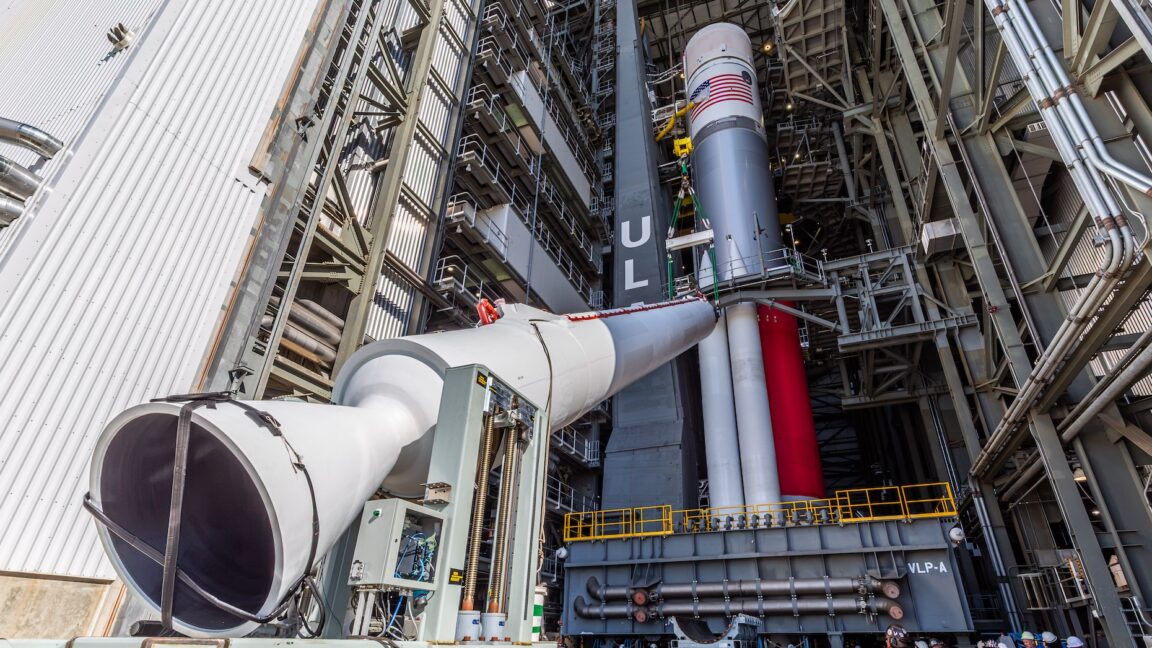
United Launch Alliance announced that its Vulcan launch vehicle will lift off from Cape Canaveral on Friday, initiating the program’s return to flight after a year‑long pause following a test‑flight failure. The event signals a pivotal step for the company’s next‑generation heavy‑lift rocket, which is central to its long‑term strategy for both government and commercial customers.
The flight will carry a small secondary payload and will be the first Vulcan mission to mount the full suite of six solid rocket boosters, delivering additional thrust during the early ascent phase. Engineers expect the boosters to ignite simultaneously with the core engine, providing a combined lift capability that rivals existing heavy‑lift options.
In-Depth Analysis & Key Details
The Vulcan program was launched to replace ULA’s legacy Atlas V and Delta IV families, aligning the firm with evolving launch‑service contracts and the U.S. government’s push for domestic, high‑performance access to space. Regulatory approvals and a growing demand for rapid, flexible launch services have pressured ULA to demonstrate the reliability of its new architecture.
Technically, the six‑booster configuration puts Vulcan in direct competition with SpaceX’s Falcon 9 and upcoming Starship, offering comparable payload capacity while leveraging proven solid‑propellant technology. Critics note that the added complexity of multiple boosters raises integration challenges, but proponents argue that the modular design provides redundancy and scalability for diverse mission profiles.
"The six‑booster test marks the decisive moment where Vulcan must prove its promised lift performance and reliability."
Why This Matters & What Lies Ahead
A successful launch would reassure satellite operators and government agencies that ULA can deliver on upcoming contracts for GPS, national security, and commercial broadband missions, potentially influencing procurement decisions for the next decade.
Stakeholders will watch closely for post‑flight data, as the results will shape the timing of the next scheduled Vulcan missions and could affect funding allocations within the U.S. Space Force’s launch procurement framework.
Source: Reported by Ars Technica · Analyzed & Synthesized by DNB Newsroom