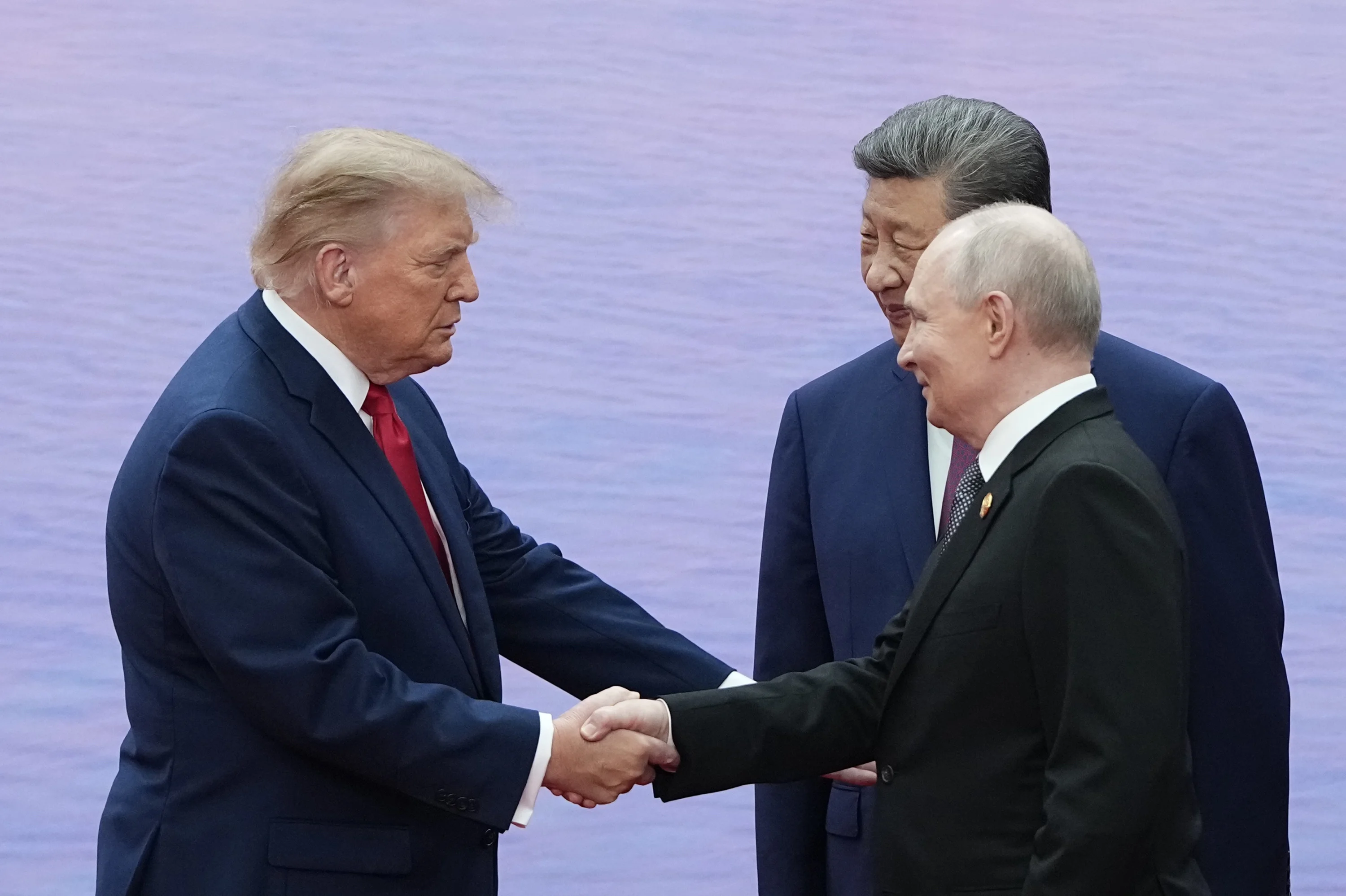
President Donald Trump, Chinese President Xi Jinping, and Russian President Vladimir Putin have convened in Shenzhen, China, for a historic trilateral summit that has immediately captured global attention. This gathering represents a notable departure from standard diplomatic protocols, where the leaders of the world's three most significant nuclear powers typically engage through separate bilateral channels or multilateral bodies. The decision to meet in Shenzhen, a major Chinese tech and manufacturing hub, underscores the host nation's central role in this new diplomatic configuration.
The operational context of the summit is defined by its location and the specific agenda items disclosed: Ukraine, Iran, and nuclear disarmament. By bringing these three critical flashpoints under one roof, the leaders are signaling an intent to address global security challenges through direct negotiation rather than through the fragmented diplomatic efforts currently underway in Europe and the Middle East. The presence of all three heads of state in a Chinese city also highlights the shifting center of gravity in global geopolitical influence.
Official remarks from the participating delegations have emphasized the need for stability and de-escalation, though specific policy concessions remain undisclosed. Initial stakeholder responses from allied nations have been cautious, with many observers noting the potential for this trilateral channel to alter the balance of power in ongoing conflicts. The summit serves as a tangible demonstration of the evolving diplomatic landscape, where traditional alliances are being tested by direct superpower engagement.
In-Depth Analysis & Key Details
The historical background of this summit reflects a long-standing tension between the desire for great-power stability and the fragmentation of the post-Cold War order. For decades, the United States, China, and Russia have operated in separate diplomatic spheres, often collaborating on specific issues like climate change or non-proliferation but rarely engaging in a unified trilateral format. This meeting suggests a structural shift, where the traditional Western-led international order is being challenged by a more multipolar or even tripartite approach to global security.
Competing perspectives on this development highlight the risks and opportunities of such direct engagement. Proponents argue that direct communication between the leaders of the world's largest nuclear arsenals is essential to prevent miscalculation and escalate tensions. Critics, however, warn that bypassing multilateral institutions and key regional partners could lead to backroom deals that undermine international law and the sovereignty of smaller nations. The economic consequences are also significant, as shifts in the US-China and US-Russia relationships can ripple through global supply chains and financial markets.
Industry analysts and geopolitical experts observe that the inclusion of nuclear disarmament on the agenda is particularly noteworthy, given the current state of arms control treaties. The potential for new agreements or the collapse of existing frameworks could have profound implications for global security. The technical intricacies of nuclear verification and the political will to enforce such agreements remain significant hurdles, but the summit provides a platform to address these challenges directly.
"The convergence of Trump, Xi, and Putin in Shenzhen signals a pivotal moment where the future of global security may be negotiated in closed rooms, potentially reshaping the rules of engagement for decades to come."
Why This Matters & What Lies Ahead
For everyday readers and global markets, this summit introduces a new layer of uncertainty and potential volatility. Changes in US-China and US-Russia relations can directly impact trade policies, technology restrictions, and energy markets. Consumers may see fluctuations in prices for goods and energy, while businesses face new regulatory and geopolitical risks. The potential for de-escalation in Ukraine and Iran could also influence global stability, affecting everything from refugee flows to international aid priorities.
Upcoming milestones to watch include the official communiqués from the summit, which will detail any agreements or frameworks reached. Additionally, the reactions from European and Asian allies, as well as the responses from international organizations like the UN, will be critical in assessing the broader implications of this trilateral engagement. Regulatory votes and legislative actions in the US, China, and Russia in the coming weeks will also provide insights into how these diplomatic developments translate into concrete policy changes.
Source: Reported by NPR Politics · Analyzed & Synthesized by DNB Newsroom