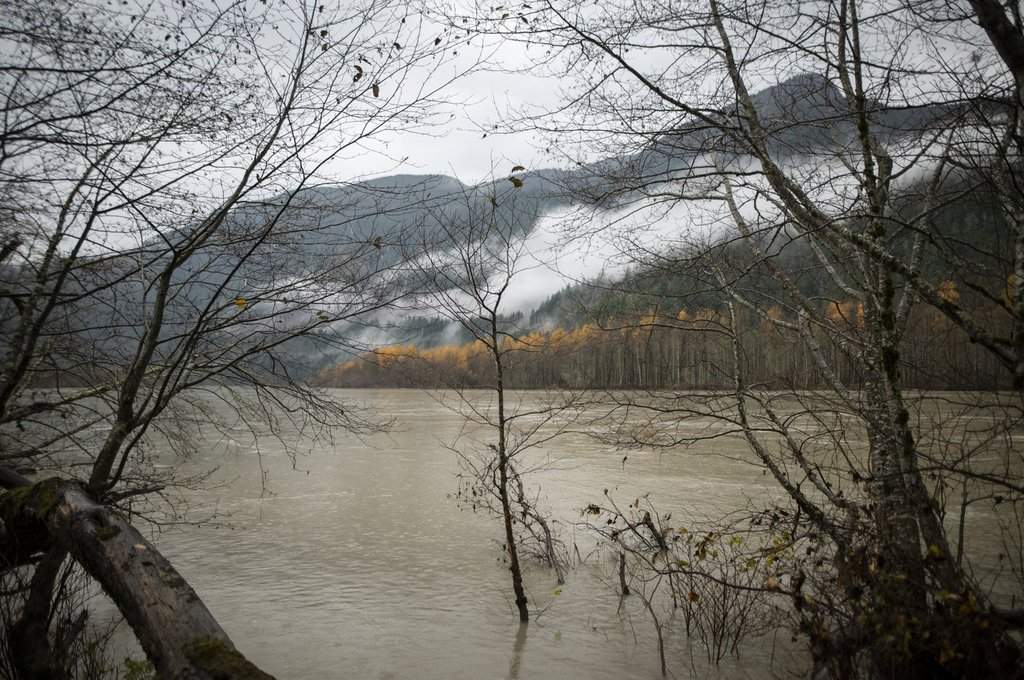
District of Squamish officials announced a community‑wide request to curtail indoor water usage after an intense period of precipitation that saturated soils and swollen streams throughout the lower mainland. The advisory, released by the district’s water management office, targets typical household activities such as bathing, dishwashing, and laundry, recommending a reduction of roughly one‑fifth in daily consumption.
The call comes as provincial rain and wind warnings have been lifted for the coastal corridor, yet hydrological models indicate that river levels remain above safe thresholds. Neighborhoods along the Squamish River and its tributaries continue to experience localized flooding, prompting emergency crews to monitor drainage systems and reinforce vulnerable roadways.
A district spokesperson emphasized that the measure is preventative, noting that “conserving water now reduces runoff pressure and buys critical time for infrastructure repairs.” Early feedback from homeowners and local businesses reflects a mix of compliance and concern over potential inconvenience, while the BC Ministry of Environment has expressed support for the municipality’s proactive stance.
In-Depth Analysis & Key Details
British Columbia’s climate patterns have shifted toward more frequent, high‑intensity rain events, a trend documented in provincial climate‑change assessments over the past decade. Historical flood episodes in the Squamish Valley, notably the 2005 and 2018 inundations, exposed gaps in storm‑water capacity and highlighted the need for adaptive water‑use policies.
Municipal leaders argue that voluntary conservation can mitigate the cumulative impact of saturated catchments, whereas some provincial analysts caution that without enforceable regulations, voluntary measures may fall short of needed reductions. Economic considerations also surface, as water‑utility operators face rising treatment costs and potential rate adjustments if flood‑related damages surge.
Water‑resource specialists point out that indoor consumption accounts for a significant portion of total municipal demand, and even modest cuts can translate into measurable decreases in runoff volume. This technical insight underpins the district’s decision to target everyday water‑use habits rather than solely focusing on external drainage infrastructure.
"Reducing household water use now is a simple yet powerful lever to lessen flood‑related stress on our aging drainage network," the district’s water manager said."
Why This Matters & What Lies Ahead
For residents, the advisory directly influences daily routines and utility bills, while also safeguarding homes from secondary damage caused by overflowing sewers and basement flooding. On a broader scale, the measure signals how local governments are integrating climate resilience into public‑service operations, a factor that investors and insurers are watching closely as flood risk reshapes asset valuations.
The next provincial water‑security forum, slated for early next year, will review community‑level conservation initiatives like Squamish’s request. Stakeholders anticipate that the outcomes could shape future legislation on mandatory water‑use restrictions during high‑risk periods, as well as funding allocations for upgraded storm‑water infrastructure across the province.
Source: Reported by Global News BC · Analyzed & Synthesized by DNB Newsroom